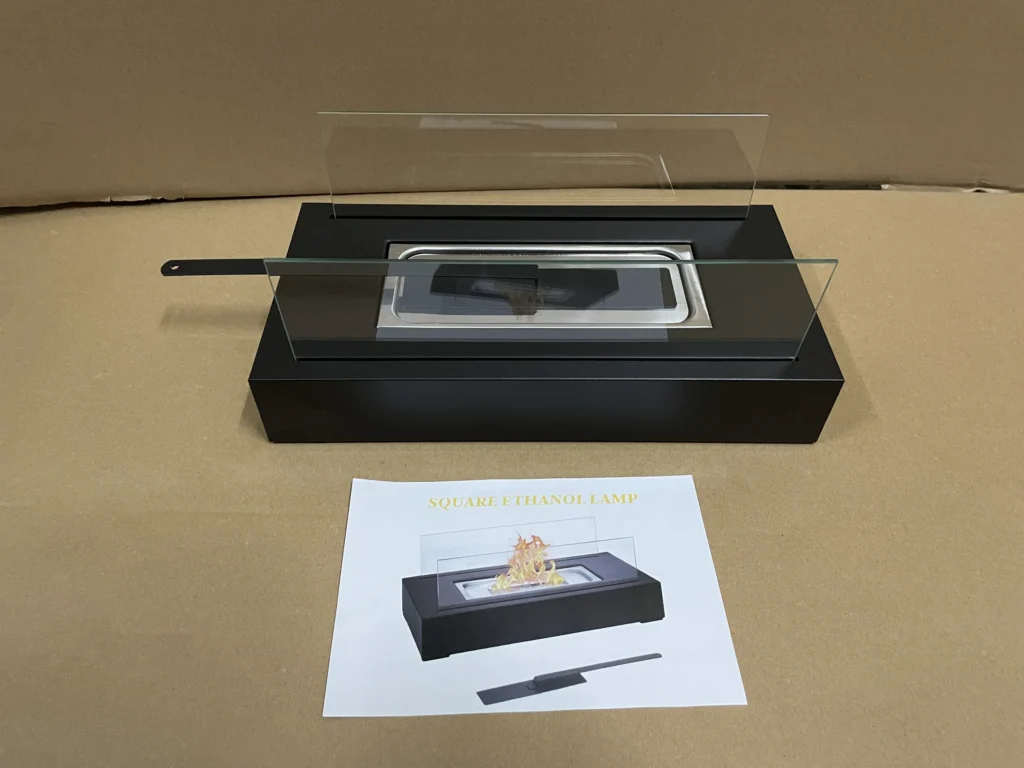
For EU importers, private-label brands and distributors, EN 16647 labelling user manual requirements are not a cosmetic detail to finish after the sample is approved. For tabletop ethanol fireplaces, the label, packaging artwork and user manual are part of the safety evidence that shows whether the product can be identified, used, refilled, extinguished, stored and supported in a predictable way.
The practical difficulty is that buyers often receive a test report, a catalogue page and a generic instruction sheet as separate files. The files may look acceptable one by one, but they may not describe the same model, the same burner volume, the same fuel limits, the same warnings or the same destination-market language. This article explains how to review the documentation pack before you confirm sampling, private-label artwork or repeat production.
Quick Answer
Under EN 16647-1:2025, documentation for manually operated alcohol-powered flueless decorative fireplaces should be reviewed as a safety-control system: permanent product identification, packaging marks, user instructions, warnings, fuel information, manual-operation steps, refilling cautions, extinguishing guidance, maintenance advice and traceable supplier documents should all point to the same product. For EU projects, importers should also align the documentation pack with General Product Safety Regulation expectations, including clear product identification, economic-operator contact details, safety information and language coverage for the Member State where the product is made available. A passed test report is useful, but it does not replace a label, packaging and manual review. Ask the supplier to provide editable artwork, the final printed manual, model-specific warnings, batch identification logic and a change-control process before mass production.
When supplier choice is still open, use the EN 16647 fireplace manufacturer China sourcing guide to connect labels and manuals with sample approval, factory control and RFQ evidence.
Why Labels and Manuals Matter Before Sampling
A tabletop ethanol fireplace is a consumer product that creates a real flame using liquid alcohol fuel. Even when the design is compact and decorative, the user still needs to understand where the product can be placed, which fuel is allowed, how the burner is filled, when refilling is unsafe, how the flame is extinguished, how the unit cools down and what must never be modified. Those instructions are not optional sales copy. They are part of how the buyer reduces foreseeable misuse.
For B2B sourcing teams, the highest-risk moment is often not the first RFQ. It is the transition from a supplier’s standard sample to a private-label retail product. Artwork changes, carton layouts, barcode placement, manual languages and marketplace listing text may be handled by different teams. If nobody owns the complete documentation set, a compliant-looking sample can become a shipment with mismatched labels and weak instructions.
This is why documentation review should happen before final sample approval. The buyer should check whether the product name, model number, burner capacity, fuel type, warnings, supplier identity and manual version are consistent across the sample label, carton mark, manual, inspection file and commercial invoice. If one file says “tabletop ethanol fireplace” while another file uses a broader “bio fireplace” family name, the buyer should ask whether the test evidence and manual really apply to the exact SKU being ordered.
What EN 16647-1:2025 Covers
Public standards summaries describe EN 16647-1:2025 as the European standard for alcohol-powered flueless fireplaces, with safety requirements and test methods for manually operated decorative fireplaces for domestic use. The scope information is important for documentation review because it points to a specific product category: decorative fireplaces that produce flame using liquid alcohol fuel and require manual user interaction for ignition, filling, refilling or extinguishing.
That distinction matters commercially. A manually operated tabletop ethanol fireplace should not be documented as if it were an automatic appliance with electronic fuel management. Automatic alcohol fireplaces are handled under a different standards path. Likewise, a decorative household fireplace should not be documented as an industrial burner, camping stove, heating appliance or outdoor fire pit unless the product and applicable requirements have been evaluated for that use.
For importers, the standard reference should therefore be used as a scoping question first: does the product that the supplier is offering sit inside the manually operated decorative fireplace category, and does every document use the same product identity? If the answer is uncertain, the label and user manual may be premature.
The Documentation Set Buyers Should Request
A useful documentation pack is more than a single PDF manual. Buyers should ask for the complete set of consumer-facing and compliance-facing documents that will travel with the product, support the sale and support future traceability. The exact pack depends on the market, channel and product configuration, but the following categories are normally relevant for a tabletop ethanol fireplace project.
For the broader pre-order file request, review HND’s ethanol fireplace compliance documents supplier checklist before approving private-label artwork, shipment documents or mass-production versions.
| Document or artwork | What to check | Why it matters |
|---|---|---|
| Product label | Model, batch or serial identification, supplier or brand details, safety marks and key warnings. | The product must remain identifiable after the carton is discarded. |
| Retail carton and shipping carton | Product name, SKU, quantity, orientation marks, warnings, importer details where required and barcode placement. | Warehouses, retailers and consumers often see packaging before they see the manual. |
| User manual | Assembly, placement, fuel, filling, ignition, operation, extinguishing, cooling, maintenance and disposal instructions. | The manual is the main tool for explaining safe and intended use. |
| Warning label artwork | Placement, permanence, language, symbol use and consistency with the manual. | Critical warnings should be visible at the point of use, not hidden in a file. |
| Technical file index | Applied standards, test reports, risk assessment, drawings, bill of materials and version history. | Importers need a way to prove which evidence belongs to which model. |
| Online listing text | Product identification, safety warnings, use limits, images and responsible economic-operator information. | Distance sales can create information obligations before the buyer opens the box. |
When HND buyers are reviewing an OEM or private-label project, this pack can be paired with the supplier’s public certificates and accreditation information, product photography and sample inspection notes. The key is not to assume that a certificate page automatically covers every future SKU. The documentation pack should identify the specific product, the specific market and the specific production version.

Product Label: Identification Comes First
The first job of a product label is identification. If a customer, retailer or market-surveillance authority needs to trace a fireplace, the label should make the product findable in the supplier’s records. A practical label review therefore starts with the model number, SKU, batch code or serial number logic. The buyer should ask where that identifier appears on the product, where it appears on the carton and how it maps to production records.
For private-label projects, this is where many mistakes appear. A brand may request a new product name, a retailer may request a new barcode, and the supplier may still use an internal model code in the manual. That is acceptable only if the relationship between those identifiers is controlled. If the inspection report, carton, product label and manual cannot be matched, the documentation pack will be difficult to defend later.
The label also needs enough supplier or economic-operator information for the target market. Under the EU product-safety framework, businesses should pay attention to manufacturer, importer, authorised representative or other responsible contact details as applicable to the route to market. The exact legal role may differ by project, but the buyer should not leave this until after printing. Contact details added as a sticker at the destination warehouse may create cost and consistency risks.
Packaging: More Than a Shipping Box
Packaging is often treated as a logistics file, but for ethanol fireplaces it also carries safety information. A retail carton may be the first consumer-facing surface, and a shipping carton may be the only surface visible to a warehouse or distributor before unpacking. Packaging should therefore be checked for product identity, quantity, handling marks, warning placement, language needs and any retailer-specific claims.
Private-label buyers should separate two packaging questions. First, does the carton protect the product and accessories during transport? Second, does the carton communicate the right product and safety information? Passing a drop or packing check does not automatically mean that the printed carton is suitable for sale. Conversely, attractive packaging artwork does not prove the burner, glass and accessories are protected during transit.
For projects that need custom cartons, the documentation review should include final die lines, print-ready artwork, warning locations and barcode validation. Buyers using HND’s private-label workflow can connect this stage with customized service planning so that packaging changes are managed before mass-production cartons are ordered.
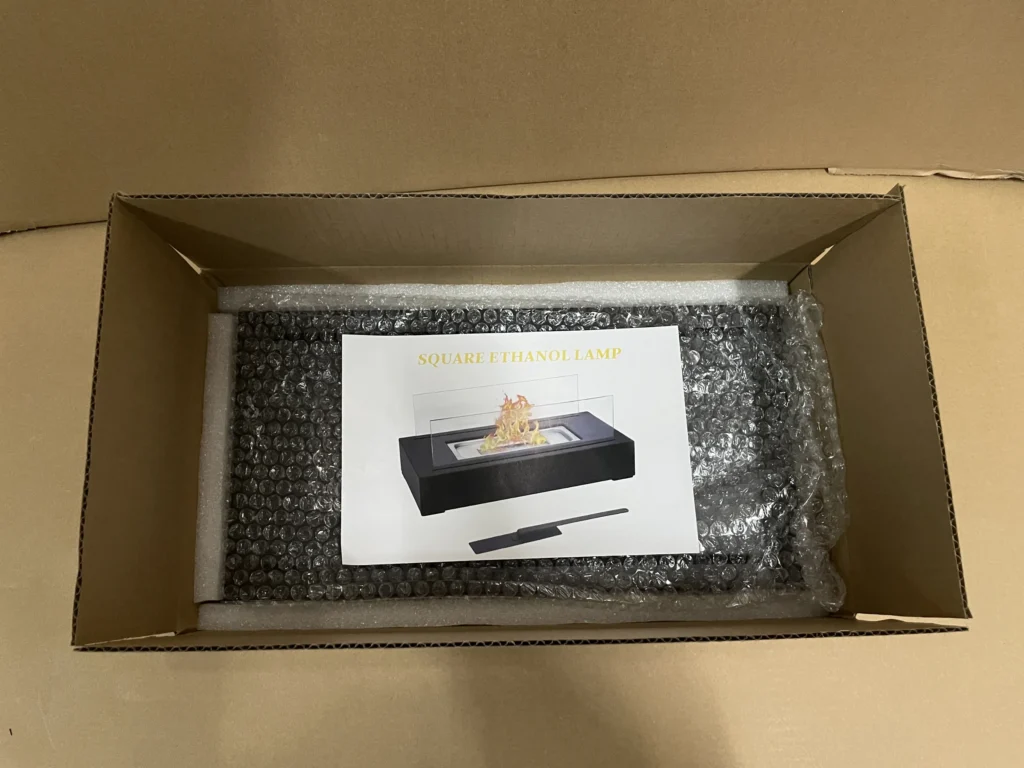
User Manual: The Core Operating Risk Control
The user manual should describe the product that is actually shipped, not a generic family of fireplaces. For manually operated ethanol fireplaces, the manual should cover the full use sequence: unpacking, inspection before use, placement, allowed fuel, maximum filling condition, ignition method, operation limits, flame extinguishing, cooling time, cleaning, storage and disposal. If accessories are included, the manual should explain their purpose and any limits on use.
Fuel information deserves special attention. A manual that says only “use ethanol” is usually too broad for buyer review. The supplier should specify the fuel type or quality expected by the tested design, avoid unsupported alternative fuels and warn against refilling while the product is hot or burning. If the burner has a maximum fill level or needs a specific extinguishing tool, the manual should state that plainly and match the physical product.
Placement instructions should be equally concrete. A decorative tabletop fireplace may be moved from a dining table to a hotel lounge, showroom, apartment balcony or retail display. The manual should identify stable, level and heat-resistant placement needs, clearance from combustible materials, supervision expectations and any indoor or outdoor limitations supported by the product design. If the product is intended for domestic decorative use, the manual should not promise heating performance that has not been evaluated.
Warnings Should Match Foreseeable Misuse
Good warnings are specific, visible and consistent. They should address the hazards that a real user can misunderstand: liquid fuel, open flame, hot surfaces, glass breakage, unstable placement, refilling, storage, children, pets and post-use cooling. The warning system should also match the hierarchy of controls. Design features and tested construction come first; warnings and instructions then explain the residual risks that remain.
Buyers should compare warnings across the product label, packaging, manual and online listing. If the manual warns against moving the fireplace while in use, the online listing should not show lifestyle images that suggest casual movement during burning. If the packaging says “indoor and outdoor,” the manual should clarify the conditions and restrictions. If a warning exists only in English but the target retail market requires another language, the documentation pack is not ready for that market.
Icons can help, but they do not remove the need for readable text. Symbols should be understandable, used consistently and supported by written instructions where the warning needs detail. For destination markets, buyers should also check whether the manual’s translation has been reviewed by a competent native speaker or compliance reviewer. Machine translation can create dangerous ambiguity around fuel, refilling or extinguishing instructions.
Language Coverage for EU Projects
For EU sales, language planning should be treated as a project requirement, not a final artwork task. The General Product Safety Regulation framework places strong emphasis on information that consumers can understand in the market where the product is made available. For importers, that means deciding the destination countries early enough to prepare manual, packaging and online-listing language versions before production.
A distributor selling the same tabletop fireplace into Germany, France, Spain and the Netherlands may need a different language set than a single-country retailer. A marketplace seller may also need safety information visible in the online offer before the consumer receives the product. Buyers should therefore map language requirements by channel: retail carton, printed manual, downloadable manual, marketplace listing, after-sales support and spare-parts guidance.
Language review is also a version-control issue. If the English master manual changes after a lab or safety review, every translation should be updated and rechecked. Otherwise, one market may receive current refilling instructions while another market receives older wording. A controlled manual version code, printed date or revision number helps importers audit this risk.
Online Listings Need Documentation Discipline Too
Documentation does not stop at the box. EU distance selling and marketplace channels put product information in front of consumers before delivery. An online listing should not overstate the product’s use, hide warnings, use the wrong product image or omit identity details that are necessary for the consumer and the supply chain. For a flame-producing decorative product, the listing should be treated as part of the safety information system.
Commercial teams often prefer short benefit-led product pages. That is understandable, but the safety layer still needs to be present. The listing should clearly identify the model, avoid unsupported certification claims, use accurate photos and provide important warnings or safety information in a form the customer can see before purchase. If the product is sold through marketplaces, the marketplace template should not strip out warnings or compress instructions into unclear fragments.
For HND sourcing discussions, buyers can use the public products page as the starting point for selecting the physical product family, then request project-specific documentation before approving final online content. The public page is useful for orientation, but the compliance review should happen at SKU and destination-market level.
How to Review a Supplier Manual Before Approval
A buyer does not need to rewrite the entire manual to review it effectively. A structured checklist is usually enough to find the important gaps before printing. Start with identity, then use sequence, warnings, language, artwork control and evidence matching. The review should be done on the final manual layout, not only on a Word draft, because page breaks, icons and warning hierarchy can change when the document is designed.
1. Match the manual to the exact product
Confirm model name, SKU, product dimensions, burner type, accessories and product photos. If the manual includes multiple models, check whether the instructions and warnings remain correct for the selected SKU. Avoid a manual that blends tabletop, wall-mounted and built-in fireplace instructions unless the differences are clearly separated.
2. Read the use sequence as a consumer would
Follow the manual from unpacking through first use and shutdown. Look for missing steps, ambiguous wording and assumptions that only factory staff would understand. If a user needs a tool or extinguishing accessory, the manual should state whether it is included and how it is used.
3. Check fuel and refilling controls
Fuel and refilling are central to tabletop ethanol fireplace safety. The manual should not invite experimentation with fuels, should describe maximum fill limits where applicable and should warn against refilling during operation or before cooling. Any product-specific fuel cup, burner insert or absorption material should be described accurately.
4. Check warning placement and priority
Critical warnings should not be buried in a dense paragraph after marketing text. A buyer should be able to identify which warnings appear on the product, on the carton, in the quick-start section and in the full manual. The warning hierarchy should make sense for a consumer who may skim.
5. Confirm translation and artwork ownership
Before mass production, ask who owns the master manual, who approves translations and who controls print-ready packaging files. If the supplier, importer and retailer each edit a different file, the final documentation pack can drift quickly. One approved source file and one revision log reduce that risk.
Private-Label Documentation Questions to Ask HND
Private-label orders introduce brand, packaging and language variables. During an HND project discussion, buyers should ask documentation questions alongside MOQ, sample lead time, packaging and product configuration. That keeps compliance-related decisions connected to commercial decisions instead of becoming a late correction.
- Which exact HND model, burner and accessory set will the manual describe?
- Which test reports, certificates or supplier declarations are available for that model or product family?
- Which product label information is fixed by the manufacturer, and which fields can carry the buyer’s brand?
- Which languages are needed for the target Member States, retailers or marketplaces?
- Will the carton artwork show safety warnings, importer details, barcode and handling marks before production?
- How will manual revisions be controlled if the burner, glass, packaging or accessory set changes?
- Can the supplier provide editable files and final print proofs for importer review?
These questions do not replace legal advice or laboratory evaluation, but they make the sourcing conversation more concrete. They also help buyers avoid approving a visually attractive sample without confirming the documents that will support the product in the market.
Common Documentation Gaps
The most common gap is model drift. The sample, quote, invoice, test evidence and manual use different names for the same product. Sometimes the difference is harmless, but it should still be mapped. A buyer should be able to show that “Model A,” “SKU 2026-01” and the retailer’s brand name all refer to the same fireplace and production version.
The second gap is unsupported claims. Labels or listings may say “certified,” “EU approved” or “compliant” without explaining which standard, report or product configuration supports the claim. A better approach is to connect claims to reviewed evidence. Buyers can link the sourcing discussion to HND’s certificates and accreditations, then request project-specific documents before final artwork approval.
The third gap is weak language control. A manual may be clear in English but vague in another language. This is especially risky for warnings around filling, refilling, extinguishing and cooling. Translation should not be treated as a layout-only service. It should be reviewed for technical meaning.
The fourth gap is missing reverse logic between production and documentation. If the factory changes a burner supplier, glass thickness, fuel cup or packaging insert, someone should decide whether the manual or warnings need revision. This connects directly to production-control review, which is why buyers should read documentation work alongside the EN 16647 factory production control checklist.
Link Documentation Review to Testing and Product Evidence
Labelling and manuals should not be reviewed in isolation. The best documentation pack is tied to product testing, risk assessment and production records. If a test report evaluates one configuration, the manual should not quietly describe another. If a risk assessment identifies hot surfaces or refilling misuse, the warnings and instructions should address those risks.
Buyers who are still early in the cluster can review HND’s wider guide to ethanol fireplace compliance in Europe and the specific article on EN 16647-1:2025 testing requirements. Those pages explain why documentation should sit beside testing, not after it. For tabletop products, HND’s tabletop ethanol fireplace safety guide also helps buyers identify user-facing hazards that should be covered by labels and manuals.
Product documentation is especially important before repeat orders. A buyer may approve the first shipment after a sample review, but a retailer may reorder months later after packaging artwork, supplier files or destination markets have changed. A stable documentation checklist lets the buyer compare each reorder against the approved baseline.
Importer Checklist Before Mass Production
Before approving mass production, the importer or brand owner should run a final documentation checkpoint. This checkpoint should happen after the product sample is accepted and before cartons, labels and manuals are printed in volume.
- Confirm the final model, SKU, burner, accessory set and product photos.
- Confirm the selected standard scope and avoid mixing manual and automatic fireplace claims.
- Check that product label, carton, manual and online listing use consistent model identity.
- Check that warnings cover fuel, open flame, hot surfaces, placement, refilling, children and cooling.
- Confirm destination-market languages for packaging, manuals and online offers.
- Check that supplier, importer or responsible economic-operator details are handled for the target route to market.
- Confirm that final print artwork matches the approved manual and label content.
- Save the approved files, revision dates and evidence index with the purchase order.
This is also the right time to contact the supplier if anything is unclear. For HND projects, buyers can use the contact page to request a documentation review alongside samples, packaging artwork and product selection.
How HND Buyers Can Use This Checklist
The checklist works best when it is introduced early. At RFQ stage, the buyer can tell HND which destination markets, retail channels and private-label requirements apply. At sample stage, the buyer can request the draft manual, label and carton information. At pre-production stage, the buyer can review final artwork, translations and evidence references. At shipment stage, the buyer can keep the approved pack with inspection and order files.
This approach reduces last-minute corrections. It also makes commercial discussions more precise. Instead of asking only whether a tabletop ethanol fireplace is “compliant,” the buyer can ask whether the selected model has matching test evidence, label identity, fuel instructions, warning language, packaging marks and revision control for the destination market.
For private-label brands, that level of clarity is useful even when the supplier provides strong support. The brand’s logo, packaging, manual style and marketplace copy become part of the product presentation. If those elements change the way a user understands the fireplace, they should be reviewed with the same seriousness as the sample itself.
FAQ
Does EN 16647-1:2025 apply to every ethanol fireplace?
No. Public standards summaries describe EN 16647-1:2025 around manually operated alcohol-powered flueless decorative fireplaces for domestic use. Automatic alcohol fireplaces and other product categories should be checked separately.
Is a test report enough for EU import documentation?
No. A test report is important evidence, but importers still need consistent labels, packaging, instructions, warnings, product identification and market documentation for the actual SKU being sold.
Can the user manual be finalized after production?
That is risky. The manual affects packaging artwork, translations, warnings and online listing content. It should be reviewed before mass-production printing and shipment.
Should private-label artwork include the importer details?
It depends on the route to market and legal role structure, but importer, manufacturer, authorised representative or responsible-contact details should be decided before label and carton printing for EU projects.
Do icons replace written warnings?
No. Icons can support warnings, but fuel, refilling, extinguishing, cooling and placement instructions often need clear written language that consumers can understand.
What is the biggest documentation mistake in tabletop ethanol fireplace sourcing?
The biggest mistake is mismatched identity: the test report, label, carton, manual and invoice describe the product differently, making it hard to prove which evidence supports the shipped SKU.
Can HND support private-label documentation review?
HND can discuss product selection, packaging and custom-service requirements. Buyers should request project-specific documents and evidence for the exact model, market and order configuration.