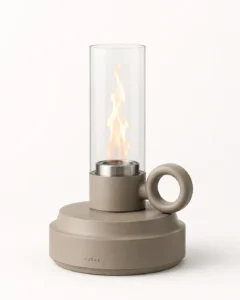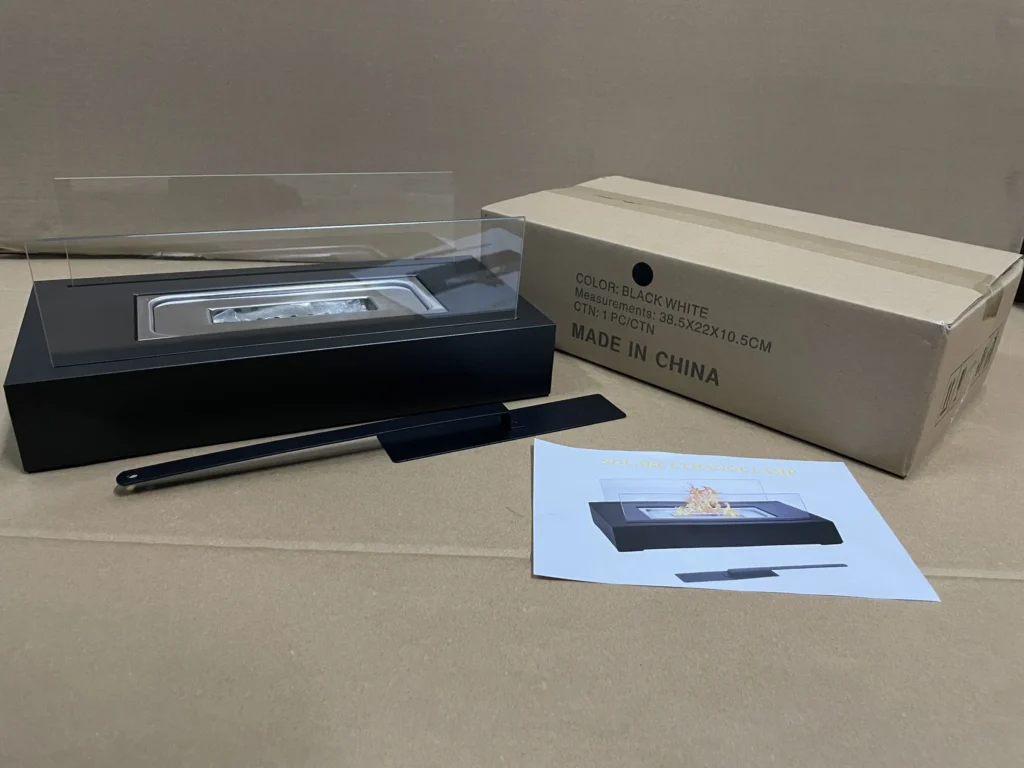
Quick Answer for B2B Buyers
A practical tabletop fireplace wholesale order should not start with every attractive model in a supplier catalog. For a first order, most importers, distributors and retail brands are better served by a focused model mix: one compact entry product, one or two core repeatable tabletop ethanol fireplaces, one higher-value visual model, and only limited finish or packaging variations until sell-through data is available. The buying team should approve samples, confirm burner and stability details, review warnings and instructions, check carton protection, define acceptable cosmetic standards, and ask for market-relevant documentation before mass production. The goal is to build a first order that is broad enough to test demand but narrow enough to control quality, inventory, packaging cost and after-sales risk.
Choosing models for a first wholesale order is different from building a mood board. Product photos can make ten tabletop fireplaces look equally promising, but purchasing risk is created by details that are less visible: burner opening, flame guard, glass fit, base weight, surface finish, refill instructions, carton drop protection, replacement parts, labeling space, MOQ, packing quantity and the number of SKUs a team can actually manage. A buyer who treats the first order as a structured test usually learns faster than a buyer who fills the container with random styles.
This guide is written for importers, distributors, wholesalers, e-commerce sellers, home decor retailers, sourcing managers and private-label product teams preparing to buy tabletop fireplaces in bulk. It builds on HND’s tabletop ethanol fireplace product range planning guide, the broader wholesale tabletop ethanol fireplace sourcing guide, and the tabletop vs freestanding fireplace format comparison. Here the question is more immediate: which tabletop fireplace models should be placed into the first wholesale order, and what should be confirmed before the purchase order is released?
Start With the Commercial Role of Each Model
A first tabletop fireplace order should give every model a clear business role. If two models have the same size, same finish, same price position and same visual effect, they are competing with each other before they ever reach the customer. That may be acceptable in a mature range with sales history, but it is rarely a good starting point for a new buyer. The first order should show enough variety to test market preference without creating a fragmented inventory problem.
Most first orders can be organized around four roles. The entry model gives the sales team an accessible opening price and helps e-commerce channels test demand. The core model is the design expected to repeat, so it should have stable construction, broad styling and reliable packaging. The premium model creates stronger visual merchandising and a higher perceived value for showrooms, hotels, restaurants or gift channels. The optional niche model tests a specific customer story, such as a wider panoramic flame view, a special color, a compact balcony format or a private-label seasonal package.
This role-based method prevents the first order from becoming a catalog dump. It also makes supplier conversations clearer. Instead of asking, “Which models are popular?”, the buyer can ask, “Which model is most stable for an entry price, which model is the most repeatable for retail, which model has the strongest visual impact, and which model is suitable for private-label packaging?” That question leads to better technical discussion because it connects design selection to market use.
Buyers who are still deciding whether ethanol fits the channel should first review HND’s ethanol vs electric vs gel fireplace comparison. A first wholesale order should only move forward after the category type fits the intended sales channel, product positioning and buyer responsibility. Tabletop ethanol fireplaces can be strong decorative flame products, but they are not simple impulse items when fuel, flame behavior and consumer instructions are part of the final offer.
Use a Narrow SKU Plan for the First Order
The most common first-order mistake is too many SKUs. A buyer sees many shapes and wants to test them all, but every additional SKU creates separate sample approval, photography, barcode management, packaging artwork, carton marking, spare part planning, quality control and inventory allocation. A broad order may look diversified, yet it often produces weak purchase quantities per SKU and unclear sales data.
A narrow SKU plan is usually stronger. For example, a distributor might select three tabletop fireplace models with two finishes each: a compact rectangular model in black and stainless steel, a mid-size round or square model in black and white, and one larger panoramic model in black. That produces six commercial SKUs, but only three structures need deep technical review. If the supplier supports customized packaging, the buyer can keep the product structure stable while testing brand presentation through packaging artwork and instruction language.
For a new retail brand, even three structures may be enough. The purpose of the first order is not to prove that every design can be sold. The purpose is to learn which size, price point, finish and visual style deserve repeat ordering. Buyers should be wary of first orders that include many low-quantity models only because the factory can supply them. Factory availability is not the same as market evidence.
SKU count should also match the sales channel. An online seller may need fewer shapes but better product content, carton durability and return handling. A brick-and-mortar retailer may need clearer good-better-best display logic. A distributor may need models that can serve several dealers without looking too specialized. A hospitality buyer may prioritize a stronger visual model and spare-part support over a broad decorative range. The first order should be designed around the channel that will actually sell the product, not around an abstract catalog plan.
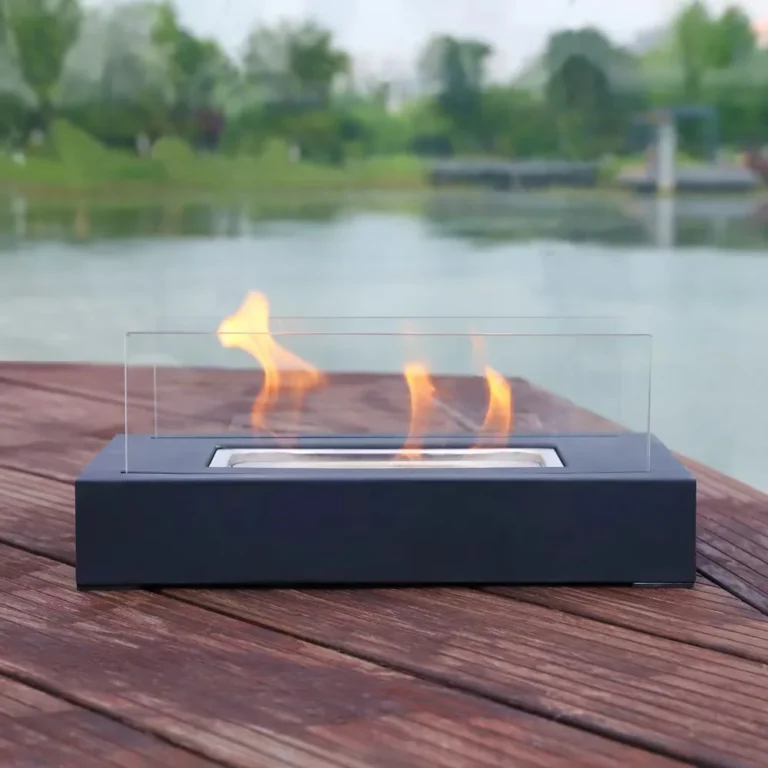
First Wholesale Order Model Selection Table
| Model role | What to select | Why it belongs in the first order | What to verify before buying |
|---|---|---|---|
| Entry tabletop model | Compact size, simple body, common finish, clear price point | Tests category demand and gives retailers an accessible opening offer | Base stability, burner design, instruction clarity, protective packaging and actual landed margin |
| Core repeatable model | Mid-size tabletop ethanol fireplace with broad styling and stable construction | Acts as the main reorder candidate if sales data is positive | Sample consistency, finish quality, glass fit, carton strength, MOQ and replacement part availability |
| Premium visual model | Larger or panoramic design with stronger display impact | Supports higher-ticket merchandising and brand differentiation | Weight, glass protection, flame visibility, packaging inserts, shipping cost and showroom handling |
| Private-label variation | Existing model with logo, finish, artwork or manual changes | Lets the buyer test brand positioning without full custom tooling | Artwork approval, label placement, color tolerance, manual language, barcode and carton marks |
| Custom or niche model | Special shape, seasonal style or modified body structure | Useful only when the buyer has a clear market reason or brand requirement | Development time, tooling need, sample rounds, MOQ, inspection standard and launch schedule |
This table is not a fixed formula. It is a decision filter. A buyer may choose two core models and no custom model, or one premium model and two entry models for a seasonal channel. What matters is that each SKU has a reason to exist. If the team cannot explain the role of a model, that model should probably wait until the second order.
Confirm Safety-Relevant Design Details Before SKU Approval
Safety review should happen before the order is treated as a pricing exercise. Alcohol-fuel tabletop products have attracted regulatory attention because incorrect product design, open fuel reservoirs, poor refill behavior and unclear warnings can create serious fire and burn hazards. The U.S. Consumer Product Safety Commission has warned about alcohol or liquid-burning fire pits that violate voluntary safety standards and present flame jetting and fire hazards. Health Canada has also assessed hazards related to pourable alcohol-based fuels and portable firepots. These references do not mean every tabletop ethanol fireplace is the same; they mean buyers should treat burner design, refueling instructions, warnings and market rules as core purchasing questions.
For a first wholesale order, the buyer should ask the supplier to explain the burner structure, fuel type assumptions, extinguishing method, refill warnings, flame guard design, base stability, glass position and instruction layout. If the product is intended for a market where a specific standard, test report, label or certification expectation applies, the buyer should request the relevant documents before placing the order. HND’s certificates and accreditations page can be used as a starting point for document discussion, but the buyer still needs to verify requirements for the destination market and sales channel.
Sample testing should include normal handling, not only appearance review. The buyer should check whether the fireplace sits flat, whether the glass or guard is stable, whether sharp edges are controlled, whether the finish scratches easily, whether the burner can be accessed safely, whether the extinguisher or lid fits cleanly, and whether the instruction wording is understandable to the final customer. If a product looks good in a photo but creates confusion during use, it is not ready for a first bulk order.
Do Not Let Customization Overload the First Order
Customization can make a tabletop fireplace range more defensible, but it can also make a first order slower and riskier. For most new buyers, the safest path is to begin with existing models and apply controlled customization: logo engraving, packaging artwork, manual language, carton marks, color selection or a modest styling change. HND supports practical services such as free logo engraving, customized packaging and custom cutting and styling, but the buyer should decide which changes are commercially necessary at the first order stage.
A private-label buyer may want a unique look immediately. That is understandable, especially if the product will sit beside competing decor or outdoor-living items. The question is whether the customization changes the structure, the tooling or the safety review. Packaging artwork and logo placement are usually easier to control than a new burner opening, new glass size or new body shape. If the buyer needs a deeper change, the project may belong in a custom development path rather than a normal first wholesale order. HND’s custom molding service is more relevant when the design requires a new form or deeper structural development.
Customization should also be connected to reorder potential. A custom color that looks good in a presentation may not justify higher MOQ if the buyer cannot forecast demand. A fully custom package may be attractive, but it can create leftover packaging inventory if the first order is too small. The first order should balance brand identity with learning speed. If a buyer can validate demand with an existing model plus controlled branding, the second order can carry more confident customization.
Check Packaging, Carton Data and Shipping Logic Early
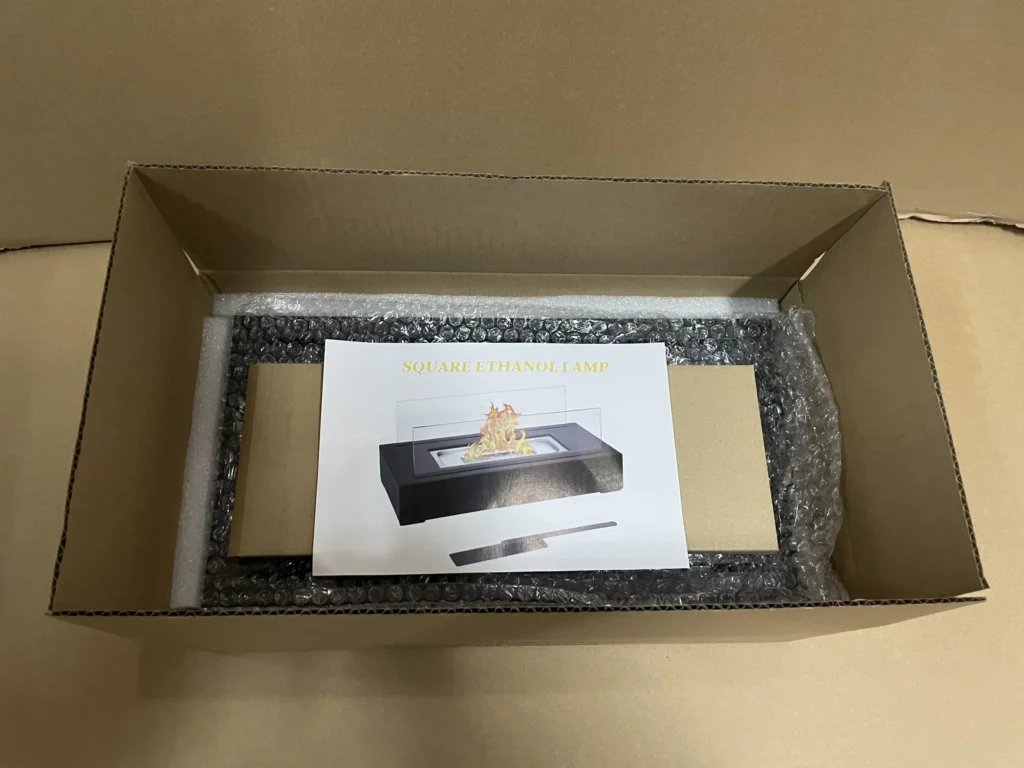
Packaging is not a final administrative step. It directly affects damage rate, retail presentation, freight cost, warehouse handling and customer satisfaction. A tabletop fireplace may include glass, metal, burner parts and finish-sensitive surfaces. Poor inner protection can turn a promising order into a return problem. Oversized packaging can weaken landed cost even when the unit price looks attractive.
Before approving the first order, buyers should ask for carton dimensions, gross weight, net weight, packing quantity, inner protection method, pallet or container loading assumptions, drop-test expectations if applicable, barcode placement and carton marks. For e-commerce channels, packaging should be reviewed with courier handling in mind. For retail channels, the color box must communicate the product clearly and leave enough space for warnings, fuel-use guidance, brand story and legal information required by the destination market.
HND’s bulk export and packaging-related services can support the operational discussion, but the buying team should still compare carton data across selected models. Two fireplaces with similar selling prices may have very different shipping economics. A larger panoramic model may deliver stronger display impact, but it may also require better glass protection and a higher freight allowance. The first order should include this math before the quote is accepted.
Before building the final SKU mix, buyers can use HND’s tabletop fireplace sample evaluation guide to screen structure, safety details, packaging, manuals, and production repeatability before a bulk order is released.
Build the First Order Around Samples, Not Catalog Confidence
Samples are the bridge between model selection and mass production. A buyer should not approve a tabletop fireplace wholesale order from images alone. At minimum, sample review should confirm appearance, dimensions, material feel, surface finish, flame area, burner details, base stability, glass fit, instruction clarity, packaging protection and whether the received sample matches the quoted model. If a private-label package is part of the order, a packaging mockup or production-ready artwork proof should be approved before mass production.
The sample process should be written into the buying sequence. First, shortlist model roles. Second, request samples for the chosen structures. Third, inspect and record findings. Fourth, clarify changes. Fifth, confirm whether the mass-production unit must match the exact approved sample. Sixth, release the purchase order only after the specification, packaging, documentation and inspection expectations are aligned. This process may feel slower than immediate ordering, but it reduces the chance of receiving a product range that cannot be sold confidently.
For importers and distributors, the sample record should also support internal sales teams. Photos, measurements, selling points, warnings, carton details and approved changes help the sales team understand what is being purchased. For retailers, sample records help merchandising and content teams prepare listings, displays and customer education. For private-label brands, sample approval becomes the reference point for future repeat orders.
Ask Supplier Questions That Reveal Operational Readiness
A supplier conversation should go beyond price and MOQ. The buyer should ask which models are most repeatable, which finishes have the most stable production history, which carton structures are proven, which models are easiest to customize, which spare parts or replacement components should be planned, and which documents are usually requested by buyers in the destination market. A manufacturer that can answer these questions clearly is more useful than a supplier that only sends a long model list.
The buyer should also ask how the supplier handles pre-production confirmation. Are samples photographed and documented before mass production? Are packaging files checked before printing? Are warning labels and manuals reviewed before packing? Can the supplier separate different SKU cartons clearly? What inspection points are used before shipment? What happens if a finish, glass part or packaging component does not match the approved sample?
These questions help identify whether a first order can become repeatable. A buyer is not only purchasing tabletop fireplaces; the buyer is testing whether the supplier can support a product program. That program may later include customized fireplace services, more finishes, additional models, seasonal packaging, larger orders or new market requirements. The first order should reveal whether that path is realistic.
Plan the Reorder Before Placing the First Order
A strong first wholesale order is designed to create usable sales data. Before placing the order, decide how success will be measured. Is the priority online conversion, retailer reorder rate, showroom response, margin, low return rate, brand presentation or a distributor’s ability to open new accounts? Different goals may point to different model choices.
For example, an e-commerce seller may reorder the model with the lowest return rate and clearest content story, not the most dramatic design. A distributor may reorder the model that dealers can explain easily and display safely. A home decor retailer may reorder the style that fits seasonal displays and has dependable packaging. A private-label brand may reorder the model that supports the best combination of brand presentation, margin and customer feedback.
Buyers should also decide what information will be collected after launch: sell-through by SKU, customer questions, return reasons, packaging damage, product reviews, dealer feedback, replacement-part requests and margin after freight. This information turns the first order into a controlled test. Without it, the second order becomes another guess.
Recommended First-Order Checklist
- Choose model roles before choosing quantities: entry, core, premium and optional niche.
- Limit the first order to a manageable number of structures and finish variations.
- Request samples for every structure that will enter mass production.
- Inspect stability, burner construction, flame guard or glass position, finish and instruction clarity.
- Confirm market-relevant safety documents, labels and warnings before release.
- Review carton dimensions, inner protection, packaging artwork and shipping assumptions.
- Define acceptable cosmetic standards and mass-production match to the approved sample.
- Clarify MOQ, lead time, payment terms, inspection timing and replacement-part support.
- Plan launch metrics so the second order is based on evidence, not memory.
This checklist is intentionally practical. A first tabletop fireplace wholesale order should give the buyer enough information to decide whether to repeat, expand, customize or stop. If the order is too broad, the learning becomes noisy. If the order skips sample and document review, the risk shifts into the warehouse, the sales channel and the end customer. A good first order creates a controlled foundation for the next order.
When to Choose Existing Models and When to Customize
Existing models are usually the better starting point when the buyer is entering the tabletop ethanol fireplace category for the first time, testing a new country, building a seasonal range or trying to control MOQ. They are also practical when the main differentiation can come from finish, package design, photography, assortment logic or channel positioning. Existing models help the buyer move faster from sample review to launch.
Customization becomes more appropriate when the buyer already understands demand, needs exclusive design language, has retailer-specific requirements or wants to build a defensible private-label line. Even then, customization should be staged. Start with brand and packaging changes, then move to surface finish or styling, and only then consider deeper structural development. For a first order, deep customization should be justified by a clear commercial reason, not just a preference for novelty.
If your team is comparing existing model selection with a more developed OEM or ODM path, review HND’s services and products pages before requesting a quote. The clearer the buyer is about channel, target price, packaging, market and required documents, the more useful the supplier response will be.
CTA: Discuss Your First Bulk Order
If you are preparing a first tabletop fireplace wholesale order, HND can help review model roles, sample priorities, packaging direction, logo or private-label needs, and bulk export planning. Share your target market, sales channel, preferred model types, estimated order quantity, packaging expectations and any document requirements, and the HND team can help you turn a broad catalog interest into a focused first-order plan. Contact HND Fireplace to discuss your first bulk order.
FAQs About Tabletop Fireplace Wholesale Orders
How many tabletop fireplace models should be in a first wholesale order?
Many first orders work best with three to five model roles rather than a wide catalog selection. The exact number depends on MOQ, budget, channel and packaging needs, but each model should have a clear purpose such as entry price, core repeat item, premium display or private-label test.
Should I choose existing models or custom tabletop fireplaces first?
Existing models are usually better for the first order because they reduce development time and make sample approval easier. Customization can be added through logo, packaging, finish or controlled styling changes. Deeper structural customization is better when the buyer has a proven market requirement.
What should I check in tabletop fireplace samples?
Check appearance, dimensions, base stability, burner construction, glass or flame guard fit, surface finish, extinguisher or lid function, instruction wording, warning labels and packaging protection. The sample should represent what mass production is expected to match.
What safety documents should I request from a supplier?
The right documents depend on the destination market and sales channel. Buyers should ask for available test reports, certificates, product instructions, warning labels, material information and any documentation relevant to local rules or retailer requirements. Do not assume one document covers every market.
Is packaging important for a tabletop fireplace wholesale order?
Yes. Packaging affects glass protection, finish protection, freight cost, retail presentation, warning communication and customer satisfaction. Buyers should review carton size, inner inserts, gross weight, barcode placement, carton marks and color box design before mass production.
When should a buyer add private-label packaging?
Private-label packaging is useful when the buyer has a clear channel plan and enough order volume to justify artwork, printing and approval steps. For very early testing, a controlled package change may be better than a fully custom structure.
What information should I send when requesting a quote?
Send target market, sales channel, preferred models or model roles, estimated quantity, finish preferences, packaging needs, logo requirements, document expectations, target launch date and shipping destination. A clear RFQ helps the supplier respond with practical model and order recommendations.
Sources
- GovInfo Federal Register record for CPSC fire pots and gel fuel advance notice
- NIST publication: Evaluation of Firepots and Gel Fuels
- NFPA gel fuel warning safety tip sheet
- Health Canada recall warning about rubbing alcohol used as firepot fuel
- UL Standards & Engagement article on reducing fuel-alcohol burn risk with UL 1370
- UL Standards & Engagement listing for UL 1370, Standard for Unvented Alcohol Fuel Burning Decorative Appliances