For an EU importer, asking an ethanol fireplace compliance documents supplier for “certificates” is only the starting point. A tabletop ethanol fireplace is a consumer-facing live-flame product, so the document pack has to prove more than a general safety claim. It should show that the exact model, burner, fuel wording, glass, label, manual, packaging, and production version being ordered have been reviewed for the intended European sales route.
This guide is written for importers, distributors, private-label brands, retailers, sourcing teams, compliance managers, and purchasing teams that are already close to RFQ or sample approval. The goal is practical: know which files to request before ordering, how to judge whether they match the product, and how to avoid relying on a folder of attractive but weak documents. It does not replace legal advice, accredited testing, or market-specific review. It gives buyers a disciplined way to ask better supplier questions before money, moulds, packaging, and launch dates lock the project in place.
Quick Answer
Before ordering a tabletop ethanol fireplace for the EU market, request a model-specific compliance document pack from the supplier. The core pack should include product identification, applicable standard scope, test report or test-plan evidence, risk assessment or safety review, controlled drawings, bill of materials, burner and fuel-box details, product label, warning labels, packaging artwork, user manual, language plan, batch traceability, inspection criteria, change-control history, supplier identity, importer-facing contact information, and corrective-action support. Review every file against the exact SKU, sample, quotation, artwork, and shipment plan. A certificate is useful only when it can be traced to the model and version being purchased. Treat missing, generic, mismatched, outdated, or unverifiable documents as pre-RFQ risk, not as small paperwork issues to solve after deposit.
Why Document Review Belongs Before the Purchase Order
Many buyers ask for compliance documents late because the early conversation feels commercial: unit price, MOQ, sample lead time, colour, packing method, and shipping date. That sequence is understandable, but it is risky for a decorative ethanol fireplace. Once the product sample is approved and the carton artwork is designed, changing warnings, manuals, burner configuration, fuel wording, or model references becomes slower and more expensive.
For custom projects, this same discipline should start even earlier. Before a buyer approves a custom mold, HND’s ethanol fireplace pre tooling compliance review guide explains how to connect concept drawings, burner choices, labels, manuals and sample planning before tooling cost is locked in.
Document review should start before the purchase order because the documents define what the buyer is actually buying. The same exterior fireplace can become a different compliance project when the burner changes, glass height changes, fuel instruction changes, manual translation changes, or the product is sold through a different channel. A retail buyer selling in Germany, France, Spain, and the Netherlands may need a different documentation discipline from a single hospitality project buyer. The supplier should understand that distinction before the quote is treated as final.
For EU-focused projects, buyers should first confirm the broader compliance context with HND’s EN 16647-1:2025 guide for tabletop ethanol fireplaces and the earlier planning article on ethanol fireplace compliance before sampling. Those pages explain why the sample is not only a design preview. It is the first physical proof that the supplier, product category, documentation, and buyer requirements are moving in the same direction.
The document pack is therefore a buying control. It helps the importer decide whether to continue with the model, ask for a revised sample, narrow the sales market, involve a third-party lab, redesign a warning layout, or pause the supplier before deposit. Good documents do not remove every risk, but weak documents make every downstream decision harder to defend.
Start With Product Scope, Not a Certificate Name
The first document to request is not always the certificate. It is a clear product identification sheet. The buyer needs to know the model name, model number, product family, dimensions, burner type, fuel description, material list, glass or guard configuration, accessories, packaging style, intended use, and proposed sales channels. Without this anchor, the rest of the pack can look impressive while still belonging to a different product.
Public standards listings describe EN 16647-1:2025 as a standard for alcohol-powered flueless decorative fireplaces, with safety requirements and test methods for manually operated decorative fireplaces for domestic use. That scope matters when reviewing a supplier’s documents. A manually operated tabletop ethanol fireplace should not be documented as if it were an automatic alcohol fireplace, an outdoor heater, a catering burner, or a generic decorative article. If the supplier cannot explain the product category in plain language, the buyer should slow the RFQ process.
The buyer should also separate a standard reference from a product claim. A supplier may write “EN 16647” in a catalogue, quotation, or email. That wording does not show whether the exact model has been tested, whether the test report covers the current burner, whether the manual reflects the tested product, or whether packaging warnings have been updated for the buyer’s private-label artwork. The useful question is: “Which files connect this exact model and version to the target EU compliance path?”
For supplier selection context, pair this document checklist with HND’s EN 16647 fireplace manufacturer China sourcing guide. The sourcing guide helps shortlist factories. This article helps evaluate whether a shortlisted factory can provide a document pack strong enough for importer review.
The Core Compliance Document Pack
A useful supplier document pack is not measured by the number of PDFs. It is measured by whether each file helps the buyer answer a real approval question. The table below gives purchasing and compliance teams a structured request list before sample confirmation or mass-production deposit.
| Document or evidence | What it should help confirm | Buyer review risk |
|---|---|---|
| Product identification sheet | Exact model, version, dimensions, burner, glass, accessories, fuel wording and intended use. | Other documents may refer to a similar but different fireplace. |
| Applicable standard and scope statement | Why the supplier believes the model fits the relevant manually operated decorative fireplace scope. | The wrong product category may be assumed during testing or sales. |
| Test report or test plan | Whether model-specific evidence exists, or what testing will be completed before shipment. | A generic certificate may be mistaken for proof of the exact SKU. |
| Risk assessment or safety review | Known hazards, intended users, misuse scenarios, warnings and control measures. | Important user and product risks may be left only to the manual writer. |
| Controlled drawings and BOM | Version of body, burner, glass, fasteners, packaging and critical parts. | Production changes may break the evidence trail. |
| Label, warning and packaging artwork | Product identity, safety warnings, importer details, language coverage and carton information. | Retail artwork may conflict with the tested or approved product information. |
| User manual | Assembly, placement, filling, ignition, extinguishing, cooling, refilling, storage and maintenance guidance. | Consumers may receive unclear or inconsistent safety instructions. |
| Inspection and traceability records | How incoming parts, assembly, final inspection, batch identity and shipment checks are controlled. | The buyer may not be able to link a shipment to the approved sample. |
| Change-control record | How the supplier records updates to burner, glass, body, manual, carton or label versions. | An approved document pack can become outdated without anyone noticing. |
For many buyers, the most valuable file is the model matrix. A matrix can show which models share the same burner, body family, glass component, manual, packaging approach, and test evidence. It helps the importer see whether a report is truly relevant or only adjacent. It also helps separate a standard product order from a private-label variation that needs extra review.
If your team is still building the safety baseline for the category, review HND’s tabletop ethanol fireplace safety guide before requesting final files. Buyers who need to check supplier credibility can also compare the document pack against HND’s certificates and accreditations page, while remembering that public company credentials do not replace model-specific evidence for the product being ordered.
How to Review Supplier Documents for Fit
Start with the file names, dates, holders, model numbers, photos, drawings and revision codes. They should tell one consistent story. If the quotation names model HND-TF-220, the test report shows HND-TF-200, the manual uses a generic product family, and the carton artwork has no model reference, the buyer should not treat the pack as complete. Ask the supplier to reconcile the difference in writing.
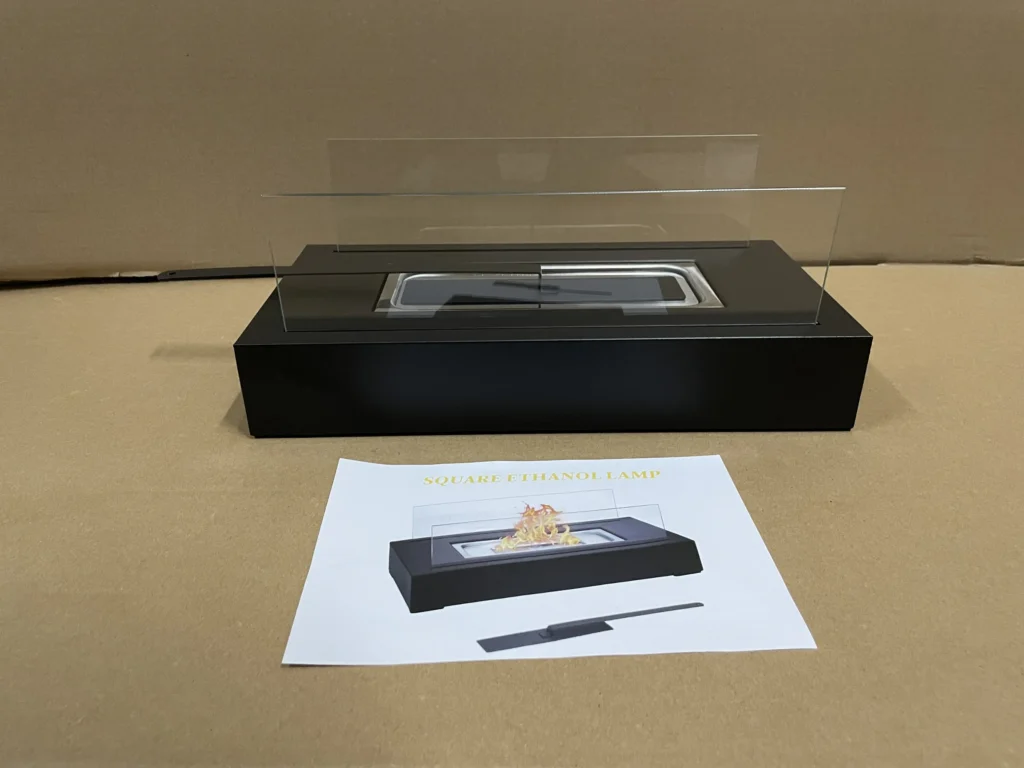
Next, compare the approved sample against the documents. Check the burner opening, fuel-box construction, flame path, glass guard, base material, feet, accessories, extinguishing tool, decorative stones, warning label location, carton layout, and manual illustrations. A small physical change can create a big documentation question if the report, manual, and product label no longer describe the same thing.
Then review the consumer-facing documents together. The product label, warning label, carton, user manual, and online listing should not contradict one another. Fuel wording, indoor-use guidance, cooling time, refilling warnings, placement distances, prohibited fuels, children-and-pet warnings, and maintenance instructions should be consistent. HND’s article on EN 16647 labelling and user manual requirements gives a deeper checklist for this stage.
Finally, review the manufacturing controls. A supplier may have a good report and still have weak batch discipline. Ask how approved components are controlled, how incoming glass or burners are checked, how final inspection is recorded, how packaging is verified before mass production, and how nonconforming products are handled. HND’s factory production control guide explains why repeat shipments need more than a clean first sample.
EU Importer Questions to Ask Before Ordering
Regulation (EU) 2023/988 is the EU’s current general product safety framework for consumer products. For an importer, the practical effect is that product safety is not just a supplier-side statement. The importer should be able to understand the product, keep relevant records, support traceability, cooperate with market surveillance where required, and act if a safety issue appears. This is why the document pack should be reviewed before the product enters the market, not after a customer or platform asks for proof.
Use these questions before approving the purchase order:
- Does each document identify the exact product model and version being ordered?
- Does the supplier explain why the product belongs in the selected compliance scope?
- Does the report, test plan or technical evidence match the burner, glass, fuel wording and use environment?
- Are warnings, labels, packaging and manual content consistent across files?
- Are language versions planned for the destination markets before artwork approval?
- Does the supplier keep controlled drawings, BOMs, inspection records and batch traceability?
- Is there a written process for changes after sample approval?
- Can the supplier support importer records, retailer requests and corrective actions?
The buyer does not need every final file before the first conversation, but the supplier should be able to explain the path. If the answer is always “later”, “same as all products”, or “certificate is enough”, the importer has a risk signal. Compliance-ready suppliers normally understand that documentation is part of the product, especially for a live-flame consumer item.

Documents for Private-Label and OEM Projects
Private-label projects need stricter document control because the buyer may change the brand, colour, finish, packaging, manual cover, barcode, warning layout, carton marks, or accessory set. These changes can look commercial, but they may affect the evidence trail. A new logo does not usually change product safety by itself. A changed warning label, changed fuel wording, changed burner, changed glass guard, changed packing method, or changed use instruction may be more significant.
Before opening moulds, printing cartons, or confirming mass production, ask the supplier to prepare a document change list. It should show which files are unchanged, which files are buyer-specific, and which files need further review. HND’s customized service page is useful for buyers who need to discuss product shape, branding, packaging and documentation together instead of treating the manual as an afterthought.
For OEM development, the document pack should be tied to design freeze. The buyer and supplier should agree which dimensions, burner design, glass position, materials, finishing process, accessories and packaging details are locked before testing or final document creation. If changes continue after testing, the supplier should explain whether additional review is needed. A clean compliance pack is built from stable product information.
How to Use the Checklist in an RFQ
The best time to request documents is before the supplier spends time only on price. In the RFQ, divide the request into “available now”, “available after NDA”, “available after sample order”, and “available before mass production”. This is more realistic than demanding every confidential file in the first email, and it lets professional suppliers respond without exposing unrelated customer documents.
For example, the supplier may share a public certificate, product photos, standard manual sample, and model list during the first RFQ. After the buyer selects a model, the supplier may share drawings, BOM summary, model-specific report details, packaging artwork, and inspection criteria under NDA. Before mass production, the buyer should expect final label files, manual version, carton version, pre-shipment inspection checklist, and batch identification method.
Buyers should also keep a review register. Record file name, date received, version, model covered, open questions, supplier answers, reviewer name and approval status. This simple register prevents a common problem: the buyer receives many files across email, chat and cloud folders, but no one can later say which version was approved. For repeat orders, the register becomes a fast way to detect changes.
When comparing products, use HND’s products page to keep the commercial model discussion separate from the documentation request. The model that looks most attractive in a catalogue is not always the model with the strongest evidence pack for a specific EU channel.
Red Flags in a Supplier Document Pack
Document problems often appear as small inconsistencies. A model number is missing. A report holder does not match the supplier. A manual has no version date. The product photo in a report shows a different glass design. The carton artwork uses a fuel instruction that is not repeated in the manual. The label has no clear importer-facing information. The supplier sends screenshots instead of controlled files. None of these issues proves the product is unsafe, but each one deserves review before the buyer orders.
Other red flags are more direct. Be cautious when a supplier refuses to identify the applicable standard scope, treats all ethanol fireplaces as the same, cannot explain whether the product is manual or automatic, cannot provide any evidence tied to the model, or says the importer can fix warnings after shipment. Also be careful with documents that appear copied, incomplete, expired, unrelated to the model, or unsupported by sample evidence.
Do not use one document to answer every question. A certificate may support a claim about testing or assessment. It does not automatically prove that the current production batch, private-label carton, translated manual, online listing, and importer records are complete. A buyer-friendly supplier will help connect these points; a weak supplier will try to close the conversation with one file.
Practical Approval Workflow
A simple approval workflow can protect the project without slowing it unnecessarily. First, define the target market, sales channel and product category. Second, select the candidate model and request the supplier’s document pack. Third, compare the pack against the sample, quotation and artwork. Fourth, list gaps and request written answers. Fifth, decide whether to proceed, test, revise, or reject. Sixth, freeze the approved versions before mass production. Seventh, keep the final pack with shipment and batch records.
For buyers still defining the testing path, HND’s EN 16647-1:2025 testing requirements guide explains how test evidence fits into the broader purchasing decision. For buyers who need a narrower document-first overview, HND’s earlier article on ethanol fireplace product documentation in the EU explains why documentation should be treated as part of the product itself.
Once the document pack is acceptable, the buyer can move to commercial closure with more confidence. The goal is not to make sourcing complicated. The goal is to make the right questions visible early, while there is still time to choose another model, adjust packaging, clarify language, or ask for additional evidence.
FAQs
Is a supplier certificate enough before ordering ethanol fireplaces?
No. A certificate can be useful, but it should be matched to the exact product model, version, burner, fuel wording, label, manual and intended market. Buyers should request the supporting document pack, not only a single file.
Should an EU importer request documents before or after sampling?
Request the initial document pack before or during sampling. The sample should be reviewed together with product scope, warnings, manual content, packaging and testing evidence so the buyer does not approve a physical product that the documents cannot support.
What is the most important document in the pack?
The product identification sheet is often the most important starting point because it anchors all other files to the exact SKU. Without clear model identity, reports, manuals and labels may look relevant while covering a different product.
How should private-label buyers handle document changes?
Private-label buyers should keep a change list for branding, packaging, warnings, manual language, accessories, materials and burner details. The supplier should explain which changes are cosmetic and which may require further review.
Can the importer rely on the supplier to keep all records?
The supplier should maintain manufacturing and technical records, but the importer also needs its own purchasing and market records. Keep final versions, supplier answers, inspection results, shipment identity and corrective-action contacts in an importer-controlled folder.
What if the supplier will not share confidential reports before payment?
Use stages. Ask for public or redacted evidence first, then request model-specific files under NDA or after sample order. A reasonable confidentiality boundary is normal; refusing to explain the evidence path is the bigger concern.
Which HND page should I read next?
If you are still choosing a supplier, read the EN 16647 fireplace manufacturer China sourcing guide. If your model is already selected, review the labelling and user-manual guide, then prepare your document questions before contacting HND through the contact page.
Sources
- European Union, Regulation (EU) 2023/988 on general product safety, EUR-Lex.
- UK Business, EU General Product Safety Regulation guidance for businesses.
- GOV.UK, product safety law advice for manufacturers and importers.
- EVS standards catalogue listing for EVS-EN 16647-1:2025.
- ELOT standards catalogue listing for EN 16647-1:2025.
Ready to review a specific document pack before purchase? Contact HND with the model, target market, packaging plan and current supplier files so the discussion can focus on the exact product you plan to order.