
Before comparing supplier prices, buyers should also screen safety risk at the category level. HND’s tabletop ethanol fireplace safety guide explains flame-jetting, pool-fire, stability, refuelling and documentation checks that belong before sample approval.
Quick answer for B2B buyers
Sourcing wholesale tabletop ethanol fireplaces is not only a search for a low unit price. Importers, distributors, retailers and private-label brands need to confirm whether the supplier can provide repeatable models, stable finishing, clear fuel-use warnings, reliable packaging, market-appropriate documentation, realistic MOQ terms and sample quality that matches the final bulk order. A practical sourcing process starts with a focused product range, then moves through supplier qualification, specification review, sample approval, packaging confirmation, compliance checks, landed-cost analysis and written RFQ terms. The safest commercial route is to shortlist manufacturers that understand tabletop flame-product risk, can support customization without overpromising, and are willing to put every material, burner, carton, manual, label and inspection requirement into the purchase agreement before production begins.
Why wholesale sourcing needs a different checklist
A tabletop ethanol fireplace looks simple in a catalog photo: a compact body, a burner, a visible flame and sometimes glass protection. For a consumer, that may be enough to begin comparing styles. For a B2B buyer, it is only the start. The same product has to move through supplier quotation, sample shipment, quality approval, export packaging, market instructions, warehousing, retail presentation, customer service and reorder planning. A sourcing mistake made at the sample or RFQ stage can become an expensive problem after a container arrives.
The first two articles in this cluster looked at whether the tabletop ethanol fireplace market is worth evaluating and how to build a practical tabletop ethanol fireplace product range. This guide moves to the buying execution stage. It is written for teams that are ready to contact suppliers, request samples, compare quotations and decide whether a manufacturer can support wholesale, retail or private-label distribution.
Search results for wholesale tabletop ethanol fireplaces are heavily commercial. Marketplace pages list many suppliers, factories, trading companies, MOQ levels and product shapes. That is useful for market scanning, but it can also make the category feel easier than it is. A buyer should treat each listing as a lead, not as proof that the supplier is ready for the buyer’s market. The stronger process is to turn the marketplace search into a controlled supplier qualification workflow.
Step 1: define the wholesale role before contacting suppliers
Before asking for prices, define what the product must do in your business. A home decor chain may need giftable tabletop units with strong shelf presentation. An importer may want a compact assortment that works across several retail accounts. A hospitality supplier may need statement models for restaurants, lounges or outdoor dining concepts. An e-commerce brand may need private-label packaging, clear product photography and replacement-part support. The right sourcing route depends on the role.
This matters because suppliers respond better to specific requirements than to broad questions. “Send your best price for tabletop fireplace” usually produces a loose catalog and a price range. “We need three tabletop ethanol fireplace models for retail channels in Western Europe, with glass protection, black and stainless finishes, individual color box packaging, English manual, warning labels, sample approval and first-order quotation for 500 units per SKU” gives the supplier enough information to respond professionally.
The buying team should also decide how much customization is necessary at the first order stage. Many first-time category buyers are better served by existing models with controlled changes: logo placement, finish, packaging artwork, instruction language and carton structure. Deep structural customization, such as a new body shape or burner system, can be appropriate for established brands, but it usually requires more tooling discussion, longer sample development and more careful validation.
After the supplier shortlist is clear, move from sourcing criteria into SKU execution with HND’s first tabletop fireplace wholesale order guide, which explains how to choose entry, core and premium models before releasing a purchase order.
Step 2: separate manufacturers from product-listing noise
Wholesale search results often mix direct manufacturers, trading companies, category marketplaces and retailers. None of those sources is automatically good or bad, but they should be evaluated differently. A manufacturer may offer better control over materials, finishing, tooling, packaging and production timing. A trading company may provide broader catalog access and communication convenience, but the buyer still needs clarity on the actual production site, responsibility for quality control and access to model-specific documents.
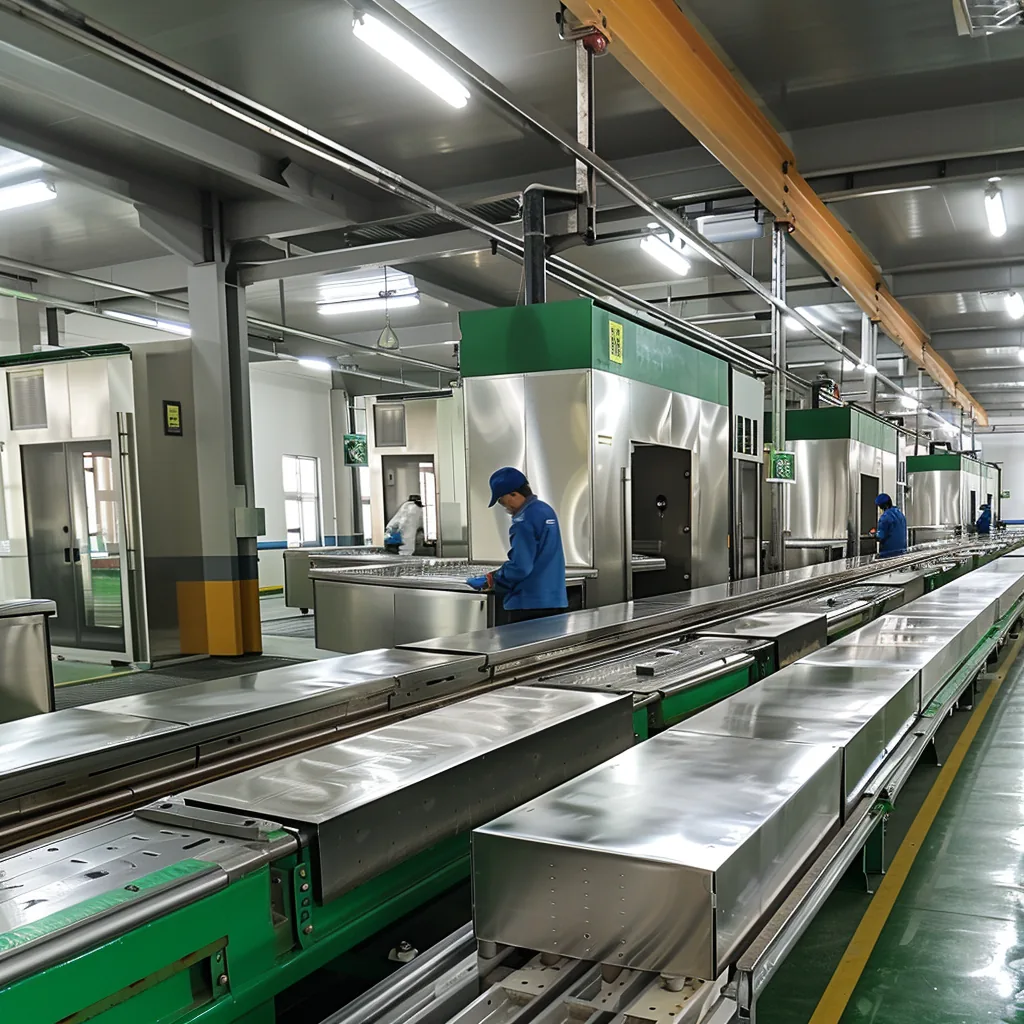
Start by asking whether the supplier can describe the production process behind the models you want. For tabletop ethanol fireplaces, relevant processes may include metal cutting, forming, welding or joining, surface finishing, glass sourcing, burner assembly, packaging, inspection and export preparation. A real production partner should be able to explain which processes are in-house, which are outsourced, how samples are controlled, and how bulk goods are checked against the approved sample.
HND supports buyers through existing tabletop and portable fireplace styles, bulk export services, customized product options, custom cutting and styling, custom molding, logo engraving and customized packaging. Buyers should use those capabilities as discussion points, then confirm the exact scope, MOQ, timing and documentation for their own market.
Supplier qualification table
| Decision area | What to ask the supplier | Why it matters for wholesale buyers | Evidence to request |
|---|---|---|---|
| Product scope | Which tabletop ethanol fireplace models are stable for repeat orders? | Prevents a range built from discontinued or one-off designs. | Model list, photos, dimensions, material details and current availability. |
| Manufacturing role | Are you the manufacturer, a trading company, or a mixed supplier? | Clarifies control over quality, lead time, customization and responsibility. | Factory profile, process photos, business documents and production explanation. |
| Safety design | How is fuel handled, how is the burner closed, and what warnings are supplied? | Decorative flame products carry fuel and refuelling risks that must be reviewed before sale. | Manual, warning label, burner details, market documents and sample testing notes. |
| Sample control | Will the bulk order match the approved sample in finish, burner, glass and packaging? | Reduces disputes caused by catalog-to-production differences. | Signed sample approval sheet and final specification sheet. |
| Packaging | What inner protection, retail box, master carton and drop-protection plan are used? | Glass, coated metal and retail boxes can be damaged in international shipping. | Packaging photos, carton data, artwork dieline and packing method. |
| Commercial terms | What is MOQ by SKU, sample lead time, production lead time and payment structure? | Determines whether the supplier fits the buyer’s launch scale and cash cycle. | Written quotation, pro forma invoice terms and production timeline. |
| After-sales support | How are defects, replacements, manuals and reorder changes handled? | Wholesale buyers need support beyond the first shipment. | Inspection standard, spare-part policy and agreed communication process. |
Step 3: review safety and compliance before price negotiation
Alcohol-fuelled decorative devices have attracted regulator attention because poor designs and unsafe refuelling behavior can create serious burn risks. The U.S. Consumer Product Safety Commission has warned against alcohol or other liquid-burning fire pits that require users to pour liquid fuel into an open container and ignite it in the same place, connecting those hazards to pool fires and flame jetting concerns under ASTM F3363-19. This does not mean every ethanol fireplace model is the same, but it does mean a sourcing team must inspect design, instructions, warnings and intended fuel use carefully.
Australia’s product safety guidance for decorative alcohol fuelled devices is also useful for international buyers because it shows the type of issues regulators consider important: design, stability, refuelling and warning requirements. The Australian mandatory standard overview says covered products include tabletop devices, freestanding devices and fixed devices, and it references requirements such as fixture or weight/footprint rules, EN 16647:2015 stability testing, flame arresters or automatic fuel pump systems, and permanent warnings. Buyers should not copy one market’s rule into another without local review, but they should treat these topics as procurement checkpoints.
European standard information is another reference point. BSI lists BS EN 16647-1:2025 for alcohol-powered flueless fireplaces and describes the scope as manually operated decorative fireplaces for domestic use that produce a flame using liquid alcohol. The scope also notes free-standing, wall-mounted and built-in fireplaces, manual interaction for ignition, filling, refilling or extinguishing, and exclusions that should be read carefully. For importers and brands, the practical takeaway is clear: do not ask only whether a supplier has a certificate. Ask which model was assessed, which version of the product is covered, what market the document supports, and whether the bulk product will match the tested or documented configuration.
HND’s certificates and accreditations page is a useful starting point for document review, but B2B buyers should still verify model-specific relevance, destination-market requirements and current document status before placing an order. A certificate page can support the conversation; it should not replace a written compliance review by the buyer’s own team or local advisor.
Step 4: request samples that prove the exact buying decision
A sample should not be treated as a souvenir from a supplier. It is the physical basis for the wholesale decision. The buying team should inspect the same factors that will affect the retail customer, warehouse team and after-sales team: body stability, burner construction, glass fit, finish consistency, edges, fasteners, accessories, manual clarity, warning language, packaging strength and product presentation. If the sample does not match the proposed retail configuration, it cannot fully approve the order.
Ask the supplier to label the sample with model number, material, finish, burner type, packaging version, date, and any changes from the standard model. Photograph the sample from all sides. Record dimensions and weight. Check whether the instruction manual and warning labels match the selling market language plan. If the product will be private-label, review logo placement, box artwork, barcode location, insert card design and any required retailer information before approving bulk production.
Sample evaluation should include common handling situations. Does the unit sit flat? Are the glass components protected and easy to assemble? Are edges finished cleanly? Is the burner easy to identify, fill and extinguish according to the manual? Is the product stable on the surfaces where customers are likely to use it? Are warnings visible and durable? These are practical questions, not abstract compliance claims. They help the buyer decide whether the product is ready for wholesale scale.
Step 5: build the RFQ around specifications, not just unit price
A weak RFQ asks for price, MOQ and lead time. A strong RFQ defines the product and the business context. For wholesale tabletop ethanol fireplaces, include target models, size, material, finish, glass requirements, burner details, accessories, manual language, warning label placement, individual packaging, master carton requirements, inspection standard, sample approval process, destination market, preferred Incoterms, target order quantity and expected launch schedule.
Give suppliers a structured quotation template. Ask them to separate standard model pricing from customization charges. Logo engraving, color box printing, new foam inserts, custom mold development and special finishes can have different MOQs and lead times. If those costs are mixed into one vague number, the buyer may not understand what changes the price or what can be adjusted later.
Also ask for carton dimensions, gross weight, units per carton, packaging photos and loading assumptions. A tabletop fireplace with glass and protective packaging may look small in a product image but still create meaningful freight and warehouse considerations. Landed cost should include product cost, customization, inspection, packaging, inland handling, export terms, freight, duties, destination fees, returns allowance and retailer margin structure. The lowest ex-factory price is not always the lowest commercial cost.
Step 6: compare MOQ and production terms realistically
MOQ is often a negotiation point, but it is also a production planning signal. A supplier may need minimum quantities to purchase materials, set up finishing, print packaging, schedule labor, control waste and keep unit costs reasonable. Buyers should ask which part of the order creates the MOQ: base product, color, finish, logo, packaging, carton printing or custom mold. Once that is clear, the buyer can decide whether to simplify the first order or accept a larger commitment for stronger brand differentiation.
For a first wholesale order, a narrow SKU plan is usually more manageable than a broad catalog selection. Choose models that represent different commercial roles: an entry tabletop fireplace, a core repeatable model, a premium visual model and, if needed, one private-label or hospitality-oriented option. This keeps sample approval, photography, manuals, packaging and inventory forecasting under control. Expansion can come after customer response and reorder data are available.
Production terms should be tied to approval milestones. A sensible workflow includes quotation, sample invoice, sample production or dispatch, sample inspection, final specification confirmation, packaging artwork approval, purchase order, deposit, production start, mid-production update, final inspection, balance payment and shipment. Each step should have a named owner and a written record. This protects both buyer and supplier from misunderstandings after production begins.
Step 7: decide what should be customized now and what can wait
Customization can create a stronger market position, but not every change belongs in the first order. Lower-risk changes include logo engraving, packaging artwork, manual language, finish selection and accessory bundling when the base product is already stable. Medium-risk changes include different glass dimensions, altered body proportions, special finishes or new retail packaging structures. Higher-risk changes include new burner concepts, major structural redesigns or new mold development, because they can change safety review, testing needs, cost, timing and MOQ.
A buyer should connect customization to a specific business reason. A private-label home decor brand may need consistent visual identity across packaging and product marking. A distributor may need several finishes to serve different retailers. A hospitality supplier may need larger statement pieces or finishes that match commercial interiors. If the reason is clear, the supplier can recommend a suitable route. If the reason is only “make it different,” the buyer may add cost without improving sell-through.
When custom work is needed, create a simple change log. Record what is standard, what is customized, who approved the change, whether a new sample is required, and whether the change affects packaging, documents or lead time. The change log should become part of the production file. It is much easier to resolve questions before production than after finished goods are packed.
Step 8: verify packaging as part of the product
Packaging is not a final decoration step. It is part of the wholesale product. Tabletop ethanol fireplaces often include finished metal, glass, burners and accessories that must survive handling, shipping and storage. Packaging also carries the customer’s first retail impression and may contain instructions, warnings, barcode labels, model numbers and brand information. A good product in weak packaging can still become a commercial failure.
Ask for packaging photos before mass production. Confirm inner protection, glass separation, accessory placement, retail box size, master carton size, carton marks and pallet assumptions if relevant. If the product will be sold online, consider whether the retail box needs an additional outer shipping carton. If the product will go to stores, consider shelf presentation, barcode placement and retailer compliance requirements. If the product will be sold under a private label, confirm who owns final artwork approval and who checks printed color accuracy.
Packaging also affects landed cost. Larger protective cartons may reduce damage but increase freight volume. Compact cartons may reduce freight cost but increase risk if glass or finish protection is weak. The best answer is rarely “smallest carton possible.” It is the packaging structure that balances protection, retail presentation, shipping efficiency and the buyer’s service expectations.
Step 9: confirm internal responsibility before the purchase order
Wholesale sourcing fails when responsibilities are assumed instead of assigned. Before placing the order, decide who approves the sample, who signs off packaging, who checks market documents, who reviews warnings, who confirms logistics data, who handles artwork, who approves inspection criteria and who communicates final changes to the supplier. This is especially important when the buyer has separate sourcing, product, compliance, logistics and sales teams.
The supplier should also have clear responsibilities. Ask who manages the account, who confirms technical details, who controls packaging artwork, who follows production, and who handles after-sales issues. A good supplier conversation should feel specific. If every question returns a vague “no problem,” slow down and request written details. A confident manufacturer should be willing to define what is standard, what is possible, what requires MOQ, what requires a new sample and what should be checked for the destination market.
Common sourcing mistakes to avoid
The first mistake is comparing suppliers only by product image and unit price. A lower price may come from thinner material, weaker packaging, less support, unclear documentation or a different product structure. The second mistake is assuming marketplace badges replace supplier qualification. They can be useful screening signals, but they do not approve the model, sample or market documentation for your order.
The third mistake is approving samples without packaging. For tabletop fireplaces, packaging is part of quality. The fourth mistake is changing details after the deposit without updating the specification. Finish, glass, burner, logo, box artwork and manual changes should be written down. The fifth mistake is treating safety guidance as marketing copy. Buyers should verify instructions, warnings, product design and local requirements before selling.
The final mistake is launching too many SKUs at once. A disciplined first order gives the buyer a chance to learn which models sell, which finishes customers prefer, how packaging performs, what questions customer service receives and how quickly inventory moves. A wide first order may look impressive, but it can scatter attention and capital across models that have not yet proven demand.
A practical sourcing sequence
Use a staged sourcing process instead of trying to solve every issue in one message. First, define the commercial role and target market. Second, build a shortlist of existing models and required customization. Third, contact suppliers with a structured RFQ. Fourth, compare supplier answers for completeness, not only price. Fifth, order samples that match the intended retail configuration. Sixth, inspect samples and documents. Seventh, approve packaging artwork and written specifications. Eighth, place the purchase order with clear milestones. Ninth, inspect production against the approved sample. Tenth, review shipment documents and prepare the next order based on actual performance.
This sequence is slower than asking for a price list, but it is faster than fixing a poor first shipment. It also helps the supplier understand that the buyer is serious. Manufacturers are more likely to invest careful attention when the buyer provides clear specifications, realistic quantities and timely decisions.
When HND may be a fit for your wholesale project
HND may be a fit when you need tabletop or portable ethanol fireplace models for wholesale, retail, distribution, hospitality supply or private-label development, and when your team is prepared to define specifications before bulk production. Buyers can start from available HND fireplace products, discuss manufacturing and service scope through the services overview, review export support, and confirm whether existing models or customized work better fits the first order.
The most productive inquiry includes target market, intended sales channel, model references, approximate order quantity, customization needs, packaging requirements, documentation expectations and timeline. If you are still planning the category, start with product range discussion. If you already have a specification, share it for quotation review. If you need private-label presentation, include logo, packaging and manual requirements at the beginning rather than after price negotiation.
CTA: Ready to compare wholesale tabletop ethanol fireplace models or request a quote? Send HND your market, model, packaging and order requirements so the team can discuss product options, customization scope, sample review and bulk export details.
FAQs
What is the best way to start sourcing wholesale tabletop ethanol fireplaces?
Start with a clear product role, target market, first-order quantity, required customization and packaging expectations. Then request model-specific quotations and samples from suppliers that can explain production, documentation and quality control.
Should I choose an existing model or develop a custom tabletop fireplace?
Most first orders should begin with existing models plus controlled changes such as logo, finish, packaging or manual language. Full custom development is better when the buyer has a clear design reason, sufficient MOQ and time for sampling and validation.
What documents should a tabletop ethanol fireplace supplier provide?
Request product specifications, material details, manual, warning labels, packaging information, carton data, available certificates or test reports, sample approval records and inspection criteria. Confirm whether documents apply to the exact model and destination market.
How should buyers compare supplier quotations?
Compare the full offer: model specification, material, burner design, finish, packaging, MOQ, lead time, sample cost, customization charges, inspection support, payment terms and freight-impacting carton data. Unit price alone is not enough.
Why is sample approval important before a bulk order?
The sample proves the physical product, finish, glass fit, burner details, manual, warnings and packaging direction. Bulk production should be checked against the approved sample and written specification, not only against catalog images.
Can tabletop ethanol fireplaces be private-label products?
Yes. Common private-label work includes logo engraving, custom packaging, instruction design, selected finishes and assortment planning. Buyers should confirm MOQ, artwork approval, sample requirements and market documentation before production.
What safety topics should buyers check before importing?
Review fuel handling, burner closure, stability, warnings, manual language, refuelling instructions, packaging labels and market-specific rules. Use regulatory and standards references as checkpoints, then confirm requirements for the actual destination market.
Sources
- U.S. Consumer Product Safety Commission: product safety warning listing for tabletop fire pits and related products
- Product Safety Australia: decorative alcohol fuelled devices mandatory standard
- BSI Knowledge: BS EN 16647-1:2025 alcohol-powered flueless fireplaces
- Alibaba supplier results for tabletop fireplaces
- Made-in-China bio ethanol fireplace wholesale listings


