Quick Answer for B2B Buyers
Ethanol fireplace safety features should be evaluated as a complete product system, not as a list of attractive parts. For a tabletop ethanol fireplace, buyers should look at how the design controls liquid fuel, flame access, stability, heat exposure, refuelling behavior, extinguishing, labeling, packaging, and user instructions. A wide base, neat stainless finish, or glass guard can be useful, but none of those features is enough by itself.
The practical B2B question is whether the exact sample can be checked against the intended market, sales channel, user scenario, and applicable standard framework before it becomes a purchase order. A model intended for retail shelves, hospitality procurement, private-label branding, or distributor inventory should pass a stricter review than a simple photo comparison. This guide gives importers, wholesalers, retailers, and brand owners a structured way to inspect tabletop ethanol fireplace safety design before approving samples or requesting bulk pricing.
This article focuses on MOFU product and sample evaluation. If you need the broader risk overview first, read HND’s tabletop ethanol fireplace safety guide. If your target market is the EU, pair this checklist with HND’s EN 16647-1:2025 buyer guide before approving a final model.
Why Safety Features Need a Design Review, Not a Marketing Review
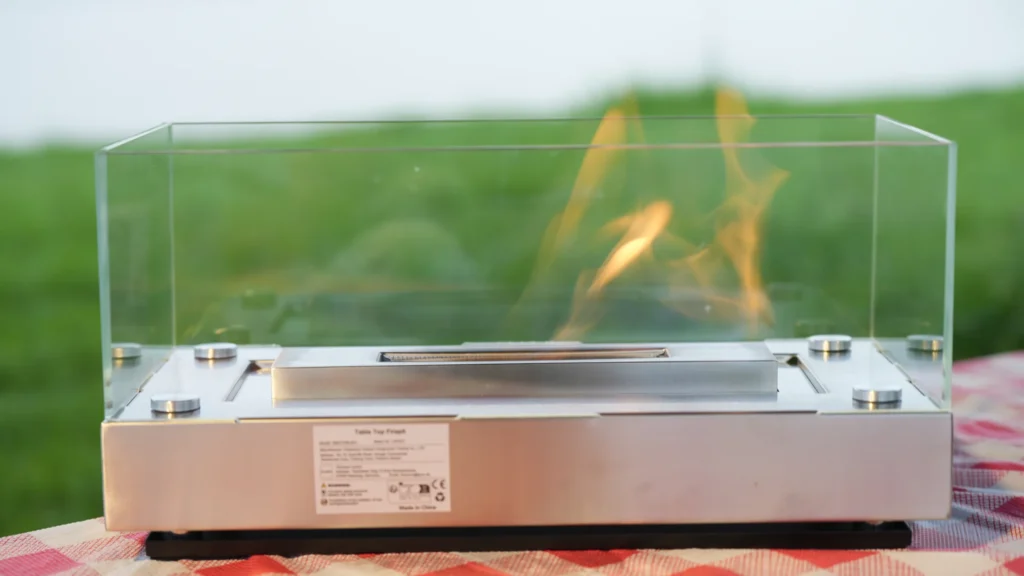
Many tabletop fireplaces look similar in product photos. A polished metal tray, a straight burner slot, clean glass panels, and a compact footprint may all look suitable for an online catalog. The safety difference often sits in details that are easy to miss: how fuel is contained, whether the flame path is controlled, how the unit behaves when moved or bumped, whether the user can access hot surfaces, and whether the extinguishing accessory actually fits the burner geometry.
For B2B buyers, that distinction matters because the product will not be used in a controlled showroom only. A retailer must think about consumer assembly, packaging copy, after-sales questions, and product returns. A hospitality buyer must think about staff training, guest access, placement, replacement parts, and maintenance routines. A private-label brand must think about whether the product, instructions, warnings, packaging, and claims all describe the same design that was tested or approved.
Current standards and general product-safety obligations point to the same practical conclusion: liquid fuel, open flame, refuelling, and user behavior must be controlled as one product system. That does not mean every ethanol tabletop product is unsuitable. It means a buyer should not approve one from appearance alone. The right process is to define the market, inspect the sample, verify documentation, and reject designs where safety relies mainly on ideal user behavior.
Start With the Intended Use Case
A safety feature is only meaningful when it matches the way the product will be sold and used. A decorative tabletop fireplace for supervised restaurant use has different requirements from a boxed retail product sold through e-commerce. A giftable tabletop fire pit has different risks from a larger desktop fireplace with glass wind guards and a more substantial metal base.
Before asking a supplier for price, buyers should define the product role in the range. Is it a small impulse SKU, a premium centerpiece, a private-label collection, a hospitality amenity, or part of a broader tabletop ethanol fireplace product range? The answer changes the design review. Small decorative models may need extra scrutiny around tip-over resistance and user access. Larger metal-and-glass models may require more attention to hot surfaces, glass attachment, carton protection, and accessory storage.
The same logic applies to the sales channel. Retail and online channels need clear instructions, warnings, carton markings, and product images that do not encourage unsafe placement. Wholesale and distributor channels need repeatable specifications and quality checks. OEM and ODM projects need agreed drawings, sample sign-off records, and packaging files that stay aligned with the final approved design.
The Core Safety-Feature Checklist
The following checklist is a practical first screen for buyers comparing samples. It does not replace formal testing or legal review. It helps purchasing and product teams decide which models deserve deeper technical review, which questions to send to the supplier, and which samples should be rejected early.
| Design Area | What to Inspect on the Sample | Why It Matters for Buyers | Supplier Evidence to Request |
|---|---|---|---|
| Fuel containment | Burner cup, fuel chamber, seams, closure method, and any path where liquid could pool or escape. | Liquid fuel control is central to reducing spill, overflow, and refuelling risk. | Drawings, material details, burner construction photos, and applicable test references for the exact model. |
| Flame access | Distance between flame opening, guard glass, user hands, surrounding decor, and accessory handles. | Users should not need to reach through a flame path during normal use or extinguishing. | Instruction manual, warning label artwork, accessory list, and use-position photos. |
| Stability | Base footprint, center of gravity, foot pads, contact surface, and behavior when placed on common tabletop materials. | Portable products are often moved, repositioned, and used on furniture rather than fixed installations. | Sample inspection record, packaging drop-protection notes, and any stability-related test report. |
| Heat exposure | Metal surfaces, glass edges, underside insulation, handles, and nearby packaging or accessory contact points. | Heat can affect user contact, tabletop protection, carton inserts, and after-use handling instructions. | Material specification, user instructions, and photos showing safe placement and extinguishing method. |
| Extinguishing | Whether the snuffer or closing tool fits the burner cleanly and can be used without unstable hand positioning. | An extinguishing accessory that looks acceptable in a photo may fail as a practical user-control feature. | Accessory specification, operating instructions, and sample-use video for the exact accessory. |
| Warnings and packaging | Labels, carton text, instruction sequence, fuel wording, refill warnings, and replacement-part identification. | Product safety depends partly on users receiving the same restrictions that the design assumes. | Editable label files, instruction manual, retail carton artwork, and compliance-document list. |
Fuel Containment Is the First Inspection Point
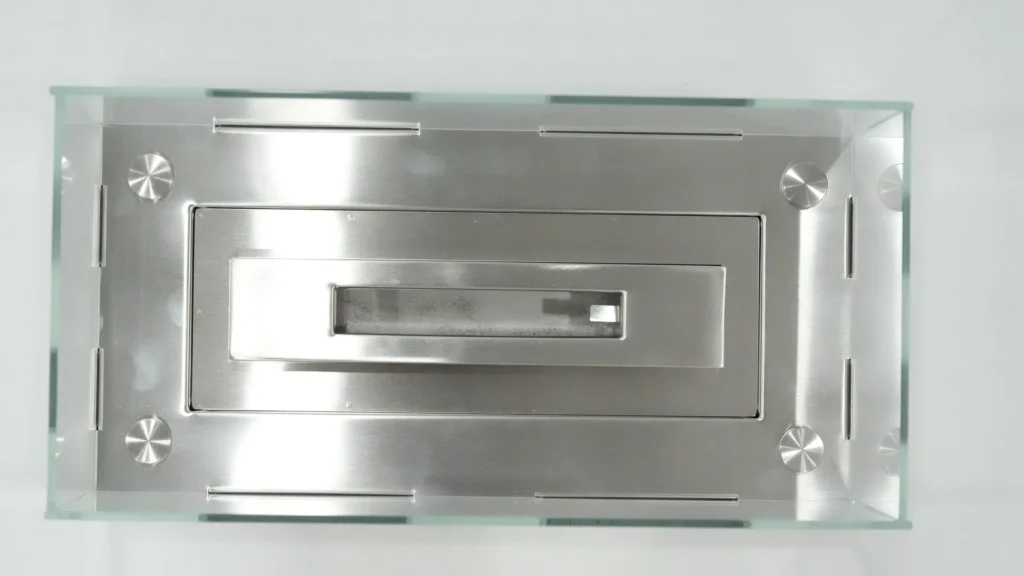
When reviewing ethanol fireplace safety features, start with fuel. Ask where the liquid goes, how it is held, how much user judgment is required, and what happens if the product is overfilled, moved too soon, or placed on an uneven surface. Buyers do not need to invent extreme tests at this stage. They need to identify whether the design gives the user too many opportunities to pour fuel into the wrong place or interact with fuel near flame.
The burner should be treated as a functional component, not a decorative insert. Look for clean seams, consistent finish, appropriate material specification, and a burner geometry that matches the product size. A narrow flame line, a removable cup, a sliding cover, or a separate fuel container can each be reasonable in some designs, but each route requires different questions. The buyer should ask the supplier to explain how the fuel chamber is constructed and how the user is instructed to fill, light, extinguish, and cool the product.
For private-label projects, this is also where drawings and samples must stay synchronized. If the approved sample uses one burner structure but the quote or production version quietly changes, the buyer’s safety review becomes unreliable. HND buyers planning deeper product changes can review the OEM/ODM customization service early so design, branding, packaging, and documentation are not treated as separate decisions.
Guard Glass Should Reduce Access Without Creating New Problems
Glass panels are common on tabletop ethanol fireplaces because they help define the flame area and improve perceived product quality. They can also support a more premium look for retailers, hospitality buyers, and home decor brands. The design review should still ask practical questions: is the glass held securely, are edges finished cleanly, can the user remove or misplace it, does it interfere with extinguishing, and does the packaging protect it during export?
A guard that looks good in a hero image may not be enough if it leaves unstable attachment points, sharp edges, unclear assembly steps, or fragile carton protection. Buyers should inspect how glass panels fit into slots or posts, whether there is unnecessary movement, and whether replacement parts are available. If the model will be shipped through e-commerce or handled by multiple retail warehouses, the carton and internal protection become part of the safety-design conversation.
When the product needs a different glass shape, metal housing, or branded outer body, involve manufacturing review before committing to an MOQ. HND’s custom molding and custom cutting and styling services are relevant when the existing sample almost fits the brand brief but requires structural or appearance changes.
Stability and Placement Are Commercial Issues, Not Only Lab Issues
Tabletop products are often evaluated on style first. That is understandable, but stability has a direct commercial effect. A model that is too tall for its base, too light for its footprint, or too easy to move during use may generate complaints even when the catalog image looks premium. Buyers should place the sample on the types of surfaces the end user is likely to choose: dining tables, outdoor tables, display counters, hospitality service areas, and smooth decorative surfaces.
The review should include the base shape, foot-pad material, surface contact, and whether the product encourages risky placement. It should also consider how product photography and retail copy guide the user. If marketing images show the unit near curtains, papers, cushions, shelves, or crowded tabletop decor, the commercial presentation may undermine the safety assumptions in the instructions.
This is one reason HND recommends connecting safety review to product-range planning. The first wholesale order should not contain only the lowest-cost small models. A healthier assortment may combine stable hero SKUs, compact trial SKUs, and packaging formats that match each channel. For range planning, see HND’s guide to choosing tabletop fireplace models for a first wholesale order.

Extinguishing Design Must Be Tested Like a User Task
An extinguishing tool is not a safety feature just because it is included in the box. It must be usable. During sample review, buyers should ask someone unfamiliar with the model to read the instructions and perform the normal extinguishing sequence without improvising. The tool should fit the burner or closure area cleanly, keep the user’s hand away from the flame path as far as practicable, and avoid forcing the user to move the product while it is hot.
The same review should check accessory storage and packaging. If the snuffer, lighter guidance, warning insert, or fuel notice can be lost easily, the final user experience may differ from the approved sample review. For retail projects, carton structure and printed inserts should be reviewed alongside the product. HND’s customized packaging service can support private-label buyers who need carton artwork, inserts, or packaging layouts aligned with the approved model.
Buyers should be cautious with supplier videos that show only a clean flame for a few seconds. Ask for videos showing the full normal use sequence: unboxing if relevant, placement, filling as instructed, lighting, burning observation, extinguishing, cooling instructions, and repacking or accessory storage. The goal is not to replace formal testing; it is to discover obvious design or instruction issues before a purchase order is issued.
Material and Finish Choices Affect Safety Perception and Quality Control
Material choice is not only a cost issue. Stainless steel thickness, surface finishing, glass quality, fastener consistency, and base construction all affect how buyers judge a sample. A sharp edge, uneven burner fit, loose panel, poorly finished seam, or unstable foot pad may signal weak production control even before formal testing begins.
Do not approve a sample only because one hand-picked unit looks acceptable. Request production-intent samples when possible and define what must remain consistent in mass production. Important details include metal finish, visible welding or joining quality, glass panel fit, accessory finish, label placement, carton inserts, and instruction language. If the project uses private-label branding, the brand mark should not obscure warnings or create confusion about fuel type, use restrictions, or supplier identity.
For importers and distributors, the practical decision is whether the sample is easy to inspect repeatedly. If the safety-related details are hidden, inconsistent, or difficult to describe, quality control becomes harder at shipment stage. That can turn a promising product into a risky repeat-order item.
After the physical sample review, purchasing teams should request a model-specific supplier safety document pack so the burner, accessory set, manual, warning labels, packaging, and report scope can be checked before bulk approval.
Documentation Should Match the Exact Product
Safety features in the product and safety information in the documentation must describe the same design. This is where many sourcing projects become weak. A supplier may send a general test report, generic instruction sheet, or old certificate that does not clearly match the model, burner, accessory set, packaging, or market claim under discussion. Buyers should not treat that as complete evidence.
At minimum, request documentation for the exact model or model family, including the applicable standard or test basis, instruction manual, warning labels, fuel wording, packaging artwork, and product specification. For EU-oriented projects, buyers should understand how EN 16647-1:2025 relates to decorative fuel-effect appliances using alcohol-based or gelatinous fuels, and how general product safety obligations shape importer due diligence. For US-oriented projects, ask which ASTM framework the supplier references for portable liquid or gel-fuel devices, then verify whether that reference applies to the exact product.
The right wording is important. A buyer can say “request applicable documentation” or “confirm which standard applies.” A buyer should not claim that a product is certified, compliant, or approved unless there is evidence for that exact product and target market. This conservative language protects both the brand and the supplier relationship.
For a broader quality-control view beyond safety features, HND’s sample quality evaluation guide helps buyers connect burner fit, glass alignment, surface finish, packaging and documentation into one approval file.
How to Run a Sample Approval Meeting
A good sample approval meeting is structured. It should not be a casual discussion where the team agrees that the product “looks fine.” Use a written checklist and assign each issue to a decision: approve, revise, request evidence, test further, or reject. Include purchasing, product management, quality, packaging, and sales when possible. Each function sees different risks.
Start with the intended market and channel. Then inspect the product without flame: weight, base, feet, glass, burner, seams, accessories, instructions, packaging, and labels. Next review the normal user sequence from filling through extinguishing and cooling. Finally compare the supplier’s documents against the physical sample. If there is a mismatch, stop and clarify before discussing bulk quantity.
For buyers sourcing from China, this meeting should connect directly to the RFQ. The same safety-design details should appear in the quotation, sample comments, packaging request, and pre-shipment inspection checklist. HND’s wholesale sourcing guide explains how supplier evaluation, samples, packaging, and order planning fit together before a buyer moves to bulk purchasing.
Red Flags That Should Pause the Purchase
Some issues do not automatically prove a product is unsafe, but they should pause approval until the supplier explains or corrects them. Examples include unclear fuel instructions, a burner that can be overfilled too easily, loose glass, unstable feet, missing extinguishing accessories, labels that conflict with the manual, carton artwork that suggests unsafe placement, or documentation that belongs to a different model.
Other red flags are commercial. A supplier who cannot explain the burner construction, avoids model-specific documentation, changes accessories without notice, or treats safety questions as optional may not be suitable for a repeat-order relationship. The problem is not only the first container. It is whether every reorder will match the approved product.
Buyers should also pause when the target claim is too broad. “Suitable for every market” is not a useful safety statement. Different jurisdictions, sales channels, and retail partners may ask for different evidence. A better supplier conversation identifies the target market first and then decides what product, packaging, documentation, and testing path are appropriate.
How Safety Design Connects to Packaging and Export
Packaging is often discussed after price, but it should appear earlier in the safety review. Glass panels, metal edges, burner accessories, labels, instruction sheets, and carton markings all need protection and organization. If a carton allows parts to move, scrape, or arrive loose, the final consumer experience may differ from the approved sample.
Export packaging also affects how distributors and retailers handle quality complaints. A broken glass panel, missing snuffer, damaged foot pad, or unreadable instruction insert can become a safety issue even when the product left the factory with a reasonable design. For bulk orders, packaging checks should be included in the pre-shipment inspection plan, not treated as a separate marketing task.
Buyers planning international shipments can connect the product review with HND’s bulk export service. That discussion should cover carton structure, packing method, replacement parts, labeling, and the information needed by the importer or distributor before shipment.
A Practical Approval Framework
Use a five-part approval framework before moving from sample to order. First, define the target market, sales channel, and user environment. Second, inspect the physical design: fuel, burner, flame access, stability, glass, materials, extinguishing, and heat exposure. Third, verify documentation against the exact model. Fourth, review packaging and instructions as part of the product system. Fifth, convert all approved details into written specifications for the purchase order and inspection checklist.
This framework helps buyers avoid two common mistakes. The first is approving a product because it looks attractive in photos. The second is asking for compliance documents after the price and production route are already fixed. Safety design has to be part of product selection, not a document chase at the end of the sourcing process.
When a model passes the first review but needs adjustment, buyers can discuss whether to modify an existing HND model or develop a more customized product. When a model fails on fuel control, stability, extinguishing, or documentation, the better decision may be to reject it and select a different base model. A lower unit price does not compensate for a weak safety-design foundation.
Discuss Your Tabletop Fireplace Safety Requirements
If you are comparing tabletop ethanol fireplace samples, HND can help review product structure, burner design, guard glass options, packaging, OEM/ODM requirements, and market documentation needs before you finalize a bulk order. Share your target market, channel, expected order plan, and preferred design direction through the HND contact page.
FAQs
What ethanol fireplace safety features should B2B buyers inspect first?
Start with fuel containment, burner construction, flame access, stability, extinguishing method, guard glass, surface heat, warnings, and instructions. These areas determine whether the product can be reviewed as a controlled system rather than a decorative object with an open flame.
Is guard glass enough to make a tabletop ethanol fireplace safe?
No. Guard glass can help define the flame area and reduce casual access, but it is only one feature. Buyers still need to inspect fuel control, stability, burner geometry, material quality, extinguishing, packaging, warnings, and documentation for the exact model.
Should buyers ask for ASTM or EN documents?
Buyers should ask which standard or test framework applies to the target market and exact product. ASTM F3363-25 is relevant to portable unvented liquid or gel-fuel devices, while EN 16647-1:2025 is relevant to European decorative fuel-effect appliances using alcohol-based or gelatinous fuels. The supplier should explain applicability instead of sending generic documents.
Can one test report cover every tabletop fireplace model?
Do not assume that. A test report or compliance document should be checked against the exact model, burner, size, materials, accessories, packaging, and market claim. If a supplier changes the burner or structure, buyers should ask whether the existing evidence still applies.
How should a buyer evaluate extinguishing accessories?
Test the normal user task. The accessory should fit the burner or closure area cleanly and should not require unstable hand placement, product movement, or improvised steps. The instructions should explain the sequence clearly and match the supplied accessory.
What is the difference between safety design and supplier safety documents?
Safety design is what the physical product does: fuel control, stability, flame access, materials, and extinguishing. Supplier documents are the evidence and instructions that support the design. Buyers need both. A document cannot fix a weak design, and a good-looking design still needs evidence.
When should safety review happen in a sourcing project?
Safety review should happen before bulk pricing is treated as final. The best point is during sample selection and approval, when the buyer can still change the model, request a design adjustment, revise packaging, or reject a product before committing to production.