Quick answer for B2B buyers
A strong tabletop ethanol fireplace product range is not built by collecting every attractive shape in a supplier catalog. For retailers, importers, distributors and private-label brands, the better approach is to design a controlled assortment with clear roles: an entry model for accessible price points, one or two core models for repeat sales, a premium statement model, and selected customization options for brand separation. Each SKU should be chosen against market fit, safety design, packaging size, target price, display value, sample quality and compliance expectations in the selling market. Start narrow, test physical samples, confirm documentation and packaging, then expand only after sell-through and customer feedback show which sizes and finishes deserve deeper inventory.
Why range planning matters more than catalog browsing
Many buyers enter the tabletop ethanol fireplace category after seeing strong product images: real flame, compact size, modern metal or glass, and no need for a chimney or gas connection. Those are useful commercial signals, but they are not enough to build a profitable wholesale or retail range. A product range must work as a system. The SKUs should cover different customer needs without confusing the buyer, overloading inventory, or creating unnecessary compliance and after-sales risk.
This is especially important for a decorative flame product. A tabletop ethanol fireplace sits between home decor, gift, patio, hospitality display and fireplace accessory categories. That mixed positioning can be a strength, because the same product family can serve multiple channels. It can also become a problem if the buyer chooses models only by appearance and misses structural details, fuel handling, warning language, packaging strength or market restrictions.
The previous article in this cluster looked at whether the tabletop ethanol fireplace market is worth evaluating. This guide moves one step deeper. It focuses on how a B2B buyer should turn that market opportunity into a practical product range, with enough variety to sell and enough control to manage quality, landed cost and customer expectations.
Start with the role of the range
Before selecting designs, define what the range must do for your business. A home decor retailer may want a giftable seasonal line. An importer may need cartons and SKUs that work for wholesale distribution. A private-label brand may care more about finish, logo placement and package presentation. A hospitality supplier may want larger statement pieces for controlled lounge, spa or restaurant environments. Each business model points to a different SKU mix.
If the role is unclear, the range will usually become too wide. Buyers add one round model, one rectangular model, one glass model, one metal model, one outdoor-style model and one premium model without deciding which customers each item serves. The result is a collection, not an assortment. A collection is difficult to forecast, photograph, train sales teams on, and reorder. An assortment has intentional price points, sizes, visual roles and channel roles.
A practical range brief should answer five questions: Which customer segment is the range for? Where will it be sold? What price tiers must it cover? Which product claims are safe and verifiable? What must be customized for the market, language, packaging or brand? The answers guide the supplier conversation and reduce the risk of choosing attractive but commercially awkward models.
A balanced range architecture
For a first wholesale program, the safest structure is usually narrow and layered. The buyer does not need twenty tabletop fireplace SKUs at launch. In many channels, four to seven well-chosen products can provide enough coverage while keeping sample approval, photography, packaging review and inventory planning manageable.
| Range role | Typical product direction | Commercial purpose | Buyer checks before approval |
|---|---|---|---|
| Entry SKU | Compact round or rectangular model with simple finish | Accessible price point, gift use, easy online testing | Stability, instructions, carton protection, realistic margin after freight |
| Core SKU | Medium tabletop model with stronger visual presence | Main repeat seller for retail, wholesale and showroom display | Finish consistency, glass fit, burner access, replacement packaging |
| Design SKU | Distinctive shape, color, glass profile or decorative base | Brand separation and higher perceived value | Photographability, surface durability, MOQ impact, production repeatability |
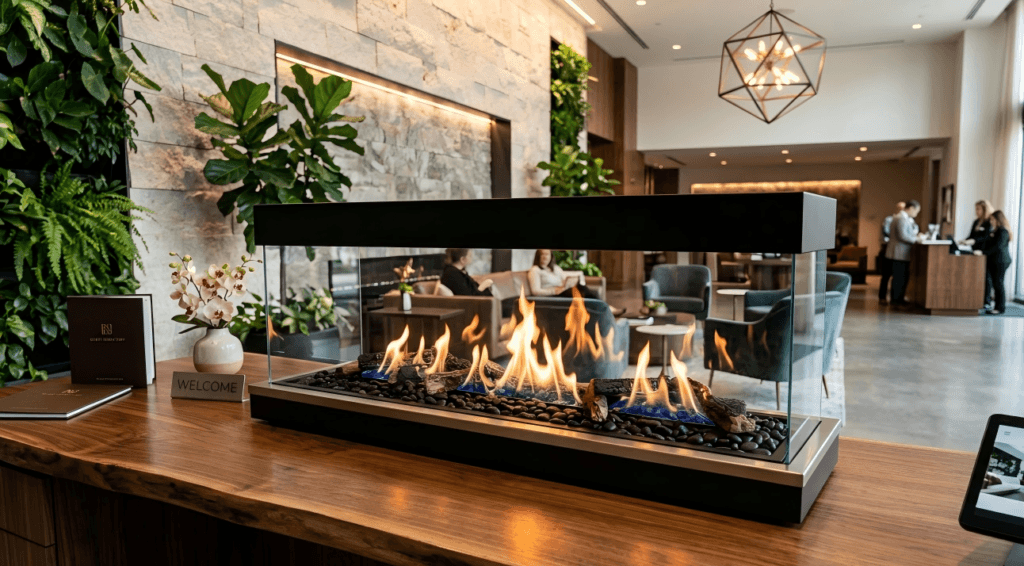
| Premium SKU | Larger panoramic or statement tabletop fireplace | Higher ticket, hospitality display, showroom feature | Carton size, unit weight, handling, use environment and instructions |
| Private-label SKU | Existing model with logo, finish, manual and retail packaging changes | Controlled brand line without full new-tooling risk | Artwork approval, barcode, warning layout, language version control |
| Future expansion SKU | New mold, special shape or deeper ODM development | Defensible product differentiation after market validation | Tooling cost, development time, sample rounds and compliance evidence |
This architecture helps the buyer say no. A product may look attractive but still duplicate the core SKU, push carton size too high, require an unnecessary MOQ, or create a price point that does not fit the planned retail ladder. Range discipline is what turns supplier options into a commercial program.
Choose sizes by channel, not only by appearance
Tabletop ethanol fireplaces are often described as compact and portable, but size still has major business consequences. A very small unit may be easy to ship and gift, yet it may not create enough flame presence for a premium decor channel. A large panoramic unit may photograph beautifully, yet its carton, glass protection and retail shelf space may limit where it can be sold profitably.
Retail buyers should think in use cases rather than dimensions alone. A small dining-table or coffee-table model can serve gifting, apartment and e-commerce channels. A medium rectangular model can become the core range item because it balances visual impact with manageable packaging. A larger model may be better for showrooms, hospitality distributors and premium home decor retailers that can explain the product and support higher pricing.
When reviewing the HND tabletop and desktop ethanol fireplace product range, buyers should group models by range role first, then ask for unit size, burner structure, glass specification, net weight, gross weight, carton dimensions, master carton plan and loading quantity. A product that looks similar online can behave very differently in freight cost, shelf display and sample evaluation.
Build a price ladder with real landed cost
A range should have a price ladder that customers can understand. Entry, core and premium products should not compete with each other too closely. If the visual difference between two SKUs is small but the price gap is large, retailers will struggle to explain the range. If the price gap is too narrow, customers may always choose the larger model and leave the smaller SKU with weak sell-through.
Factory price is only the starting point. Buyers need landed cost, including packaging, inner protection, outer carton, inspection, freight, duty, warehousing, breakage allowance, platform fees and after-sales handling. Tabletop fireplaces often include glass or carefully finished metal surfaces, so packaging cannot be treated as an afterthought. A low factory price can be misleading if the carton is weak, the glass protection is poor, or the final volume increases freight cost beyond the planned margin.
For a first order, it is usually better to protect the core range than to chase the lowest possible entry SKU. A weak entry product can damage the category before the buyer has enough sales data. A well-made core product, supported by clear images and responsible instructions, gives the category a better chance to earn repeat orders and customer trust.
Use design variety carefully
Design variety is one of the reasons tabletop ethanol fireplaces are commercially interesting. Buyers can choose round, rectangular, panoramic, column, bowl, lantern-inspired or sculptural shapes. Finishes may include black, stainless steel, brushed metal, white, bronze-like tones or custom color directions. Glass can be used to improve the flame view and create a more premium impression.
The risk is over-selection. Too many designs make the range harder to merchandise and reorder. A better method is to choose one dominant design language for the first launch. For example, a modern minimalist range may use black and stainless finishes with clean glass lines. A hospitality range may emphasize larger panoramic models and stable bases. A gift channel may favor compact shapes with stronger retail packaging and clear instructions.
When a buyer needs brand-specific changes, the first conversation should usually cover lower-risk customization: finish, logo, packaging, manual, accessories and carton marking. HND’s OEM and ODM customization service, custom cutting and styling, custom molding, free logo engraving and customized packaging pages are useful references for organizing those requirements. Deeper tooling should come after the market proves which range direction deserves investment.
Screen safety and documentation before expanding SKUs
A tabletop ethanol fireplace is a decorative flame product, not a simple ornament. Safety design and instructions must shape the product range. The U.S. Consumer Product Safety Commission has warned consumers about alcohol or liquid-burning fire pits that can create uncontrolled pool fires and flame jetting hazards, especially where liquid fuel is poured into an open container and ignited in the same area. Product Safety Australia states that decorative alcohol fuelled devices are covered by a mandatory standard intended to reduce injury risk from uncontrolled fires. BSI’s EN 16647 materials cover decorative fireplaces using alcohol-based or gelatinous fuel, including scope, construction and user information concepts for covered appliances.
These sources do not mean every product is the same, and they do not replace market-specific legal review. They do show why B2B buyers should treat documentation as a range-planning issue. If one SKU has strong documentation and another does not, the weaker SKU can create disproportionate risk. If one market requires different warnings or instructions, the buyer must control packaging versions before production. If a supplier cannot explain burner design, refuelling instructions, extinguishing method, stability and model-specific reports, the range is not ready for a bulk order.
Buyers can use HND’s certificates and accreditations page as a starting point for documentation discussion, but order approval should still be based on current, model-specific evidence for the destination market. Request reports, declarations, warnings, manual drafts and packaging artwork early enough to review them before mass production.
Plan packaging as part of the product
Packaging has three jobs in this category: protect the product, support the brand, and communicate safe use. A retail box should not be designed only for shelf appeal. It must also handle glass, metal finishes, accessories, manuals and warning labels. For e-commerce, the outer packaging may need stronger drop protection and clearer product identification because the item moves through parcel networks rather than controlled retail distribution.
Packaging also affects assortment economics. Two products with similar factory prices may have very different carton volumes. A premium glass model may require extra internal protection. A private-label box may require print MOQ, artwork lead time and barcode management. A buyer should compare unit carton, master carton, pallet plan and container loading before finalizing the range, not after the design decision is already made.
The manual and warning layout should be reviewed with the same discipline as the box artwork. Instructions need to cover suitable placement, fuel handling, refilling timing, extinguishing, supervision, ventilation where applicable, and use only according to the approved manual. Avoid unsupported claims such as risk-free, harmless, or safe in any space. Responsible language protects the buyer, the retailer and the end user.
A sample approval workflow for the first range
Sample evaluation should be structured enough to compare models fairly. A buyer should not approve a tabletop fireplace just because the first impression is good. Create a scorecard that covers commercial fit, structure, finish, flame presentation, packaging, documentation and supplier responsiveness. Then test each shortlisted SKU against the same criteria.
- Commercial role: confirm whether the SKU is entry, core, design, premium, private-label or future expansion.
- Physical build: check weight, stability, metal edges, glass fit, surface finish and assembly quality.
- Burner and use concept: review fuel access, extinguishing method, refuelling instructions and foreseeable misuse concerns.
- Packaging: inspect protection, instruction placement, warning visibility, barcode location and carton strength.
- Documentation: request current reports, declarations, manuals and model references that match the sample.
- Photography: confirm whether the product can be photographed clearly for catalog, marketplace and showroom use.
- Cost structure: compare factory price, customization cost, carton volume, MOQ and landed margin.
- Supplier support: measure response quality, technical clarity, lead time, sample revision handling and export readiness.
This workflow also makes internal decisions easier. Merchandising can comment on visual fit. Compliance can review documentation. Logistics can check carton data. Sales can judge channel fit. E-commerce can test images and copy. When each team sees the same sample scorecard, the final range decision becomes less subjective.
How many SKUs should a first order include?
There is no universal number, but many first programs should stay close to four to seven SKUs. Fewer than three may not give the category enough visual variety. More than seven can be difficult for a new buyer to forecast, inspect, photograph, store and reorder. The right number depends on channel strength, inventory budget, MOQ, packaging versions and how much historical sales data the buyer has.
A practical first mix might include one compact entry SKU, two core SKUs in different shapes, one premium model, and one private-label finish or package variant. If the buyer serves hospitality or project channels, the mix may include fewer small products and more statement pieces. If the buyer is testing e-commerce, the mix may include products that are easier to ship individually and photograph from multiple angles.
HND’s bulk export service is relevant once the buyer moves from sample selection to order planning. At that stage, SKU count, MOQ, carton data, production lead time, inspection needs, packaging versions and shipping terms should be discussed together. A first wholesale order is not just a purchase; it is the first test of whether the range can become repeatable.
Range planning mistakes to avoid
The first mistake is choosing too many similar SKUs. If two models serve the same customer, the same price point and the same display role, one of them is probably unnecessary. The second mistake is approving private-label changes before validating the base model. Branding cannot fix a weak structure, unclear manual or poor packaging. The third mistake is ignoring carton size until freight is quoted. A product that looks profitable on a unit-price spreadsheet can lose margin through volume and damage risk.
Another common mistake is relying on generic claims. Buyers should be cautious with copy that says a product is smoke-free, clean-burning, eco-friendly, safe anywhere or suitable for all indoor and outdoor spaces without context. Some claims may be true only under specific conditions, fuel types, ventilation assumptions or market rules. Use conservative language, verify claims, and keep instructions aligned with the actual model.
The final mistake is treating supplier selection as a price comparison only. A tabletop fireplace supplier should help clarify product structure, customization route, sample revisions, packaging, documentation and export details. HND’s broader manufacturing services are designed for buyers who need product, customization and wholesale planning in one conversation rather than separate disconnected steps.
A practical first-range framework
For a retailer or importer preparing a first tabletop ethanol fireplace range, the following framework keeps the work focused:
- Define the channel. Separate gift, home decor, patio, hospitality, e-commerce and private-label needs.
- Set the price ladder. Decide entry, core and premium targets before selecting products.
- Shortlist by role. Give every SKU a job in the range.
- Request samples. Evaluate structure, finish, burner concept, glass, packaging and instructions.
- Review documentation. Match reports and claims to the exact model and destination market.
- Confirm packaging economics. Compare unit carton, master carton, loading quantity and damage protection.
- Approve market-specific content. Check manual, warning labels, artwork, barcodes and language versions.
- Launch narrow. Place a controlled first order and expand only after sell-through data supports it.
This framework is intentionally conservative. It helps buyers avoid the two extremes of underbuilding the category with one generic product or overbuilding it with too many unproven SKUs. The goal is a product range that buyers can explain, retailers can merchandise, warehouses can handle, and customers can understand.
When to move from existing models to custom development
Existing models are usually the best starting point for a first range because they reduce development time and allow the buyer to focus on market validation. Custom development becomes more attractive after the buyer knows which shapes, price points, finishes and customer segments are working. At that stage, a new mold, adjusted body shape, exclusive finish or packaging system may create real competitive advantage.
Custom development should be tied to a business reason. A new shape may support a brand identity. A special finish may match a retailer’s home decor line. A changed base may improve stability, visual weight or packaging efficiency. A custom package may strengthen shelf presence and reduce customer confusion. If the reason is only that the product should look different, the buyer should first confirm whether lower-risk customization can solve the problem.
Before commissioning deeper ODM work, align on design drawings, sample rounds, tooling cost, target order volume, testing expectations, packaging plan and final approval checkpoints. This prevents the project from becoming a design exercise with no clear route to production.
CTA: Explore available models and customization options
If you are planning a tabletop ethanol fireplace product range for retail, wholesale or private label, start with a focused brief: target market, channel, price ladder, preferred design direction, packaging needs, documentation expectations and first-order scale. HND can help compare existing tabletop fireplace models, discuss OEM or ODM customization, review packaging options and prepare the next step from sample evaluation to bulk export. Contact HND Fireplace to share your requirements, or begin by reviewing available tabletop ethanol fireplace models.
When the range is ready to move from assortment planning into supplier execution, use the next guide on sourcing wholesale tabletop ethanol fireplaces to structure supplier qualification, samples, documentation, packaging and RFQ details.
FAQs
How many tabletop ethanol fireplace SKUs should a retailer launch first?
A first launch often works best with four to seven SKUs. That is usually enough to cover entry, core, premium and private-label roles without making inventory, photography, packaging review and forecasting too complex.
Should a buyer choose existing models or custom designs first?
Existing models are usually better for a first range because they reduce development time and allow faster sample review. Custom design becomes more practical after the buyer has sales data and a clear reason for deeper differentiation.
What information should suppliers provide before a bulk order?
Buyers should request model specifications, material and finish details, burner and use instructions, packaging data, carton dimensions, available documentation, sample lead time, MOQ, production lead time and market-specific warning or manual options.
How important is packaging for tabletop ethanol fireplaces?
Packaging is critical. It protects glass and finished metal, affects freight cost, supports retail presentation, and carries instructions and warnings. Buyers should review packaging before approving mass production, not after the order is placed.
Can tabletop ethanol fireplaces be sold as private-label products?
Yes, but private-label planning should start with a stable product structure. Logo, finish, packaging, manual and accessory changes are usually lower-risk than a completely new mold for the first order.
What is the biggest risk when building the range?
The biggest risk is treating the product as a simple decorative accessory. Buyers must review safety design, fuel handling instructions, warning language, market rules, packaging and documentation before scaling the range.
When should a buyer expand beyond the first range?
Expansion should come after sample approval, controlled first-order feedback, sell-through data, customer-service feedback and confirmation that packaging, documentation and supplier communication are repeatable.
Sources
- U.S. Consumer Product Safety Commission consumer alert on alcohol or liquid-burning fire pits
- CPSC warning on Northlight bio ethanol portable tabletop fireplaces
- Product Safety Australia decorative alcohol fuelled devices mandatory standard overview
- Product Safety Australia consumer guide for decorative alcohol fuelled devices and ethanol burners
- BSI Knowledge: BS EN 16647:2015 scope for decorative alcohol-fuel fireplaces
- BSI Knowledge: BS EN 16647-1:2025 alcohol-powered flueless fireplaces