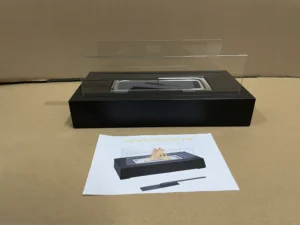
For EU importers and private-label brands, finding an EN 16647 ethanol fireplace manufacturer China supplier is not only a price exercise. A tabletop ethanol fireplace is a live-flame consumer product, so the buying decision has to connect design, safety scope, testing evidence, documentation, factory control, packaging, and shipment inspection before the first purchase order becomes repeat production.
The difficult part is that many suppliers can answer the first question well. They may have attractive product photos, a standard catalogue, sample stock, and a familiar phrase such as “EN 16647 available.” That does not prove that the exact model, burner, glass, fuel box, label, manual, carton, and production batch for your project are ready for the EU market. This guide gives sourcing teams a practical supplier-selection workflow for China projects where EN 16647-1:2025 readiness matters before RFQ, sample approval, and private-label rollout.
Quick Answer
When sourcing EN 16647-ready tabletop ethanol fireplaces from China, shortlist manufacturers by evidence, not slogans. Ask whether the product is a manually operated alcohol-powered flueless decorative fireplace that fits the EN 16647-1:2025 scope, then request model-specific test evidence, controlled drawings, burner and fuel-box details, label and user-manual files, packaging artwork, batch traceability, incoming inspection records, final QC criteria, and a process for change control. For EU projects, also clarify importer, authorised representative, distributor, online-listing, language, warning, and after-sales responsibilities under the broader product-safety framework. A test report is useful only when it matches the exact SKU and production version you plan to buy. Treat the supplier decision as a risk-control review: product scope first, sample proof second, factory control third, documentation and shipment evidence before mass production.
Why Supplier Selection Comes After Compliance Scoping
Buyers often start with catalogue selection because it feels concrete. The photo shows the shape, the quotation shows the price, and the sample can be shipped quickly. For a decorative ethanol fireplace, that order is risky. Before comparing two suppliers, the buyer needs to define the product category, the intended use, the market route, and the evidence expected for that exact product.
If the project moves from catalogue sourcing into a custom tabletop model, add a pre-tooling gate before deposit. The pre-tooling compliance review for ethanol fireplaces outlines the design, documentation, label, manual and production-control questions to settle before opening a mold.
Public standards listings for EN 16647-1:2025 describe it as the European standard for alcohol-powered flueless fireplaces, with safety requirements and test methods for manually operated decorative fireplaces for domestic use. That scope matters in supplier selection. A tabletop product that needs manual filling, ignition, refilling, or extinguishing should be evaluated differently from an automatic alcohol fireplace, an outdoor appliance, a food-warming burner, or a product marketed primarily for heating.
The first supplier question should therefore be: “Which standard scope does this exact model belong to, and what evidence supports that answer?” If the supplier answers with a general certificate, a family-level report, or a claim that all ethanol fireplaces are the same, the buyer should slow down. The purchasing team needs a supplier who can connect the offered SKU to a clear compliance path, not only a supplier who can ship a flame product at a target price.
If your team needs the broader context before this BOFU supplier review, start with HND’s EN 16647-1:2025 guide for tabletop ethanol fireplaces and the earlier overview on ethanol fireplace compliance before sampling. Those pages explain why compliance planning should begin before sample cost, tooling, carton artwork, and shipment timing dominate the conversation.
What EN 16647-1:2025 Readiness Should Mean in an RFQ
In a sourcing conversation, “EN 16647-ready” should not mean “we can talk about it later.” It should mean the supplier can show how the selected product is designed, documented, tested, and controlled against the relevant manually operated decorative fireplace scope. The exact legal and conformity assessment pathway depends on the buyer’s market, sales channel, and product configuration, but the RFQ should still ask for evidence that can be reviewed before the order is committed.
A strong RFQ separates five subjects. First, the physical product: model, size, burner construction, fuel box, glass, base, accessories, and use environment. Second, the evidence: applicable standard reference, test report status, drawings, bill of materials, risk assessment, and version history. Third, the documents: product label, warning labels, packaging, user manual, online listing content, and language plan. Fourth, the factory system: incoming inspection, assembly checks, final inspection, batch records, and nonconforming-product control. Fifth, the commercial path: MOQ, sample lead time, private-label changes, spare parts, claims handling, and responsibility split.
That structure makes supplier comparison more objective. One factory may have a lower unit price but weak documentation control. Another may charge more but maintain clear drawings, manual versions, and pre-shipment inspection records. The buyer’s real cost is not just FOB price. It includes sample rounds, failed inspections, reprinted manuals, delayed retail launches, missing documents, returns, and reputational risk if a consumer-facing flame product is poorly controlled.
For an earlier sourcing filter, HND also explains how to compare an ethanol fireplace manufacturer vs trading company when the buyer is still deciding which supplier model best fits compliance evidence, sampling and production follow-up.
Supplier Shortlist Checklist
Use the first conversation to remove suppliers that cannot answer basic scope and evidence questions. A competent manufacturer does not need to share confidential customer files, but it should be able to explain how its tabletop ethanol fireplace category is controlled and what project-specific evidence can be provided after NDA or sample order.
Before a shortlisted supplier moves from RFQ to purchase order, EU importers can also use HND’s ethanol fireplace compliance documents supplier checklist to request model-specific reports, labels, manuals, traceability records and change-control evidence.
| Selection area | What to ask the supplier | Risk if the answer is weak |
|---|---|---|
| Standard scope | Which models are manually operated decorative fireplaces under EN 16647-1:2025 scope, and which are outside that scope? | The buyer may compare unsuitable products or use the wrong evidence path. |
| Model evidence | Can the report, drawings, fuel-box design, label and manual be matched to the exact SKU? | A family-level claim may not support the specific item being ordered. |
| Burner control | How are burner dimensions, fuel capacity, leakage checks and extinguishing components controlled in production? | Small production changes can affect operating risk and consistency. |
| Glass and structure | What material specifications, assembly tolerances and inspection points apply to glass, base and supports? | Visual samples may pass while batch construction varies. |
| Documentation | Can the supplier provide editable label, packaging and user-manual files for the destination market? | Private-label artwork may be approved without correct warnings or language coverage. |
| Factory records | Can batch records connect incoming material, assembly, final inspection, packing and shipment release? | Defects become hard to trace after distribution. |
| Change control | What happens if material, burner supplier, glass thickness, carton design or manual text changes? | A tested sample can drift away from mass production. |
Start With Product Scope, Not Certificate Language
Certificate language is easy to copy into quotations. Product scope is harder to fake. Ask the supplier to describe the intended product use in plain terms: tabletop, freestanding, wall-mounted, built-in, manually operated, domestic decorative use, liquid alcohol fuel, maximum output, and whether any heating function is claimed. Those details should match the product page, quotation, test evidence, packaging, user manual, and sales listing.
Public EN 16647-1:2025 scope summaries state that the standard applies to decorative fireplaces using liquid alcohol fuel and requiring manual user interaction for ignition, filling, refilling, or extinguishing. They also describe exclusions, including products for heating food, boats, caravans, other vehicles, outdoor areas, output above 4.5 kW, or products with a defined heating function. A supplier who cannot separate these categories may create downstream confusion for importers.
For buyers, this is not legal wordplay. It affects marketing claims, manuals, warning labels, photography, marketplace descriptions, and test planning. A product sold as a decorative tabletop fireplace should not be promoted as a room heater unless the product and evidence support that use. A model intended only for indoor domestic decorative use should not be shown in outdoor scenes without checking whether that use is supported. The tabletop ethanol fireplace safety guide gives additional safety-context questions for buyers who are still narrowing product type.
Evaluate the Test Evidence Like a Buyer, Not a Collector
Importers sometimes collect certificates as if the folder itself lowers risk. The better approach is to match each evidence file to the product you will actually buy. Ask for the report number, issuing laboratory or body, tested model identification, sample date, standard edition, product photos inside the report where available, critical dimensions, fuel-box details, warnings, and any deviations or limitations. Then compare that information with the current sample and the quotation SKU.
Watch for three common mismatches. The first is model-family mismatch: a report covers one family while the quotation uses another product or private-label variation. The second is version mismatch: the supplier changed glass, burner, base, packaging, or instructions after testing. The third is market mismatch: the report may be useful technically but does not solve language, responsible-operator, online-listing, importer, or retailer requirements for the destination country.
HND’s public certificates and accreditations page can support the first supplier conversation, but project approval should still request SKU-level records. A public certificate page helps buyers understand capability. It does not automatically prove that every future private-label configuration, carton language, manual revision, or marketplace listing is ready for a specific EU launch.
Review the Sample as a Production Promise
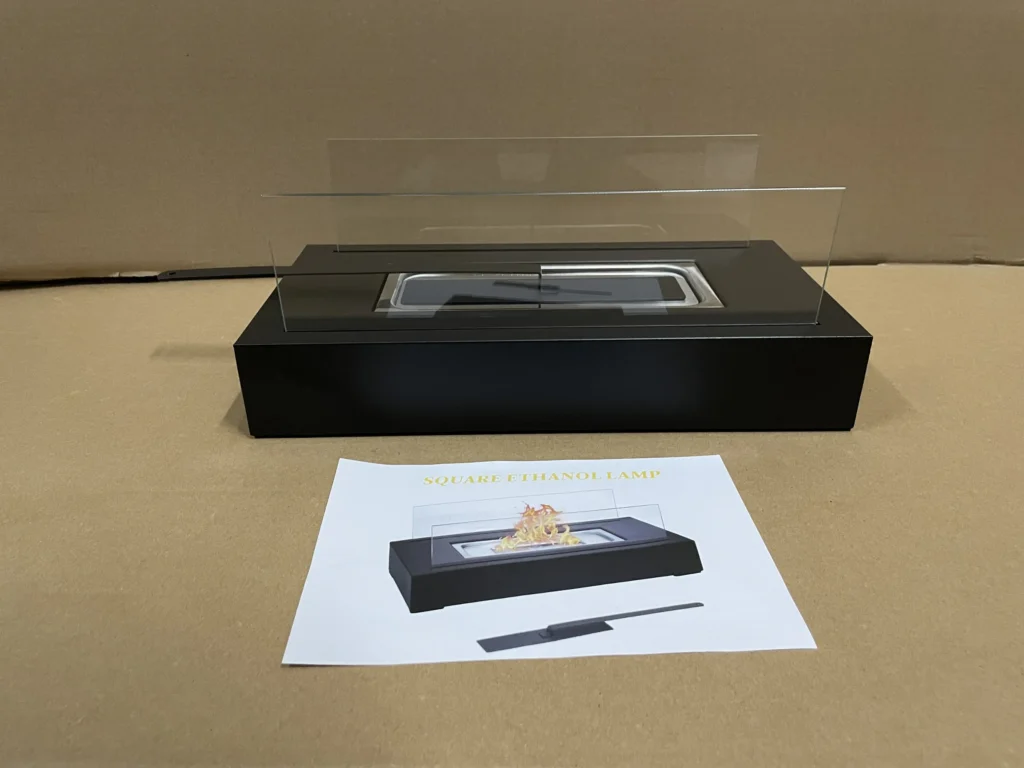
A sample is not only a sales object. In a BOFU sourcing decision, it becomes the reference point for mass production. The buyer should photograph the sample, record dimensions, verify accessories, inspect burner construction, check glass fit, review the extinguishing method, compare packaging, and match labels and manuals to the exact model. Any approved sample should have a controlled sample record, not just a courier tracking number.
For tabletop ethanol fireplaces, the buyer should pay attention to stability, fuel container construction, fill indication, visible warnings, hot-surface areas, glass support, finish quality, and how easily a user could misunderstand refilling or extinguishing. This is not a substitute for laboratory testing. It is a sourcing filter that prevents obviously weak samples from entering mass-production negotiations.
The sample review should also include private-label changes. If the buyer changes the product color, base material, glass thickness, carton artwork, manual language, logo position, barcode, or accessory set, ask whether the change affects existing evidence or factory controls. Some changes are cosmetic. Others can affect use, durability, safety information, or traceability. A professional supplier should be willing to separate those categories before taking the order.

Connect Factory Control to the Tested Design
The most important supplier question after sample approval is repeatability. Can the factory produce the same controlled design again and again? A type-tested or evidence-supported sample is valuable only if production stays aligned with it. For a tabletop ethanol fireplace, repeatability includes material purchasing, burner fabrication, glass inspection, assembly, cleaning, packing, manual insertion, label application, and final release.
Ask the supplier for a simple control plan. It does not need to be a marketing document. It should show which characteristics are checked, who checks them, when checks happen, what records are kept, and what happens when a unit fails. Burner capacity, leak or soundness checks, glass damage, sharp edges, unstable assembly, missing warnings, wrong manual version, and packing errors are all practical points for buyer review.
The separate HND guide to EN 16647 factory production control explains this issue in more detail, and the EN 16647-1:2025 testing requirements guide helps buyers connect production checks with the evidence expected from a test-ready design. Use both when comparing a supplier that can pass a sample conversation but cannot explain how bulk orders stay consistent with the approved version.
Documentation Should Be Approved Before Carton Printing
Documentation is where many sourcing projects lose time. The product can look ready while the manual is generic, the carton uses old wording, the warning label lacks destination-market language, or the online listing makes unsupported claims. For an ethanol fireplace, documentation is part of risk control because users rely on labels and instructions to understand fuel, placement, ignition, refilling, extinguishing, cooling, cleaning, and storage.
Before approving carton printing, ask for editable and final PDF versions of the product label, warning label, retail carton, shipping carton, user manual, spare-parts list, and marketplace listing text. Check that every document uses the same model identity, fuel information, warnings, importer or responsible contact where required, language set, and revision date. The HND article on EU ethanol fireplace product documentation gives a broader documentation-pack view, while the EN 16647 labelling and user-manual requirements guide focuses on consumer-facing files.
Documentation approval should be linked to sample approval. If the sample changes after the manual is translated, the translation may need review. If the buyer changes the carton after the sample is approved, barcode, warning, and importer details may need another check. If the online listing is written by a retailer, the buyer should still make sure the listing does not contradict the manual or product limits.
EU Product Safety Roles Must Be Clear
China manufacturers can support EU buyers with design, evidence, documents, production records, and after-sales information, but they do not automatically solve every role in the EU supply chain. The European Commission product-safety pages explain that EU product safety rules are intended to ensure that only safe products are available on the market and point businesses toward obligations for selling safely. For importers, this means the supplier conversation should include economic-operator responsibility, not only factory capability.
Ask who will be the importer of record, which entity appears on the product or packaging, who holds technical documentation, who answers market-surveillance questions, who manages recalls or corrective action, and who controls online marketplace information. If a private-label brand places the product on the EU market under its own name, the responsibility split may look different from a distributor buying HND-branded goods. This is a commercial and compliance question to resolve before the first container shipment.
The practical supplier requirement is cooperation. A strong manufacturer should provide traceable records, consistent documents, prompt clarification, and controlled changes. It should not ask the buyer to rely on vague claims after shipment. For RFQ discussions, HND’s customized service and contact page are the right next steps when the buyer needs model, packaging, documentation, and sample details aligned before quotation.
Private Label and OEM Questions
Private-label sourcing can add value, but it also adds failure points. A buyer may ask for a new logo, color, carton layout, manual cover, barcode, accessory set, shipping mark, or retail pack. Each change should be reviewed against product evidence and production control. A supplier who treats private label as only logo placement may overlook warnings, manuals, importer details, batch codes, and online listing consistency.
For OEM tabletop ethanol fireplace projects, ask for a change matrix before final quotation. The matrix should list the requested change, whether it affects physical design, whether it affects documentation, whether it affects existing evidence, whether it needs a new sample, and who approves it. This turns a vague customization conversation into a controlled sourcing workflow.
Buyers reviewing the physical model range can start from HND’s products page, then narrow the RFQ to exact models, quantities, packaging requirements, destination markets, and documentation scope. The product page is useful for orientation, but the sourcing decision should be made at SKU level.
Pre-Shipment Inspection Should Include Documents
A pre-shipment inspection for tabletop ethanol fireplaces should not stop at appearance, quantity, and carton condition. It should also check whether the right manual is packed, the product label is present, warnings are applied, accessories are complete, carton marks match the order, and sample-approved construction points have not drifted. For EU projects, the inspection checklist should reflect the same evidence assumptions used during RFQ and sample approval.
Ask the supplier to prepare inspection records before the third-party inspector or buyer representative arrives. The record pack can include incoming material checks, assembly records, final inspection sheets, packing photos, label checks, manual version confirmation, and any corrective actions. If the supplier cannot produce these records, the buyer has less visibility into whether the approved sample became repeatable production.
The buyer should also define hold points. For example, do not print cartons before manual and warning text are approved. Do not begin mass production before sample and evidence review are closed. Do not release shipment if the wrong manual version is packed. These hold points are easier to enforce when they are written into the purchase order and supplier checklist.
Red Flags When Comparing China Suppliers
Red flags are often visible before money is spent. Be cautious if a supplier refuses to identify which exact model was tested, says every product shares one certificate, cannot explain whether a model is manually operated or automatic, uses outdoor lifestyle claims for a domestic decorative product, or treats manuals and labels as post-order decoration. Also be cautious if the supplier cannot describe burner control, fuel-box checks, glass inspection, or batch traceability.
Another red flag is evidence timing. If a supplier promises documents only after deposit, ask what can be reviewed before commitment. Some confidential information may require NDA, but basic scope, document categories, sample controls, and production process should be explainable. Buyers should not wait until cartons are printed to discover that importer details, warning language, or manual revisions are unresolved.
Price pressure can make these issues easy to ignore. A low unit price can still become expensive if the buyer pays for extra sample rounds, reprinted cartons, delayed shipments, market listing corrections, customer complaints, or replacement stock. For a flame product, the better supplier is usually the one who reduces uncertainty before production, not the one who gives the shortest answer.
RFQ Package to Send a Serious Manufacturer
A serious RFQ should help the manufacturer answer accurately. Include the destination countries, expected sales channel, target model or product type, estimated quantity, packaging needs, private-label requirements, language requirements, sample deadline, testing or documentation expectations, inspection plan, and shipment schedule. If you need HND to recommend a suitable model, say so directly rather than forcing a fixed SKU too early.
For EN 16647-related sourcing, attach or list your compliance expectations as purchasing requirements. Ask for the applicable standard path, available evidence, model-specific documents, sample record, manual and label files, production control plan, and pre-shipment inspection checklist. The manufacturer can then tell you which items are available now, which need project-specific customization, and which require extra lead time.
This approach also protects the buyer from overclaiming. If the supplier can provide a test report for one model but your project requires a modified burner or packaging language, the project can be scoped honestly. If the supplier has strong production capability but needs time to prepare translated documentation, the buyer can plan that work before shipment pressure arrives.
Decision Framework: Approve, Hold, or Reject
After RFQ, sample review, and document review, classify each supplier into one of three outcomes. Approve the supplier only when product scope, evidence, sample, documentation, production control, and commercial terms are aligned enough for the next purchase step. Hold the supplier when the product looks promising but the buyer needs missing documents, corrected manual language, clearer batch records, or a revised sample. Reject the supplier when the evidence does not match the product, the scope is unclear, or the factory cannot explain repeatability.
Do not use “approve with later documents” as a default. That phrase often creates weak leverage after deposit or production start. If the missing item is critical to product identity, safety warnings, manual instructions, or market responsibility, close it before mass production. If the missing item is low risk, assign an owner and due date.
For HND projects, the most useful buyer conversation is specific: exact model, exact market, exact quantity, exact packaging, exact documentation pack, and exact approval sequence. That lets the supplier respond with a practical project plan rather than a broad catalogue answer.
FAQ
Does an EN 16647 report prove every model from a supplier is ready?
No. It supports due diligence only when it can be matched to the exact model, construction, burner, documentation, and production version being purchased. Buyers should not treat one report as blanket coverage for unrelated SKUs or later private-label changes.
Should I ask for documents before ordering a sample?
Ask for a document overview before the sample and detailed model-specific documents during sample approval. At minimum, confirm the applicable standard scope, available evidence, manual status, label plan, and packaging requirements before paying for mass-production preparation.
Can a China manufacturer handle EU language requirements?
Many manufacturers can prepare multilingual manuals and carton files, but the buyer should define destination countries and review translations carefully. Language coverage should be approved before printing, online listing publication, and shipment release.
What is the biggest sourcing risk for tabletop ethanol fireplaces?
The biggest risk is a mismatch between the approved sample, the evidence file, and the mass-production shipment. Control the model identity, burner design, documents, labels, packaging, and inspection records so the shipment stays aligned with the reviewed product.
How should private-label changes be handled?
List every requested change and decide whether it affects physical design, documentation, packaging, evidence, or inspection. Cosmetic changes can still create compliance or traceability issues if they alter warnings, manuals, importer details, or product identity.
What should I include in my RFQ to HND?
Include destination market, target model type, quantity, private-label needs, packaging style, manual languages, sample deadline, documentation expectations, and inspection requirements. A complete RFQ lets HND respond with a more accurate model, cost, and approval path.