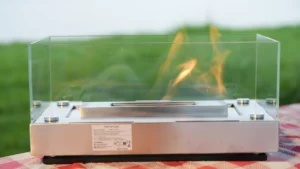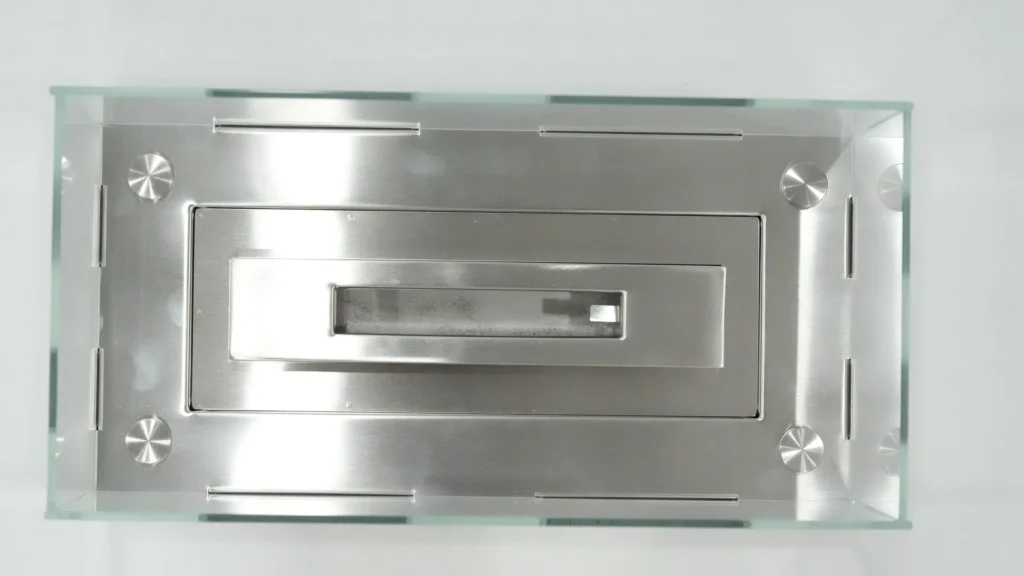
If your team is still mapping category-level hazards before reviewing EU standard details, start with HND’s tabletop ethanol fireplace safety guide to compare flame-jetting, pool-fire, stability, refuelling and supplier-documentation risks.
EU Market Compliance Guide
EN 16647-1:2025 replaces EN 16647:2015 for manually operated alcohol-powered flueless decorative fireplaces. For EU importers, distributors and private-label brands, the update affects more than laboratory testing: product structure, fuel containment, flame protection, combustion performance, markings, instructions and factory production control all need to be considered during product development.
What Is EN 16647-1:2025?
EN 16647-1:2025 is the latest European safety standard for manually operated decorative fireplaces for domestic use that burn liquid alcohol without a flue. It supersedes EN 16647:2015 and places manually operated products in Part 1. For buyers, the standard is a practical reference for product design, test planning, product information and production control; it should not be treated as legislation or as a stand-alone CE certification scheme.
The primary technical reference is EN 16647-1:2025 — Alcohol powered flueless fireplaces — Safety requirements and test methods — Part 1: Manually operated decorative fireplaces for domestic use. This guide paraphrases selected buyer-relevant considerations instead of translating or reproducing the paid standard.
Before a buyer reaches formal documentation review, the sample itself should also be screened for practical ethanol fireplace safety features such as fuel containment, flame access, guard glass fit, stability and extinguishing method. That design inspection helps decide whether the model is ready for deeper EN documentation checks.
Which Tabletop Ethanol Fireplaces Fall Within EN 16647-1:2025?
Scope should be confirmed before styling, tooling or packaging claims are fixed. A typical product falls within Part 1 when the following characteristics apply to the intended market configuration.
| Requirement | Typical Tabletop Product | Buyer Check |
|---|---|---|
| Domestic decorative use | Designed to create a decorative flame rather than perform a defined heating function | Align design, packaging and marketing claims |
| Liquid alcohol fuel | Uses the specified liquid alcohol fuel | Confirm the fuel specification in the manual and test plan |
| Manual operation | User manually ignites, fills, refills or extinguishes the appliance | Do not mix automatic-fireplace requirements into Part 1 |
| Ready-to-use fireplace | The fuel box is one unit or an integral component of the finished fireplace | Evaluate the complete product, not an isolated burner |
| Indoor application | Intended for domestic indoor use and placed on furniture or a wall shelf as defined by the manufacturer | Keep intended-use statements consistent |
| Verified output ≤4.5 kW | Decorative unit at or below the scope limit | Base the value on verification, not visual size |
EN 16647:2015 vs EN 16647-1:2025: What Changed?
The European foreword identifies a focused set of changes. The standard was aligned with the updated European safety framework and split into parts; Part 1 covers manually operated fireplaces, while requirements for automatically operated products were removed from Part 1. Gelatinous fuel was removed. Requirements for glass screens were added, combustion testing was revised, and the Factory Production Control section was revised.
For an importer, an older report is therefore a starting document, not a blanket conclusion. The final 2025 product configuration should be compared with the current scope and test program, with any required testing or documentation updates agreed before the purchase order.
Key Product Design Requirements Buyers Should Check
A useful sourcing review follows the physical safety system rather than reading the standard clause by clause.
Each item is connected. A larger burner can change capacity, flame position, centre of gravity, fuel consumption and emissions. A taller glass screen can change stability, surface temperatures and airflow. Changes that appear cosmetic can therefore alter the compliance-relevant configuration.
Fuel Tank and Secondary Containment
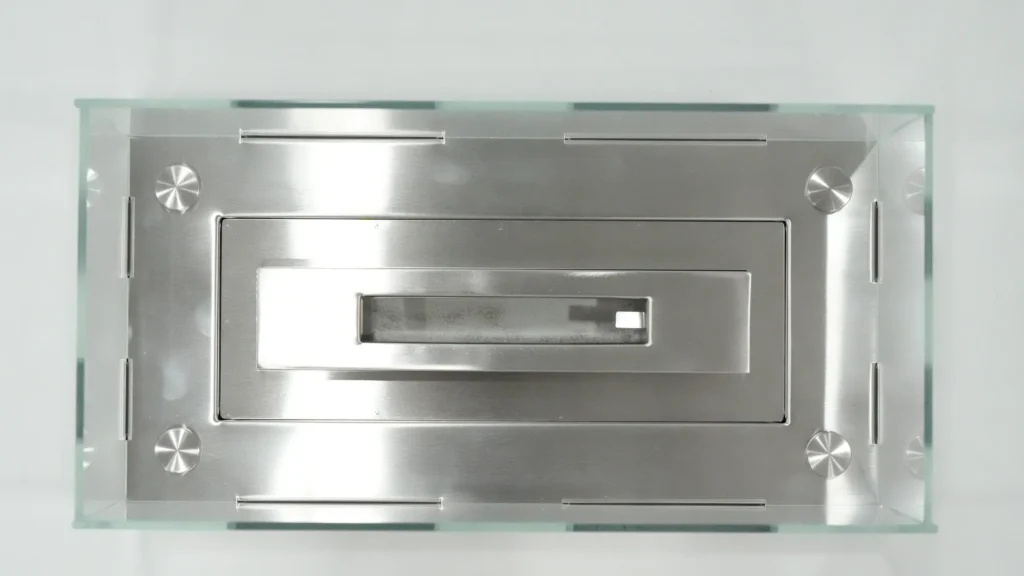
The maximum individual burner volume is 3 litres, and the maximum total fuel capacity of the fireplace is 10 litres, subject to any lower national or regional limit. The fuel storage container needs to prevent leakage, and a durable fill-level indicator or filling mark should help the user avoid overfilling.
The design also needs secondary containment with capacity of at least 110% of the actual filling volume. Excess fuel must be inspectable and removable. Buyers should review the burner, filling interface, tank and containment chamber as one system, including how welds, joints and removable parts behave in normal use.
Material Requirements
Fuel-contact parts are specified around X5CrNi18-10 / 1.4301 stainless steel unless an alternative material is supported by evidence for the required thermal, chemical, mechanical and corrosion performance. Fuel-tank weld construction is also compliance-relevant.
“Stainless steel” by itself is not an adequate sourcing record. The approved bill of materials should identify the grade, thickness and application, and the supplier should maintain material declarations and traceability through mass production.
Flame Accessibility and Glass Screens
Access to the flame must be obstructed. For tabletop fireplaces, the housing needs to restrict flame access from at least two sides. Product surfaces that could invite users to place objects near the flame require particular attention, and open-top configurations need appropriate shielding.
Where glass screens are used, the glass should be an appropriate heat-resistant construction and at least 4 mm thick. Thermal expansion, thermal shock resistance, safe edges and secure attachment all form part of the controlled design. A glass substitution after testing should therefore trigger an engineering review.
Stability and Spill Protection
A “heavy base” is not proof of stability. The complete tabletop fireplace is evaluated in critical directions, and the prescribed tilting and sliding method can take a tabletop unit to a 10° inclination.
| Test Area | Buyer Relevance |
|---|---|
| Tilting & sliding | Checks whether the unit moves or becomes unstable on an inclined smooth surface |
| Impact movement | Reviews movement and fuel leakage when the product is subjected to impact |
| Impact tilting | Assesses tipping behaviour and spillage under an impact-created load |
| Spillage | Checks fuel behaviour when the complete fireplace is tilted toward critical directions |
| Fuel containment | Confirms that the tank and secondary chamber work together during foreseeable movement |
Base footprint, centre of gravity, burner position, glass arrangement and fuel fill level can all affect the outcome. A visually similar redesign can require fresh verification.
Combustion and Indoor Air Performance
Combustion testing includes carbon monoxide and carbon dioxide performance under the specified framework. The complete fireplace is evaluated because burner geometry, fuel consumption, airflow, shielding and the surrounding structure can all affect emissions.
| CO Averaging Period | Concentration Limit in the Defined Test Framework |
|---|---|
| 15 minutes | <87 ppm |
| 30 minutes | <52 ppm |
| 1 hour | <26 ppm |
| 8 hours | <9 ppm |
For the eight-hour CO₂ test at maximum burner adjustment, the mean value remains below 5,000 ppm in the stated test framework. More importantly for the product file, the measured emissions feed a predictive model used to determine the minimum room volume for the specific fireplace.
Ignition, Extinguishing and Relighting
The product needs a safe manual ignition method with visual contact to the flame. Filling into an operating or hot burner must be clearly prohibited through durable product information and instructions. Safe excess-fuel removal and the risk of igniting spilled fuel also need to be addressed.
Under the prescribed manual shutdown test, the flame must extinguish within 10 seconds. Testing also considers self-reignition after shutdown and warm-state relighting. Buyers should review the closing mechanism, operating tool and warnings as a complete user-control system rather than treating these points as manual text added after tooling.
Labelling and Packaging
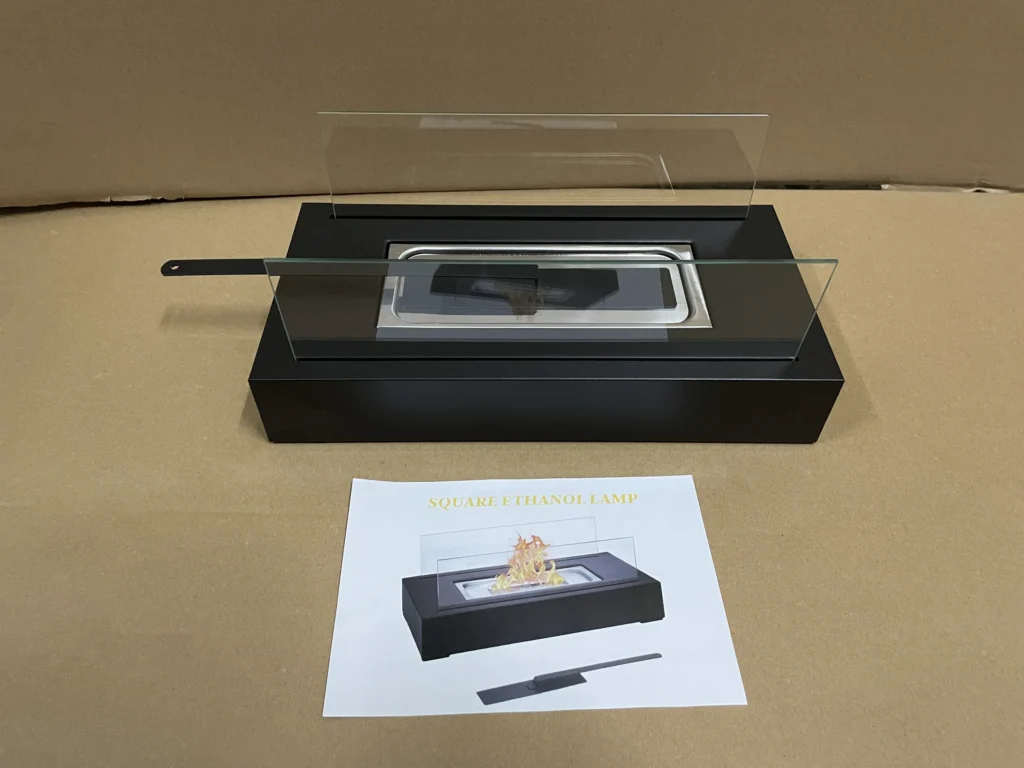
The durable product marking should identify the manufacturer or importer, trade name and product or batch identity. It also needs the applicable fuel type, maximum fuel volume, burner capacity, minimum combustible clearances and the product-specific minimum room volume.
Packaging should carry the required safety information and warnings, including ventilation/use conditions and precautions against hot refilling, overfilling, moving an operating fireplace, and leaving children or pets unattended near the flame. All artwork should be reviewed against the tested configuration before printing.
User Manual Requirements
The manual is part of the product system. It should address installation or placement, ventilation, fuel selection and storage, filling, ignition, shutdown, minimum room volume, maintenance, inspection of flame screens, emergency extinguishing and relevant warnings. Instructions must be supplied in the language required for the destination country.
For private-label programs, the brand owner and manufacturer should agree who owns translations, who approves safety artwork and how manual revisions remain linked to the product revision and test file.
Factory Production Control Matters as Much as the Prototype
Passing one sample does not mean later production automatically remains aligned. A documented Factory Production Control system should cover incoming materials and components, production procedures, inspection records, measuring-equipment calibration, equipment maintenance, final inspection, batch identification and traceability.
For an importer, the approved design should be locked in a controlled bill of materials. A change to steel grade, glass thickness, burner filling material, weld construction, warning label or packaging instruction should trigger documented review before it enters mass production. HND can support product-development reviews around EN 16647-1:2025 considerations and coordinate third-party testing for qualified projects; the specific configuration and test evidence remain decisive.
Buyer Checklist Before Ordering
- Product falls within EN 16647-1:2025 scope
- Manual operation confirmed
- Liquid alcohol fuel confirmed
- Verified thermal output ≤4.5 kW
- Burner volume ≤3 L
- Total fuel capacity ≤10 L, subject to lower local limits
- Secondary containment ≥110%
- Fuel-contact material checked
- Flame accessibility reviewed
- Glass ≥4 mm where applicable
- Stability and spillage tests planned
- CO / combustion testing planned
- Minimum room volume determined from test results
- Extinguishing requirement verified
- Rating plate and package warnings prepared
- Destination-country language manual prepared
- FPC, traceability and change control established
For EU Brands, Importers and Distributors
Developing a new tabletop ethanol fireplace for the European market? Send HND your product concept or reference design, target EU country, expected order quantity, preferred dimensions, packaging requirements and branding or private-label requirements.
HND can review the product structure against relevant EN 16647-1:2025 considerations before tooling and third-party testing. Buyers can first review suitable tabletop ethanol fireplace models, discuss OEM and private-label development, review HND information on fireplace testing and certification, or discuss your EU fireplace project directly with the team.
Discuss Your EN 16647-1:2025 Project
Share the intended market, product concept, order quantity, dimensions, packaging and branding requirements. HND can help review the structure before tooling and coordinate third-party testing for qualified projects.
Discuss Your EN 16647-1:2025 ProjectThis guide is intended to help buyers and product teams understand selected product-development considerations related to EN 16647-1:2025. It is not a substitute for the official standard, legal advice, or assessment by an accredited testing laboratory. Applicable EU and national requirements should be confirmed for each target market and product configuration.
Primary Technical Reference
EN 16647-1:2025 — Alcohol powered flueless fireplaces — Safety requirements and test methods — Part 1: Manually operated decorative fireplaces for domestic use. Obtain the official text from an authorised standards body. Public standard information: BSI standard information and purchase page.
Before approving a first sample, buyers can also review why ethanol fireplace compliance should start before product sampling, so scope, labels, manuals, packaging and model evidence are considered before the project moves into production planning.
If your sourcing list includes both manually filled tabletop fireplaces and electronically controlled burner systems, review the manual vs automatic ethanol fireplace standard guide before using EN 16647 evidence in RFQ or packaging decisions.
For teams comparing older documentation with the newer Part 1 structure, HND’s EN 16647:2015 vs 2025 tabletop ethanol fireplace comparison explains the buyer-facing changes to scope, manual operation, documentation, and supplier evidence.
For buyers who need to move from standard overview to supplier evidence review, HND also provides a focused guide to EN 16647-1:2025 testing requirements for tabletop ethanol fireplaces, including scope, stability, spillage, markings, manuals, and buyer file checks.
For buyers who already understand the EN 16647-1:2025 framework, the next practical step is checking whether production can repeat the tested design. HND’s EN 16647 factory production control guide explains what importers should ask for before turning a compliant sample into a bulk order.