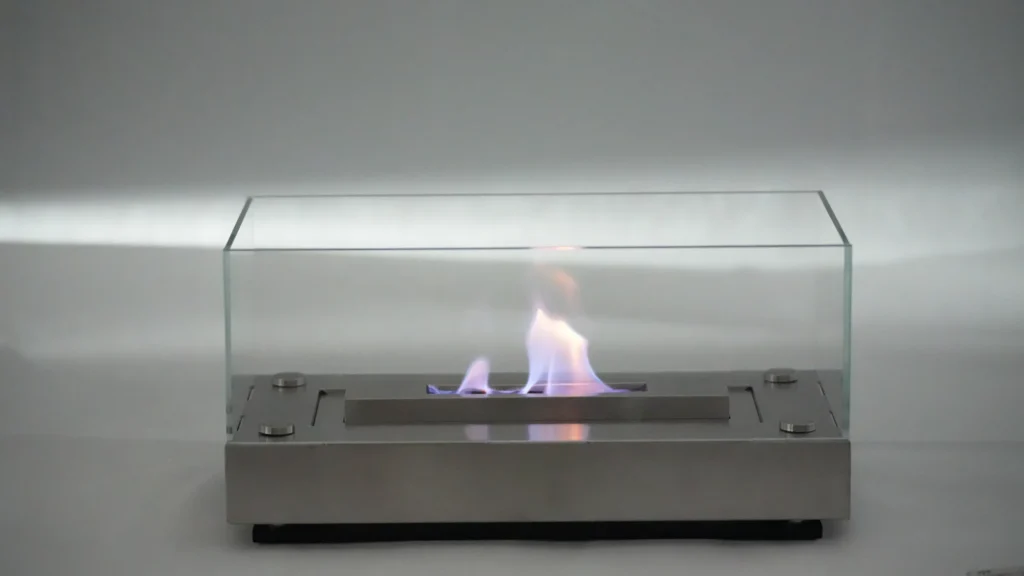
Quick Answer for Purchasing Teams
A tabletop fireplace sample approval checklist should confirm that the final approved sample is ready to become a controlled production reference. Before mass production, buyers should verify model identity, burner structure, glass and accessory fit, finish limits, safety documents, instruction and warning files, packaging protection, carton marks, inspection criteria, and written change-control rules. The approval should also state which sample is the master sample, which files are final, and which issues must be corrected before production starts.
For importers, distributors, retailers, hospitality purchasers, and private-label brands, this step is different from ordinary sample review. Earlier sample evaluation asks whether a product is promising. Final sample approval asks whether the buyer is ready to let the supplier produce hundreds or thousands of units against the same specification. If that approval is vague, disagreements can appear later around substitutions, surface marks, packaging damage, missing warnings, wrong accessories, or products that no longer match the sample used for the buying decision.
This BOFU guide follows HND’s earlier articles on why sample evaluation matters before bulk orders and how to evaluate tabletop ethanol fireplace sample quality. Use this page when your team is close to approving mass production and needs a practical release checklist.
Why Final Sample Approval Needs Its Own Checklist
A tabletop ethanol fireplace is a compact product, but the approval decision is not small. The buyer is approving a live-flame product, a packaging method, a user instruction system, a visible finish standard, and a supplier’s production discipline. A catalogue image cannot lock those details. A single email saying “approved” cannot explain which version of the burner, glass, carton insert, manual, warning label, and accessory set belongs to the order.
That is why final sample approval needs a written checklist. It turns a subjective decision into an auditable production reference. It gives the supplier a clear target. It gives the buyer’s inspection team a basis for checking the shipment. It also helps internal teams align: product, sourcing, QA, packaging, legal review, sales, and customer support should not be working from different assumptions.
Safety context is part of this discipline. The U.S. Consumer Product Safety Commission’s public warning data includes alcohol or liquid-burning fire pit warnings associated with flame-jetting hazards, deaths, and burn injuries. That evidence should not be used to generalize beyond its source or to describe every tabletop ethanol fireplace. It does show why buyers should connect product approval with clear fuel wording, use instructions, warning labels, and model-specific evidence before releasing mass production.
Define the Approved Sample Before Approving Anything Else
The first approval question is simple: which physical sample is being approved? In real sourcing work, buyers may receive a first sample, a revised sample, a packaging sample, a pre-production sample, and photos of a production-line sample. If the approval file does not identify the exact reference, the supplier may later argue that another version was accepted.
Name the master sample by model number, sample date, revision number, dimensions, burner type, material, finish, glass or guard structure, accessory set, carton type, and packaging file version. Photograph all important angles. Photograph the burner, snuffer, glass supports, label placement, carton, insert, manual, and accessories. If the product will use private-label packaging, record the artwork file name and approval date. For broader SKU decisions, connect the approved sample to the product role described in the tabletop ethanol fireplace product range.
Do not approve a sample if the factory says a key component will be changed later. A later change may be reasonable, but it should trigger another review. Buyer-side approval should be tied to the actual construction that will be produced.
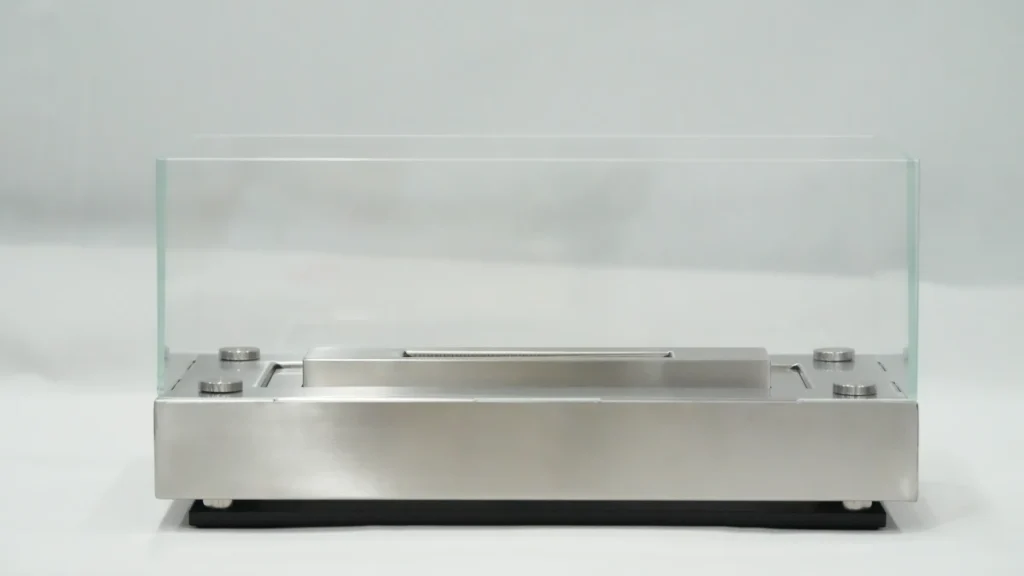
Mass-Production Approval Checklist
The table below is a practical release checklist for B2B buyers. It does not replace legal, regulatory, or accredited testing review. It helps a purchasing team decide whether a tabletop fireplace sample is ready for production release, still needs correction, or should be paused.
| Approval Area | What Must Be Confirmed | Evidence to Save | Release Decision |
|---|---|---|---|
| Master sample identity | Exact model, revision, dimensions, burner, glass, accessories, finish, carton, and approved date. | Signed sample sheet, photos, quotation, BOM or specification summary, and sample tag. | Do not release production until the approved reference is traceable. |
| Safety and use documents | Manual, warnings, fuel wording, extinguishing instructions, and applicable document scope match the sample. | Final manual file, warning label file, report list, and supplier explanation of standard or market basis. | Pause if documents describe a different model or make unsupported claims. |
| Visible quality standard | Acceptable finish, glass clarity, edge quality, fit, scratch limits, color tolerance, and assembly feel are defined. | Limit samples, photos, inspection notes, and accepted or rejected defect examples. | Release only after appearance limits are practical for mass inspection. |
| Packaging and labels | Inner protection, accessory placement, manual placement, carton marks, barcode needs, and artwork are final. | Packaging sample photos, carton artwork, label files, packing method, and shipping-mark confirmation. | Do not release if final packing is still temporary or undocumented. |
| Inspection plan | Critical, major, and minor defects are defined; sampling method and acceptance rules are agreed. | Pre-shipment inspection checklist, AQL or buyer inspection plan, defect definitions, and measurement points. | Release only when supplier, buyer, and inspector use the same criteria. |
| Change control | Supplier must disclose changes to burner, glass, base, finish, labels, manual, carton, accessories, or fuel wording. | Purchase-order clause, written supplier commitment, and revision log. | Do not accept quiet substitutions after sample approval. |
Connect Approval With Safety Documents
Approval should never rely on the phrase “standard product” alone. Ask which standard, report, instruction file, and label logic the supplier believes applies to the exact model. ASTM identifies F3363-25 as a standard specification for unvented liquid or gel fuel-burning portable devices. The Australian Competition and Consumer Commission maintains guidance for decorative alcohol fuelled devices under a mandatory standard. Those references are not interchangeable labels. They are reminders that scope matters.
Buyers should compare the document set with the sample in hand. Does the report or evidence describe the same model? Does the manual match the burner and accessory set? Does the packaging wording match the product and market? Does the supplier explain what evidence is model-specific and what is general factory information? HND’s BOFU guide to ethanol fireplace supplier safety documents gives a deeper document-request framework for this part of the approval file.
Do not convert a supplier’s broad statement into a stronger public claim. If the evidence is still under review, say so internally and keep printed claims conservative until they are verified. If your target market has specific requirements, get market-specific review before approving packaging, manuals, and sales copy.
Set Product Quality Limits That an Inspector Can Actually Use
Many sample approvals fail because the buyer writes “same as sample” but does not define what matters. A pre-shipment inspector cannot inspect a feeling. The buyer must define visible and functional limits. For tabletop fireplaces, common inspection points include base stability, burner placement, snuffer operation, glass or guard fit, edge finishing, coating condition, color consistency, accessory completeness, manual inclusion, label placement, carton condition, and barcode or shipping-mark accuracy.
Use the recent tabletop ethanol fireplace sample quality guide to separate structure, finish, packaging, and documentation issues before writing the final acceptance criteria. Then convert those criteria into defect categories. Critical defects should include wrong model, missing safety information, unsafe structure, missing essential accessory, or a packing method that cannot protect the product. Major defects may include visible finish damage, unstable assembly, wrong carton label, missing manual, or poor glass fit. Minor defects may include small appearance marks within a defined limit.
If the buyer uses formal sampling, the inspection plan should be selected deliberately. That does not mean every project must use the same sampling level or acceptance limit. It means buyers should avoid informal, undefined checking when they need a consistent decision for production release and shipment acceptance.

Approve Packaging Before the Factory Prints or Packs at Scale
Packaging approval is a production decision, not a design afterthought. For tabletop fireplaces, packaging protects glass, burner parts, accessories, labels, manuals, and surface finish. It also affects warehouse handling, e-commerce fulfillment, retail presentation, and customer support. A strong product sample can still fail commercially if the carton allows movement, the accessory bag opens, the manual is hidden, or the glass is not separated from hard parts.
Request the final packing method before mass production. The buyer should check inner protection, foam or insert logic, accessory placement, manual placement, warning card placement, carton marks, barcode needs, pallet logic, and whether the product can be repacked correctly after inspection. If the order requires branded packaging, verify that the approved artwork does not make claims that the document set cannot support.
For projects that need retail boxes, insert structures, or private-label cartons, HND’s customized packaging service is relevant before final release. When distribution or shipment risk needs formal validation, ISTA lists packaged-product test procedures and projects that can be considered based on route, carton, weight, and channel needs. Choose any formal test method based on the real shipping environment rather than as a generic badge.
Use a Change-Control Rule in the Purchase Order
A sample approval is only useful if the supplier does not change the product after approval. In practice, changes can happen for cost, availability, tooling, packaging, accessory supply, manual printing, or production convenience. Some changes are harmless. Others may affect safety evidence, fit, appearance, packaging protection, or user instructions.
The purchase order should state that the supplier must disclose and get buyer approval for any change to the burner, fuel chamber, base, glass, guard, fasteners, finish, label, manual, carton, insert, accessory, fuel wording, or model marking. If the supplier proposes a change, decide whether the buyer needs a revised sample, updated photos, updated documents, or new testing review. Do not let the first time you discover the change be during final inspection or after customer complaints.
This is especially important for OEM and private-label work. If the project involves logo placement, color changes, custom carton artwork, new accessories, custom cutting, or custom molding, use HND’s customized fireplace service to align the approved sample, files, and production requirement before release.
Run the Approval Meeting Like a Production Gate
The final approval meeting should not be a casual review of sample photos. Treat it as a production gate. The meeting should include the buyer’s sourcing owner, product owner, QA or inspection owner, packaging owner, and the supplier contact who can confirm production details. If your organization is smaller, the same person may cover several roles, but the checklist should still cover each decision area.
Work through the physical sample, documents, packaging, and order file in the same session. Confirm the exact model and quotation. Review product construction. Check whether safety documents and instructions match. Confirm packaging. Confirm inspection criteria. Confirm lead time, deposit, production schedule, and pre-shipment inspection timing. Confirm who can approve changes. Then write the decision as approved, approved with corrections, revise and resubmit, or rejected.
If the order is a first bulk order, also review SKU mix and order structure. HND’s guide on choosing tabletop fireplace models for a first wholesale order can help align sample approval with range planning, MOQ, and reorder risk.
What to Put in the Final Approval File
The approval file should be simple enough that a buyer can actually maintain it. Include the approved sample sheet, product photos, final quotation, specification summary, applicable document list, final manual, final warning label, final packaging artwork, carton and packing photos, inspection checklist, agreed defect definitions, change-control clause, and supplier confirmation. If third-party testing, market review, or transit testing is still pending, record that status clearly rather than burying it in email.
Save the approval file before paying the production deposit or authorizing mass production. If the supplier works from a different file set, correct the issue before release. The goal is not to create a complex bureaucracy. The goal is to make sure the factory, buyer, inspector, and sales team all know which product is being made and what evidence supports it.
For buyers still comparing models, start with HND’s tabletop ethanol fireplace products. For buyers needing export planning after approval, connect the final sample file with HND’s bulk export service so carton marks, packing method, and shipment schedule stay aligned.
Red Flags That Should Stop Mass Production Approval
Some red flags should stop the approval. These include no traceable master sample, no final manual, missing warning label, report or evidence for another model, undocumented burner change, unstable glass fit, weak packaging, wrong carton marks, supplier refusal to disclose changes, or inspection criteria that no one can apply. Another red flag is pressure to approve production while important safety, documentation, or packaging questions remain open.
Price pressure is not a reason to skip approval. A cheaper product can become more expensive if it causes replacement shipments, customer returns, listing takedowns, packaging rework, delayed launch, or brand damage. The final sample approval checklist exists to catch those issues before production begins, when changes are still possible.
If your team is unsure whether a detail is a safety feature, a quality issue, or a packaging issue, review HND’s ethanol fireplace safety features checklist and public certificates and accreditations page, then ask project-specific questions for the exact model under consideration.
Discuss Sample Development and Production
If you are close to approving tabletop fireplace mass production, HND can help review sample status, product structure, packaging direction, document requests, customization needs, and export planning. Share your model target, market, packaging requirement, quantity range, and approval concerns through the HND contact page.
FAQs
What is the difference between sample evaluation and sample approval?
Sample evaluation asks whether the product is worth continuing. Sample approval is the final production gate. It confirms that the exact model, documents, packaging, inspection rules, and change-control requirements are ready for mass production.
Should the approved tabletop fireplace sample be kept by the buyer or supplier?
Both sides should keep clear reference evidence. Ideally, the buyer keeps one approved sample or detailed photos and records, while the supplier keeps a tagged master sample for production comparison. The purchase order should identify the approved version.
Can a supplier change materials after sample approval?
Not without buyer review. Any change to burner, glass, base, finish, accessory, label, manual, carton, or fuel wording should be disclosed and approved because it may affect quality, safety evidence, packaging, or user instructions.
What documents should be final before mass production starts?
The final file should include the approved sample sheet, specification summary, applicable report or document list, instruction manual, warning labels, packaging artwork, carton marks, packing method, inspection checklist, and change-control agreement.
Is a pre-production sample required for every tabletop fireplace order?
It depends on project risk. A repeat order of an unchanged model may use the existing master sample. A new model, private-label order, packaging change, material change, or safety-document update usually deserves a pre-production sample or equivalent approval evidence.
How should buyers define acceptable defects?
Define critical, major, and minor defects before production. Use clear examples for wrong model, unsafe structure, missing warnings, finish damage, glass fit, accessory completeness, label placement, carton condition, and other inspection points.
When should HND be contacted during sample approval?
Contact HND before final production release if you need help aligning model selection, sample revisions, packaging, private-label requirements, document requests, bulk export planning, or inspection criteria for a tabletop ethanol fireplace order.


