Quick Answer for Importers and Distributors
Ethanol fireplace supplier safety documents should prove that the exact product being quoted has been reviewed against the target market, the intended use, and the safety claims being made. A useful document pack normally includes model identification, product drawings or specifications, applicable test reports or standard references, instruction manuals, warning labels, packaging artwork, fuel-use wording, material information, quality-control records, and a written change-control process for mass production.
The key word is exact. A generic certificate, a report for a different burner, a manual copied from another model, or a broad claim such as “suitable for all markets” should not be treated as enough for a purchase order. Buyers should request evidence before approving samples, then convert the approved evidence into the RFQ, packaging files, inspection checklist, and supplier agreement. If the supplier cannot connect documents to the actual model, burner, accessories, carton, and market, the sourcing risk is still open.
This BOFU guide is for buyers who already understand the basic risk profile of tabletop ethanol fireplaces. For earlier context, review HND’s tabletop ethanol fireplace safety guide and the more detailed ethanol fireplace safety features checklist before using this document-request framework.
Why Supplier Documents Matter Before a Fireplace Purchase Order
Open flame products create a different sourcing burden from ordinary decor. A tabletop ethanol fireplace may be compact, attractive, and easy to photograph, but the buyer still has to understand how liquid fuel is controlled, how the flame is extinguished, how users are warned, how packaging protects parts, and which evidence supports the market claim. Documents are not paperwork for paperwork’s sake. They are the bridge between the sample on the table and the product that arrives in a container, warehouse, store, hotel, or online customer order.
For importers, retailers, wholesalers, and private-label brands, the practical question is not “Does the supplier have any certificate?” The better question is “Which documents prove this exact product is appropriate for this exact market and channel?” That distinction prevents several common mistakes. A buyer may receive an old report for a previous design. A supplier may send a standard name without showing whether the current burner construction was included. Packaging artwork may make a claim that the report does not support. The manual may describe a different accessory or filling sequence from the one packed with the sample.
Document review should therefore happen before commercial pressure locks the buyer into the wrong model. It belongs in the same decision stage as sample approval, carton approval, and final RFQ confirmation. If your team is still comparing models, HND’s guide to choosing tabletop fireplace models for a first wholesale order can help connect the document request to SKU planning and order risk.
Start With the Target Market and Product Scope
Before asking for reports, define the market and use case. The same physical product can raise different questions when sold into the EU, the United States, Australia, Canada, hospitality purchasing, e-commerce, or private-label retail. A fixed decorative appliance is not the same as a portable tabletop product. A liquid-fuel device is not the same as an electric decorative heater. A sample used for a product photo is not proof that the packed production unit has the same burner, warning label, and instructions.
This is why a supplier document pack should begin with a product identification sheet. It should name the model, product family, dimensions, burner type, materials, accessory set, fuel wording, carton configuration, and intended market. Without that foundation, the buyer cannot tell whether later documents belong to the same product. A report number is useful only when the product described inside the report can be matched to the quotation, sample, packaging, and production plan.
For EU-oriented projects, buyers should pay close attention to the product category and documentation trail. HND has a separate EN 16647-1:2025 buyer guide for tabletop ethanol fireplaces, but this article focuses on the broader sourcing question: what evidence should the supplier provide before the importer relies on a safety or compliance claim?
Core Document Request Checklist
The following table gives purchasing and QA teams a practical way to structure the first document request. It does not replace legal advice, accredited testing, or market-specific review. It helps buyers avoid vague requests and makes supplier responses easier to compare.
| Document or Evidence | What It Should Confirm | What Buyers Should Watch For | When to Request It |
|---|---|---|---|
| Model identification sheet | Exact model number, product family, dimensions, burner type, accessories, carton, and intended market. | Model names that change between quotation, sample label, test report, and packaging file. | Before sample approval. |
| Applicable standard or test basis | Which standard, regulation, or buyer requirement the supplier believes applies to the product and market. | Broad claims that do not explain product scope, market scope, or whether the reference covers the exact device. | Before pricing is treated as final. |
| Test report or technical report | Report holder, model description, tested construction, issue date, laboratory, and test basis. | Reports for another model, expired or incomplete pages, missing scope, or unsupported “certified” language. | Before purchase order confirmation. |
| Instruction manual and warnings | Fuel type, filling, lighting, extinguishing, cooling, placement, refuelling, storage, and user restrictions. | Manuals that do not match the supplied burner, accessory set, carton language, or target market. | During sample and packaging review. |
| Packaging and label artwork | Carton claims, warnings, fuel wording, importer details where needed, and placement of safety information. | Marketing claims that go beyond evidence, missing warnings, or artwork copied from another SKU. | Before mass-production packaging approval. |
| Quality-control and change records | How the factory keeps burner, glass, base, accessory, label, and carton details consistent in production. | Quiet substitutions after sample approval, undocumented accessory changes, or weak inspection criteria. | Before deposit or production release. |
How to Read a Test Report Without Over-Claiming
A test report is not a magic pass for every sales channel. Read it like a matching document. Check the report holder, model number, product photos or drawings, construction description, fuel reference, burner details, accessory list, test basis, issue date, and any limitations. Then compare those details with the physical sample and the supplier’s quotation. If the report describes a different burner, different size, different installation type, or different accessory set, ask whether the report still applies.
Standards also have scopes. The ASTM catalogue page for F3363-25 identifies a standard specification for unvented liquid or gel fuel-burning portable devices. The UL 1370 scope page addresses unvented alcohol fuel-burning decorative appliances but includes scope language for factory-built fixed, non-moveable appliances. In Australia, the ACCC points businesses to a mandatory standard for decorative alcohol fuelled devices, and the official Federal Register hosts the Consumer Goods (Decorative Alcohol Fuelled Devices) Safety Standard 2017. These references are useful because they remind buyers to ask scope questions, not because a standard name alone proves the product is acceptable.
Importers should also avoid turning a supplier’s informal statement into a public claim. “Supplier referenced ASTM F3363” is not the same as “this model is certified.” “Document pack under review” is not the same as “compliant in every market.” If the product will be sold under your own brand, align the claim language with the evidence and the target jurisdiction. When in doubt, use conservative wording and get qualified review before printing claims on packaging or online product pages.
Manuals, Warning Labels, and Fuel Wording Are Part of the Product
Instruction manuals and warning labels often reveal whether a supplier understands the product as a safety system. The manual should describe the same burner and accessory supplied with the sample. It should explain safe placement, filling, lighting, extinguishing, cooling, storage, and refuelling in a sequence that a real user can follow. It should not depend on vague common sense or assume that users will already understand alcohol-fuel risks.
Fuel wording deserves special attention. Decorative alcohol-fuelled devices involve liquid or gelled fuels, but the exact language must match the product and market. Buyers should not accept labels that casually mix terms, encourage inappropriate fuel substitution, or omit cooling and refuelling warnings. The document pack should also show where warnings appear: product label, manual, retail carton, insert, online listing, and replacement-part information where relevant.
For private-label projects, manuals and labels should be reviewed before packaging goes to print. Brand teams may want a cleaner design, but safety information cannot be treated as decorative copy. If your project involves custom branding, coordinate product, packaging, and documentation with HND’s OEM/ODM customization service so the approved sample and the printed materials describe the same product.
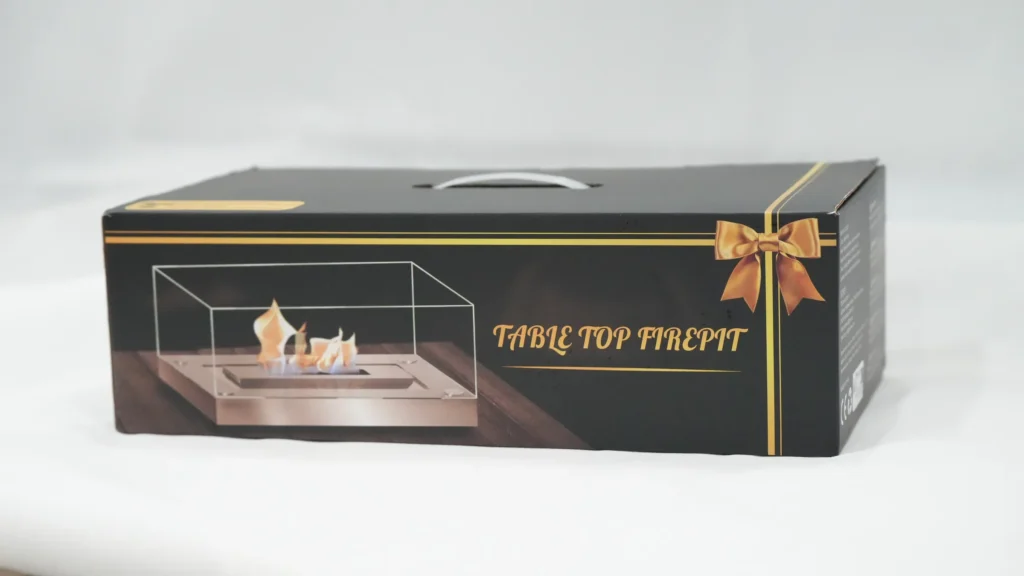
Packaging Documents Should Support Safety, Not Only Branding
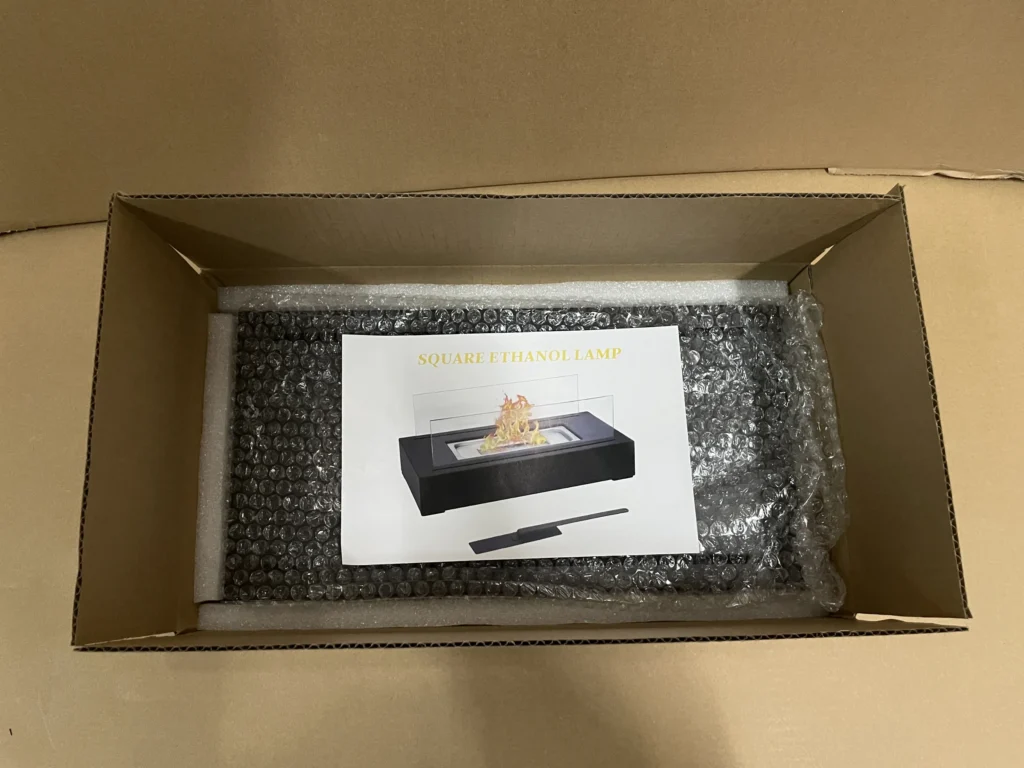
Packaging is where many sourcing teams separate design from compliance. That is risky. The carton, internal inserts, manual, warning card, accessory bag, and product label all affect how the user receives the product. If the snuffer is loose, the manual is hidden, the warning label falls off, or the glass panel is damaged during shipment, the user experience no longer matches the approved sample.
Request packaging artwork and packing method evidence before production. For export orders, ask how glass panels are protected, how accessories are separated, whether labels remain visible, and how the carton identifies the exact SKU. If the product will be sold online, check whether the listing images and carton claims match the manual and test basis. If the product will be distributed to retail stores, check whether barcode labels, importer information, and safety warnings are complete for the channel.
HND’s bulk export service is relevant here because export packaging, carton marks, pallet planning, and documentation need to work together. A good supplier should help buyers connect product protection, safety information, and shipping requirements before the order leaves the factory.
Certificates and Factory Documents: Useful but Not Enough Alone
Factory certificates can help buyers understand the supplier’s quality system, but they do not automatically prove that a specific ethanol fireplace model is suitable for a specific market. A factory-level certificate is different from a model-specific product report. A business license is different from a safety test. A product catalogue is different from a controlled specification.
Buyers should request factory information, quality-system evidence, and relevant certificates, then keep those documents in the right category. Use factory documents to judge supplier capability. Use model documents to judge product evidence. Use packaging, manual, and label files to judge what the user will actually receive. Mixing these categories creates false confidence.
For a supplier background check, buyers can review HND’s certificates and accreditations page and then ask project-specific questions for the selected model. The public certificate page is a starting point, not a substitute for the document pack tied to your order.
How to Compare Supplier Responses
When two suppliers respond to the same request, do not compare only the number of files attached. Compare the quality of the connection between files. A strong response names the exact model, explains the applicable standard or requirement, sends readable documents, identifies what is model-specific, and states whether any claim still needs buyer-side confirmation. A weak response sends scattered certificates, old screenshots, unreadable scans, or broad promises without scope.
Create a simple scorecard with five decisions: accepted, needs clarification, needs revision, needs third-party review, or reject. Use the same scorecard for the sample, report, manual, label, carton, and production-control plan. This makes the sourcing conversation practical. Instead of arguing over price first, the buyer can say: “We can continue after the report model, manual, carton label, and burner specification are aligned.”
For new supplier selection, connect this review with HND’s wholesale tabletop ethanol fireplace sourcing guide. Supplier evidence is one part of the buying journey, alongside product selection, sample approval, packaging, MOQ, export planning, and repeat-order reliability.
Red Flags That Should Stop or Pause the Order
Some red flags should pause the purchase until corrected. These include a report for a different product, missing model identification, conflicting fuel wording, manual steps that do not match the accessory set, label artwork with unsupported claims, unclear importer responsibility, or a supplier who cannot explain which standard applies to the exact product. A low price should not override these gaps.
Other red flags appear after sample approval. If the supplier changes the burner, glass thickness, base, fuel cup, snuffer, label, carton, or manual after approval, ask for written confirmation and decide whether the evidence must be updated. A small production change can affect the document trail. Buyers should include change-control language in the purchase order so the supplier cannot substitute a safety-related component without approval.
Finally, be cautious when the supplier insists that documentation can wait until after deposit. Some details can reasonably be finalized later, but the core evidence should be available before the buyer commits to a high-risk SKU. Document review is not a closing formality. It is part of deciding whether the product belongs in your range.
A Practical RFQ Document Clause
Buyers can make the process easier by adding a document clause to the RFQ. The clause should state that the quotation must identify the exact model, target market, applicable standard or test basis, available report list, manual language, warning label files, packaging artwork status, accessory list, and any pending buyer-side review. It should also state that any change to burner, fuel chamber, glass, base, snuffer, warning label, manual, or carton must be disclosed before mass production.
This clause does not need to be aggressive. It simply makes the expected evidence clear. Serious suppliers usually prefer clear requirements because they reduce late-stage disputes. Buyers benefit because the same details can be used in the sample approval record and pre-shipment inspection checklist.
If your team is still defining the product range, start with HND’s tabletop ethanol fireplace products and then build the document request around the specific models under consideration. If you already have a shortlist, move directly to model-specific reports, labels, manuals, and packaging evidence.
Send Your Market and Product Requirements
If you are preparing to source tabletop ethanol fireplaces, HND can help review the model, burner structure, accessory set, packaging plan, OEM/ODM needs, and document request before you approve a wholesale order. Share your target market, sales channel, model preference, and required evidence through the HND contact page.
FAQs
What safety documents should an ethanol fireplace supplier provide first?
Start with a model identification sheet, applicable standard or test basis, model-specific test or technical reports, instruction manual, warning labels, packaging artwork, accessory list, and quality-control or change-control information. The documents should match the exact sample and target market.
Is a supplier certificate enough to approve a tabletop ethanol fireplace order?
No. A supplier or factory certificate may help evaluate capability, but it does not automatically prove that a specific fireplace model is suitable for a market. Buyers should request model-specific evidence, manuals, labels, packaging files, and written confirmation that production will match the approved sample.
How do I know whether a test report belongs to the product I am buying?
Compare the report holder, model number, product photos, dimensions, burner structure, fuel reference, accessories, and test basis against the physical sample, quotation, and packaging file. Any mismatch should be clarified before purchase order confirmation.
Should importers ask for ASTM, UL, EN, or Australian documents?
Ask the supplier which standard or regulatory framework applies to the exact product and target market, then verify the scope. ASTM F3363-25, UL 1370, EN 16647-1:2025, and Australia’s decorative alcohol fuelled device requirements have different scopes and should not be used as interchangeable labels.
What documents are most important for private-label fireplace packaging?
Private-label buyers should review carton artwork, warning labels, instruction manuals, fuel wording, importer details where required, barcode or SKU identification, accessory information, and any claims printed on the package. Packaging claims should not exceed the product evidence.
When should document review happen in the sourcing process?
Document review should happen during sample approval and before the purchase order is treated as final. Waiting until after deposit or mass production can make it harder to change the model, revise labels, correct packaging, or request additional evidence.
What should buyers do if a supplier sends generic documents?
Ask the supplier to map each document to the exact model, burner, accessory set, packaging, and target market. If the supplier cannot make that connection, treat the response as incomplete and pause the order until the evidence is corrected or independently reviewed.
Sources and References
- ASTM F3363-25 catalogue page for unvented liquid/gel fuel-burning portable devices
- UL 1370 standard page for unvented alcohol fuel-burning decorative appliances
- ACCC Product Safety mandatory standard page for decorative alcohol fuelled devices
- Consumer Goods (Decorative Alcohol Fuelled Devices) Safety Standard 2017
- Regulation (EU) 2023/988 on general product safety