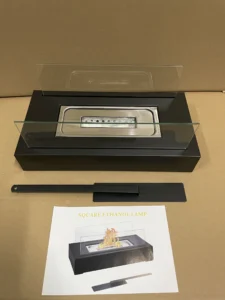
Quick Answer for B2B Buyers
Tabletop ethanol fireplace sample quality should be evaluated by checking the physical sample against the quotation, target market, intended packaging, safety evidence, and future production inspection plan. A good sample review does not ask only whether the fireplace looks attractive. It asks whether the burner sits correctly, glass and base parts fit securely, surface finish is repeatable, accessories match the manual, warnings and documents match the exact model, and packaging can protect the unit through export and local distribution.
For importers, distributors, retailers, sourcing teams, private-label brands, and hospitality buyers, the sample is the bridge between product interest and bulk-order risk. The sample should create clear decisions: approve, revise, reject, or request a pre-production sample. If the team cannot define what is acceptable from the sample, the purchase order and final inspection will also be vague.
This MOFU guide continues HND’s earlier article on why sample evaluation matters before bulk orders. Here the focus is narrower: how to inspect the sample that has already arrived and turn the findings into quality requirements.
Start by Matching the Sample to the Buying Requirement
Quality evaluation starts before anyone touches the burner or glass. The buyer should confirm that the sample in hand is the same product being quoted. Check the model name, dimensions, burner structure, base material, glass style, accessories, packaging method, manual version, and any logo or color request. If the sample identity is unclear, the rest of the inspection becomes weak because the buyer may be judging one product while the supplier later produces another.
This identity check matters especially when buyers compare multiple models in the same range. A rectangular tabletop unit for an online home decor channel may need different packaging and finish requirements from a compact cylindrical model for gift retail or hospitality use. HND’s guide to building a tabletop ethanol fireplace product range explains why product role should shape SKU selection before the buyer commits to a first order.
Create a short sample record before inspection. Include supplier name, model number, sample date, received condition, quoted configuration, intended market, target channel, and the buyer’s required decision. The record prevents later confusion when revised samples, packaging mockups, and pre-production samples start to circulate among purchasing, product, compliance, and sales teams.
Sample Quality Evaluation Matrix
The table below is a practical review structure for B2B buyers. It does not replace accredited testing, legal advice, or a market-specific compliance assessment. It helps a buying team decide whether the physical sample is ready for commercial discussion, needs supplier correction, or should be stopped before the project reaches bulk-order approval.
| Evaluation Area | Sample Checks | Common Defects or Gaps | Bulk-Order Decision |
|---|---|---|---|
| Model traceability | Model number, size, finish, burner, glass, accessories, manual and carton information match the quote. | Generic sample, wrong accessory set, unmarked carton, report for a different model. | Do not approve until the exact configuration is traceable. |
| Structure and assembly | Base levelness, burner seating, glass fit, feet, fasteners, snuffer access and handling feel. | Loose glass, unstable base, misaligned burner, sharp edges, weak accessory fit. | Request correction or a revised sample before price negotiation. |
| Material and finish | Coating, stainless surface, weld or edge finish, glass clarity, color consistency and visible scratches. | Uneven coating, burrs, marks after normal handling, glass chips, inconsistent color. | Define acceptable limits and keep reference photos. |
| Use sequence | Unboxing, assembly, fuel-area access, extinguishing accessory, cooling language and repacking. | Manual does not match product, accessory hard to use, unclear warning sequence. | Revise manual, label or accessory design before approval. |
| Safety evidence | Market basis, test scope, report model, warning labels, fuel wording and supplier change-control notes. | Certificate without model scope, outdated report, vague compliance claim. | Ask for model-specific evidence; avoid public claims until verified. |
| Packaging | Glass separation, foam or insert fit, accessory bag, manual location, carton marks and drop-protection plan. | Product moves in carton, glass touches metal, weak inserts, missing handling labels. | Approve only with final or clearly specified packaging method. |
| Repeatability | Approved BOM, finish reference, artwork version, inspection criteria and pre-production sample need. | Supplier says details may change after order, no inspection standard, no approved file control. | Convert findings into PO and inspection requirements. |
Inspect the Base, Burner and Glass as a System
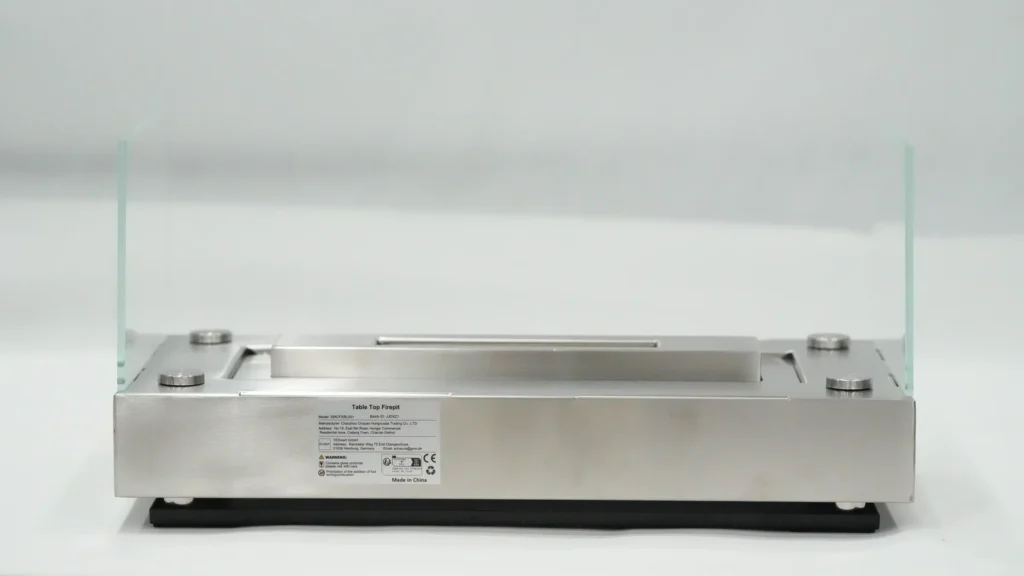
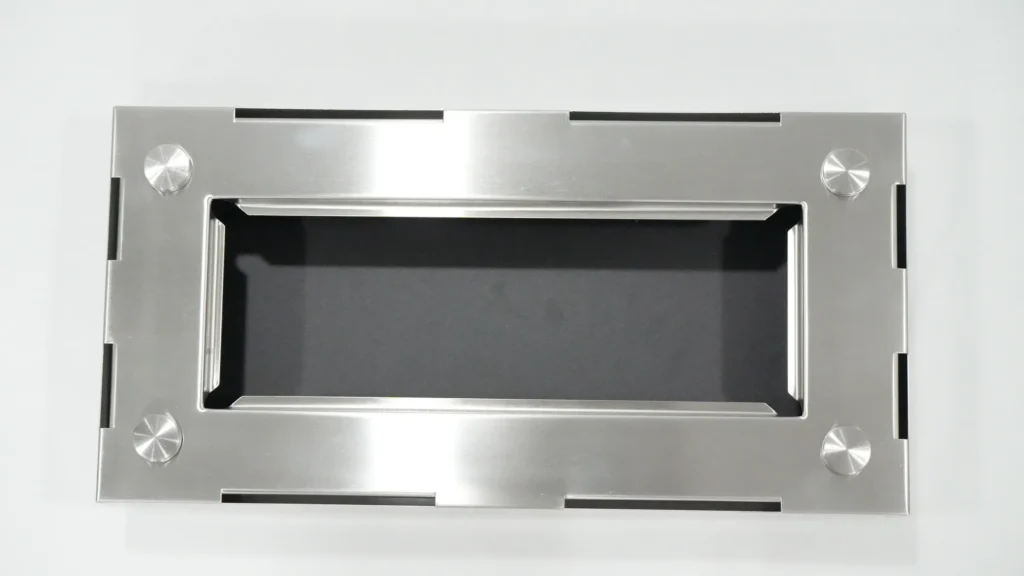
A tabletop ethanol fireplace should be evaluated as a complete system, not as separate decorative parts. The base affects stability, the burner affects use sequence, the glass affects access and handling, and the snuffer or cover affects how the user ends the flame. A sample can look acceptable in a supplier photo while still failing a basic handling review when the buyer assembles, moves, opens, and repacks it.
Start with the base. Place it on a flat surface and check whether it rocks, twists, or feels uneven. Look at the underside, feet, fasteners, welds, coating and corners. A small appearance defect may be acceptable if it is hidden and agreed, but a sharp edge, unstable foot, or loose fitting should be treated as a serious quality issue because it can multiply across a shipment.
Next, review the burner area. Confirm that the burner sits correctly, that the opening matches the product description, and that any cover or snuffer aligns with the burner. Do not infer performance from appearance alone. For safety-oriented structure review, use HND’s ethanol fireplace safety features guide as a companion checklist.
Glass requires its own attention. Check edge smoothness, panel fit, visible chips, support points, assembly logic and how the glass is protected during packing. If the buyer cannot safely install or remove the glass during sample review, the product may create support issues later for retailers, distributors, or hospitality teams.
Check the Finish Under Real Handling Conditions
Surface finish is one of the fastest ways a buyer, retailer, or end customer judges quality. A sample should be inspected under normal room light, side light, and close handling. Look for scratches, coating variation, exposed edges, fingerprints that do not clean easily, uneven gloss, welding marks, and areas where packaging has rubbed against the product.
Do not approve finish quality with a vague phrase such as “same as sample” unless the buyer has clear reference photos and acceptance notes. A better sample record says which surfaces are customer-facing, which small marks are acceptable, which marks are not acceptable, and how many defects would trigger rejection during inspection. This is especially important for black, white, stainless, brushed, mirrored, and custom color finishes because small differences can be obvious in e-commerce photos and retail display lighting.
If the product is intended for private label, finish approval should also consider logo placement, printed warnings, manual design, and carton artwork. HND’s customized fireplace service and customized packaging service are relevant when the sample will later become a branded SKU rather than a standard catalogue product.
Connect Quality Review With Safety Documents
Quality inspection and safety evidence should not be separated. Public regulators and standards bodies have repeatedly treated alcohol-fuelled decorative products as a product-safety category, not only as home decor. The U.S. CPSC warning listing includes warning 25-074 dated December 19, 2024 for alcohol or liquid-burning fire pits and reports two deaths and at least 60 injuries since 2019. ASTM identifies F3363-25 as a standard specification for unvented liquid or gel fuel-burning portable devices. Product Safety Australia maintains guidance for decorative alcohol fuelled devices under a mandatory standard. In the European Union, Regulation (EU) 2023/988 provides the broader general product-safety framework.
These references do not prove that a specific sample is compliant, and buyers should not present them that way. They show why a buyer should ask whether the supplier’s documents match the exact sample, target market and final configuration. If a report covers a different burner, different glass structure, different accessory set or earlier revision, it may not support the sample being approved.
Ask for the exact model name on reports, drawings, manuals, warnings and packaging files. If the supplier claims the product follows a standard or market rule, request a clear explanation of scope. HND’s BOFU guide on ethanol fireplace supplier safety documents lists the evidence buyers should request before purchase-order release.

Evaluate Packaging Before You Approve the Product
Packaging is part of sample quality because it determines whether the approved product can arrive in sellable condition. For tabletop ethanol fireplaces, packaging must protect glass, finish, burner parts, accessories, manuals and labels. It also affects carton marks, retail presentation, warehouse handling and replacement risk.
Open the sample carton as a warehouse or customer would. Check whether the manual is easy to find, whether accessories are separated, whether the glass touches metal, whether foam or inserts hold the product tightly, and whether the carton identifies the correct SKU. If the sample arrived in temporary packaging, record that limitation instead of treating the sample as final approval.
Where shipment handling evidence is needed, ISTA publishes packaged-product test procedures and projects that buyers can reference when selecting a suitable test context. The buyer still needs to choose the procedure that matches the route, carton, product, distribution channel and customer requirement. For larger orders, HND’s bulk export service is relevant when carton marks, pallet planning, protection and production timing need to align.
Separate Critical, Major and Minor Defects
A professional sample review should turn observations into defect categories. Critical defects are issues that may stop the product because they affect safety, product identity, essential function or market evidence. Examples include wrong model, unstable structure, unsafe sharp edges, missing warnings, wrong fuel wording, mismatched documentation or packaging that cannot protect glass. A buyer should not approve a sample with unresolved critical defects.
Major defects are issues that may not make the product immediately unusable but can damage commercial acceptance. These include obvious finish scratches, poor glass alignment, missing accessory, poor carton fit, unclear instructions, incorrect barcode placement or visible color inconsistency. Major defects usually require correction and may require a revised sample.
Minor defects are small appearance or packaging details that the buyer may accept if they are defined and controlled. The key is not to ignore them. A small mark on a hidden underside is different from a scratch on the customer-facing top surface. If the buyer does not define this distinction during sample approval, the final inspection team will have no clear standard later.
Use Inspection Logic Without Overcomplicating the Sample Stage
Bulk inspection standards are useful, but the first sample review should remain practical. ISO 2859-1 is widely referenced for sampling procedures for inspection by attributes, yet a buyer reviewing one or several samples should not pretend that a small sample proves mass-production consistency. Instead, use inspection logic to define what should be checked later: the defect categories, the photos, the approved files, the sample seal, and the inspection checklist.
For example, the sample review can create a production note that says the burner must sit flush, the glass edges must be smooth, the snuffer must cover the burner opening cleanly, the manual must match the approved file, and the carton must use the approved insert layout. During mass production or final inspection, those notes become measurable checkpoints.
This approach keeps the sample stage useful without making unsupported claims. A sample can indicate whether the supplier understands the requirement, but it does not prove every future unit will match. That is why buyers should connect sample approval with pre-production confirmation, production communication and final inspection.
When to Approve, Revise or Reject the Sample
Approve the sample when the buyer can identify the exact model, accept the structure and finish, verify that documents match the product, approve the packaging direction, and convert all open details into written production requirements. Approval should be explicit: approved model, approved date, approved files, accepted limits, and any remaining conditions.
Revise the sample when the core product is promising but important details are not ready. Common revision triggers include a better insert, corrected manual, improved glass fit, cleaner finish, updated warning label, revised carton mark, or supplier clarification on report scope. A revised sample is often less expensive than solving the same issue after production starts.
Reject the sample when the supplier cannot identify the configuration, the product is unstable, the burner or accessory design is not acceptable, documentation does not match, packaging is clearly weak, or the supplier dismisses buyer questions without evidence. Rejection is not only about poor workmanship. It can also be about poor communication and poor change control.
When the evaluated sample is ready to become a production reference, use HND’s tabletop fireplace sample approval checklist to confirm the master sample, document set, packaging, inspection criteria, and change-control rules before mass production.
Build the Final Approval File
Before moving to a bulk quote or purchase order, create a final approval file. Include photos of the approved sample, product dimensions, material and finish notes, burner and accessory list, manual and label version, packaging file, carton mark, defect categories, inspection criteria, and any open items. This file should be shared with the supplier and the buyer’s internal team.
The approval file is especially important for a first wholesale order. HND’s article on choosing tabletop fireplace models for a first wholesale order explains how buyers can manage SKU risk before committing to inventory. Sample quality approval is the practical checkpoint that makes that first-order planning more reliable.
When the buyer is ready to compare available models, review HND’s tabletop ethanol fireplace product range. If the project requires private-label packaging, custom appearance, or a production-ready specification, the buyer should share those requirements before requesting a final quote.
Request Product or Sample Information
If your team is reviewing tabletop ethanol fireplace samples, HND can help compare model structure, surface finish, burner details, glass protection, packaging direction, documentation needs and bulk-order readiness. Send your sample questions, target market and order plan through the HND contact page.
FAQs
What is the most important quality check on a tabletop ethanol fireplace sample?
Start with model identity and structure. The sample should match the quote, and the base, burner, glass, accessories and manual should work together as one product. If the model is not traceable, later approval and inspection will be unreliable.
Should I test the flame performance during sample evaluation?
Use and performance questions should be handled carefully and according to the supplier instructions, market requirements and safety evidence. For many buyers, the first step is structural, documentation and packaging review, followed by appropriate testing or expert review where needed.
How do I compare samples from two different suppliers?
Compare them against the same written requirement: model role, size, burner structure, glass, finish, accessory set, manual, packaging and target market. Do not compare a premium configuration from one supplier with a cost-reduced configuration from another.
Is packaging part of sample quality?
Yes. Packaging protects glass, finish, burner parts, manuals and accessories. A good product sample with weak packaging can still create damage, returns and retailer complaints after international shipment.
What documents should match the sample?
Reports, manuals, warning labels, drawings, packaging files and quotation details should all match the exact model and configuration being evaluated. A document for a different model should not be treated as proof for the sample in hand.
When should I request a revised sample?
Request a revised sample when the main product direction is acceptable but key details need correction, such as glass fit, finish, packaging insert, manual wording, warning label, accessory set or carton mark.
Can HND help turn a sample into a production specification?
HND can help buyers align model choice, customization, packaging direction and production requirements before bulk ordering. The best starting point is to share the target market, sample findings and expected order plan.
Sources and References
- CPSC product safety warning listing, including warning 25-074 dated December 19, 2024
- ASTM F3363-25 catalogue page for unvented liquid or gel fuel-burning portable devices
- Product Safety Australia mandatory standard page for decorative alcohol fuelled devices
- Regulation (EU) 2023/988 on general product safety
- ISTA test procedures for packaged products