Quick Answer for B2B Buyers
Tabletop fireplace sample evaluation matters because a sample is the first physical proof of what the buyer may later import, brand, pack, list, and support after sale. Photos and quotations can show style and price, but they do not prove burner construction, glass fit, surface finish, carton protection, manual accuracy, warning-label logic, or whether the supplier can keep the approved details stable in mass production.
For importers, distributors, retailers, hospitality buyers, and private-label brands, the sample should be treated as a decision tool, not a souvenir from the supplier. A good evaluation asks four questions: does the product match the commercial role, is the structure suitable for the target channel, do safety and documentation details support the claim, and can the approved sample be converted into clear production and inspection requirements? When those questions are answered before bulk ordering, the buyer reduces avoidable disputes, late redesigns, packaging surprises, and shipment-level quality risk.
If your team is already choosing specific SKUs, pair this guide with HND’s article on choosing tabletop fireplace models for a first wholesale order. This article sits earlier in the buying journey: it explains why samples should shape the sourcing decision before the buyer locks the first order plan.
Why a Fireplace Sample Carries More Risk Than an Ordinary Decor Sample
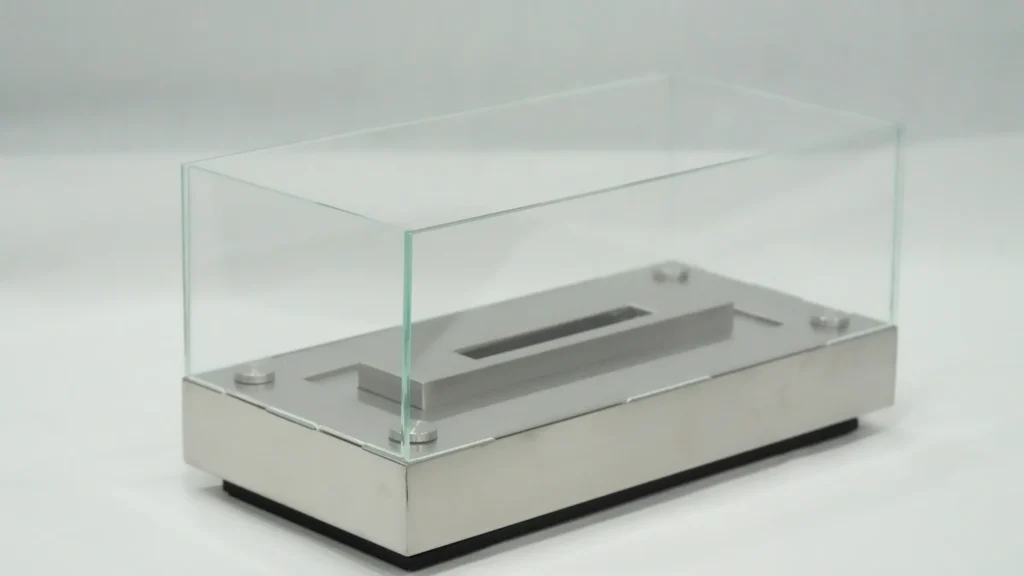
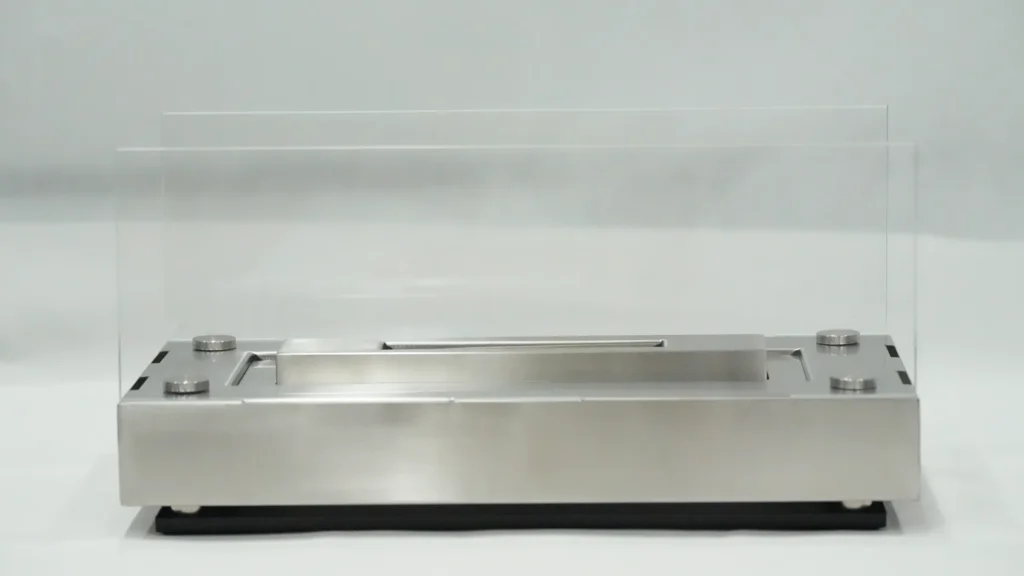
A tabletop ethanol fireplace can look simple in a supplier catalogue: a base, a burner, glass panels, accessories, and retail packaging. In real purchasing work, that simplicity is exactly why samples need careful review. The product is small enough to be shipped quickly and photographed easily, but it still involves a live flame, alcohol fuel, hot surfaces, glass parts, user instructions, and packaging that must protect the unit through export and local distribution.
A buyer who approves only the exterior appearance may miss the details that shape real selling risk. The flame opening may not match the claimed use case. The glass may look acceptable in photos but move during handling. The snuffer may not align cleanly with the burner. The finish may be attractive under studio light but scratch too easily for retail handling. The manual may describe a generic product instead of the sample in the carton. Each of these details can become a commercial problem once the buyer has already committed to inventory.
Recent public safety attention also makes sample review more important. In a December 19, 2024 consumer alert, the U.S. Consumer Product Safety Commission warned about alcohol or other liquid-burning fire pits that present flame jetting and fire hazards, and the alert associated this product category with two deaths and at least 60 injuries since 2019. That does not mean every tabletop ethanol fireplace has the same construction or risk profile. It does mean buyers should not treat the sample as a lifestyle accessory only. The sample is where sourcing, safety, packaging, and documentation first meet.
Start With the Commercial Role of the Sample
Before testing a sample, decide what the sample is supposed to prove. A buyer adding a low-risk entry SKU to a home decor range has different questions from a hospitality buyer evaluating tabletop ambiance products for repeated use. A private-label brand needs to know whether the sample can support custom packaging, logo placement, instruction files, and repeatable production. A distributor may need a range that includes several shapes and price tiers, not just one attractive hero model.
This is why sample review should connect to the product range strategy. If the sample is for a first assortment, review it against the range architecture: entry model, giftable model, premium model, seasonal model, and replacement or reorder logic. HND’s guide to building a tabletop ethanol fireplace product range explains how buyers can avoid an assortment that looks broad in a catalogue but weak in actual channel fit.
Write the sample purpose in plain language before the evaluation begins. For example: “This rectangular model is being reviewed as a mid-range retail SKU for online and showroom distribution, with private-label carton potential in the second order.” That sentence immediately changes the checklist. The buyer now needs to review product presence, carton strength, manual clarity, finish consistency, online image accuracy, MOQ implications, and whether the supplier can maintain the same structure when branding changes later.
Once the physical sample arrives, buyers can continue with HND’s tabletop ethanol fireplace sample quality checklist to inspect structure, finish, safety evidence, packaging and production repeatability before approving the next step.
The Sample Evaluation Table Buyers Can Use
The table below gives purchasing and product teams a practical structure. It is not a legal compliance assessment and it does not replace accredited testing. It helps buyers decide whether the sample is strong enough to move forward, whether it needs revision, or whether the project should pause before bulk quotation.
| Evaluation Area | What to Check on the Sample | Why It Matters for Bulk Orders | Buyer Decision |
|---|---|---|---|
| Model identity | Model number, dimensions, burner type, accessories, carton label, and supplier quotation match. | Prevents confusion between showroom samples, catalogue images, test reports, and mass-production SKUs. | Accept only when identity is traceable. |
| Structure and stability | Base balance, burner seating, glass fit, feet, fasteners, snuffer alignment, and handling feel. | Small structural gaps can become return, safety, or complaint issues after shipment. | Revise before order if the sample feels unstable or inconsistent. |
| Finish and appearance | Coating, stainless surface, glass clarity, edge quality, scratches, color consistency, and visible marks. | Retail buyers and brand teams judge quality quickly from the first unboxing and product photos. | Define acceptance limits instead of relying on “looks good.” |
| Use and documentation | Instruction sequence, warnings, fuel wording, accessory description, cooling and refuelling language. | Manual and label gaps create downstream risk for importers, distributors, and private-label sellers. | Request revised files before packaging approval. |
| Packaging | Inner protection, glass separation, accessory bag, manual placement, carton marks, drop protection, and barcode needs. | Packaging failure can damage the product even when the fireplace itself was acceptable. | Approve only with carton and insert evidence. |
| Production repeatability | Approved materials, finish sample, burner specification, packaging file, and supplier change-control process. | The bulk order must match the approved sample, not just the supplier’s general catalogue promise. | Convert the sample result into purchase-order and inspection requirements. |
Check Structure Before You Debate Price
Buyers often compare unit prices before they have physically handled the product. That order is backward for tabletop ethanol fireplaces. A lower quote does not help if the sample reveals loose glass, poor burner alignment, sharp edges, unstable feet, weak surface finish, or accessories that do not match the manual. Price becomes meaningful only after the buyer knows what structure is being priced.
Start with the base. Place the sample on a flat surface and check whether it sits evenly. Handle the unit as a retail customer might handle it during unboxing. Look at the burner seat, fuel opening, glass support, fastener placement, and snuffer fit. If the product includes stones, panels, or decorative accessories, confirm whether they are included in the quoted BOM and whether they create packaging or instruction issues.
The goal is not to invent a complicated laboratory test at the first sample stage. The goal is to identify obvious design, workmanship, and use-sequence problems before the order becomes expensive to change. For more detailed safety-design review, use HND’s ethanol fireplace safety features checklist after the basic sample screening is complete.
Review Safety Evidence and Product Scope Early
Samples should be connected to documents. A buyer should ask which standard, regulation, or market requirement the supplier believes is relevant to the product and target market. ASTM publishes F3363-25 for unvented liquid or gel fuel-burning portable devices, and the Australian Competition and Consumer Commission maintains guidance for decorative alcohol fuelled devices under a mandatory standard. In the European Union, product-safety responsibilities sit within the broader General Product Safety Regulation framework. These references do not prove that a sample is ready for sale. They show why buyers must ask scope-specific questions before relying on a general supplier claim.
When a supplier sends a report, check whether the report model matches the sample model. Check whether photos, drawings, dimensions, burner structure, accessories, and fuel wording align. If the report describes a different product, do not use it as proof for the sample in hand. If the supplier says the sample is a new revision, ask what changed and whether the evidence needs to be updated. HND’s guide to ethanol fireplace supplier safety documents gives a BOFU checklist for that evidence review.
Do not ask the supplier only for “certificates.” Ask for model-specific evidence and a clear explanation of scope. A factory certificate, catalogue page, or broad statement may be useful background, but it does not replace sample-specific review.

Evaluate Packaging as Part of the Sample
Packaging should not wait until after the product is approved. For tabletop fireplaces, packaging protects glass, burner parts, surface finish, accessories, manuals, and labels. It also shapes the first customer impression and affects whether the product can survive e-commerce, retail distribution, or international shipment.
Ask for the sample to be packed in the proposed export or retail method whenever possible. Open the carton the way a warehouse, retailer, or customer would open it. Check whether the manual is visible, whether accessories are separated, whether glass parts are protected, whether the product can move inside the box, and whether carton marks identify the exact SKU. If the sample arrives in temporary packaging, record that limitation and request the final packing method before bulk approval.
Packaging evidence can also connect to formal transit testing when the channel requires it. ISTA lists packaged-product test procedures and projects for different shipment contexts, while buyers should still choose the method that fits their route, carton, and customer requirement. For HND projects involving branded cartons, inserts, or retail-ready presentation, review customized packaging options before final artwork approval.
Turn Sample Findings Into a Production Specification
A sample review creates value only if its findings become production controls. If the buyer approves a finish, photograph it under consistent light and name the accepted color or surface reference. If the glass fit is acceptable, record the assembly requirement. If the manual needs a warning revision, approve the file version before printing. If carton protection is improved, update the packing instruction before the deposit or production release.
For repeatable inspection, separate critical defects, major defects, and minor appearance defects. Critical items may involve wrong model, unsafe structure, missing warning information, wrong accessory, or packaging that cannot protect the glass. Major items may involve visible finish defects, poor fit, missing manual, damaged carton, or inconsistent branding. Minor items may involve small appearance marks that do not affect use but still need defined limits. The important point for sourcing teams is to define what will be inspected before the goods are produced, then make sure the supplier, inspector, and buyer apply the same definitions.
Do not leave these details in chat messages only. Add them to the RFQ, purchase order, approved sample sheet, packaging file, and inspection checklist. If your project includes logo, color, shape, accessory, or design changes, HND’s customized fireplace service can help align the sample specification with production requirements.
Common Sample Evaluation Mistakes
The first mistake is approving a sample because it looks attractive in a photo. Photos hide weight, edge feel, fastener quality, glass stability, burner alignment, surface scratches, and packaging movement. Ask the team member who receives the sample to handle it, assemble it, read the manual, and repack it. The physical process often reveals issues that a product image cannot.
The second mistake is comparing samples without controlling the requirement. One supplier may send a premium version while another sends a cost-reduced version. One sample may include accessories that are not included in the quote. Another may use packaging that is not intended for export. Before comparing suppliers, make sure each sample is mapped to a quotation, BOM, carton plan, and target market.
The third mistake is treating sample approval as a one-time event. Samples can change after feedback, after private-label requirements, after cost negotiation, or after mass-production preparation. Each meaningful change should be reviewed and approved. If the supplier changes the burner, glass, base, snuffer, label, manual, carton, insert, or finish, ask whether the change affects safety evidence, packaging performance, or the inspection checklist.
A Practical Sample Review Workflow
Use a simple workflow that matches the way B2B buyers make decisions. First, define the product role and target market. Second, request the sample with the intended accessories, manual, labels, and packaging. Third, inspect structure, appearance, usability, documentation, and carton protection. Fourth, ask the supplier to answer all mismatches in writing. Fifth, approve, revise, or reject the sample. Sixth, convert the approved sample into the final RFQ and production checklist.
This workflow also helps the buyer avoid unnecessary customization too early. If the standard model is not structurally strong enough, custom branding will not solve the problem. If the product is solid but the carton or instruction file is weak, fix those areas before launching private label. If the sample is promising but not yet aligned with the channel, order a corrected sample before moving to bulk. The decision should be based on evidence, not urgency.
Buyers planning export orders should also connect sample review with shipping and carton planning. HND’s bulk export service is relevant when carton marks, pallet logic, product protection, and production timing need to support a larger order.
After early sample screening, buyers preparing for production release can follow a more detailed sample approval checklist before mass production so product, packaging, documentation, and inspection requirements stay aligned.
When a Sample Is Ready for Bulk Discussion
A sample is ready for serious bulk discussion when the buyer can answer several questions with confidence. Which exact model is being ordered? Which accessories are included? Which manual, label, and packaging files are approved? Which evidence supports safety and market claims? Which defects would stop shipment? Which customization items are confirmed now, and which will wait for a later order? Which internal team member owns final approval?
At that point, price and MOQ discussions become more productive because both sides are pricing the same product. The buyer can request a quote based on the approved structure, material, finish, carton, artwork, and inspection requirements. The supplier can explain which details affect MOQ, tooling, lead time, and packaging cost. The resulting quote is less likely to collapse later because of missing details.
If you are still at the early sourcing stage, start by comparing models in HND’s tabletop ethanol fireplace product range and reading the wholesale tabletop ethanol fireplace sourcing guide. Then request samples that prove the exact role each model will play in your channel.
Learn What to Check in a Sample
If you are evaluating tabletop fireplace samples before a bulk order, HND can help review model choice, burner structure, glass and accessory details, packaging direction, customization needs, and production-ready specifications. Share your target market, sales channel, sample questions, and order plan through the HND contact page.
FAQs
What should I check first in a tabletop fireplace sample?
Start with model identity, structure, stability, burner fit, glass support, surface finish, accessories, manual, labels, and packaging. The sample should match the supplier quotation and the intended market, not just the catalogue image.
Is one sample enough before ordering tabletop fireplaces in bulk?
One sample may be enough for early screening, but corrected samples, packaging samples, pre-production samples, or third-party testing may be needed when the design, branding, market, or safety evidence is not yet confirmed.
Should packaging be reviewed during sample evaluation?
Yes. Packaging affects glass protection, accessory placement, manual visibility, carton marks, retail presentation, and export handling. A good product sample with weak packaging can still create damage, returns, or launch delays.
How should buyers compare samples from different suppliers?
Compare each sample against the same requirement: target market, model role, dimensions, burner structure, accessories, documentation, packaging, customization needs, and inspection criteria. Do not compare a premium sample from one supplier against a cost-reduced sample from another.
What safety documents should be connected to the sample?
Ask for model-specific reports or technical evidence, applicable standard or market basis, instruction manual, warning labels, fuel wording, packaging artwork, and change-control information. The documents should match the exact sample being evaluated.
When should a buyer approve a sample for mass production?
Approve only after the product structure, finish, accessories, documentation, packaging, and production specification are aligned. If any safety, carton, label, or material detail is still open, record the issue and request correction before bulk release.
Can HND help with private-label sample development?
HND can support buyers with model selection, OEM/ODM customization, packaging direction, and production-ready specification review. The right path depends on the target market, channel, order plan, and approved sample requirements.
Sources and References
- CPSC product safety warning listing, including warning 25-074 dated December 19, 2024
- ASTM F3363-25 catalogue page for unvented liquid/gel fuel-burning portable devices
- ACCC Product Safety mandatory standard page for decorative alcohol fuelled devices
- Regulation (EU) 2023/988 on general product safety
- ISTA test procedures for packaged products
For European sourcing projects, sample checks should begin even earlier with an ethanol fireplace compliance Europe brief that defines the target market, standard scope, documentation expectations and packaging route before the buyer approves a physical sample.