EN 16647:2015 vs EN 16647-1:2025: What Changed for Tabletop Ethanol Fireplaces?
For EU importers and distributors, the move from EN 16647:2015 to EN 16647-1:2025 is not just a date change in a test report. It changes how a tabletop ethanol fireplace program should be scoped, documented, checked, and discussed with suppliers. The newer Part 1 standard is written around manually operated decorative alcohol fireplaces for domestic use, which makes the buyer’s first question much sharper: is this SKU really a manual decorative fireplace within the Part 1 scope, or does it belong in another technical lane?
Quick Answer
EN 16647:2015 covered decorative appliances producing a flame using alcohol-based or gelatinous fuel for private households. EN 16647-1:2025 is the newer Part 1 standard for manually operated decorative fireplaces using liquid alcohol fuel. For tabletop ethanol fireplace buyers, the most important change is the clearer part-based scope: manual ignition, filling, refilling, and extinguishing are now central to the way the product is classified and reviewed. The new edition also reinforces the need to connect sample testing with product construction, marking, packaging, instructions, traceability, and production control. Buyers should not accept a vague “EN 16647 compliant” claim without checking the standard version, report date, tested model, fuel system, power/output positioning, manual operating workflow, excluded use cases, and the documents that will ship with the product.
This guide is written for purchasing, QA, product, compliance, and sourcing teams that already understand the basic EU tabletop ethanol fireplace topic and now need a practical comparison. If you need the broader background first, start with HND’s EN 16647-1:2025 tabletop ethanol fireplace guide and the companion explanation of why the manual vs automatic ethanol fireplace standard split matters.
Why the 2015 to 2025 Comparison Matters
A tabletop ethanol fireplace is small enough to look simple in a catalog, but it combines open flame, liquid fuel, consumer handling, packaging, user instructions, and often international private-label requirements. That combination is exactly why a buyer should treat the standard transition as a product-management issue, not only a laboratory issue.
Many sourcing files still contain older reports, older drawings, older manuals, or supplier statements that refer generally to EN 16647. That does not automatically make the documents useless, but it does mean they should be reviewed against the current product and the current standard structure. A buyer may find that the tested sample was not the same as the commercial SKU, the instructions no longer match the packaging, the fuel-box detail has changed, or the product is being sold into a channel with language and traceability requirements that were not properly prepared.
The practical problem is not simply “old report bad, new report good.” The better question is whether the evidence package is version-specific, model-specific, market-specific, and production-ready. If the supplier cannot connect the tested sample to current production, the importer is carrying avoidable risk even when the design looks familiar.
What EN 16647:2015 Covered
EN 16647:2015 was widely used as the reference point for domestic decorative fireplaces that produced a flame using alcohol-based or gelatinous fuel. In many buyer files, the 2015 edition became the shorthand for “ethanol fireplace safety.” That shorthand is convenient, but it can hide important questions about fuel type, appliance scope, operating method, output, intended environment, and supporting documents.
For a buyer comparing old and new evidence, the 2015 reference should be read as a historical anchor. It tells you what framework a supplier or laboratory previously used, but it does not by itself prove that a current tabletop ethanol fireplace is correctly assessed under the newer Part 1 structure. A legacy report can still help you understand a design’s test history, especially for long-running models, but it should be mapped carefully against the current SKU, current drawings, current materials, current packaging, and current operating instructions.
Legacy evidence is especially sensitive when the product has been modified for private label work. A change in glass height, burner opening, filling tool, packaging warning, instruction language, accessory set, or finishing material may look minor to a sales team but meaningful to a technical review. The point of the comparison is to separate genuine continuity from assumptions.
What EN 16647-1:2025 Covers
EN 16647-1:2025 is framed as Part 1 for manually operated decorative fireplaces using liquid alcohol fuel. Public standards listings identify the scope around decorative fireplaces for domestic use, including freestanding, wall-mounted, and built-in products where a user manually interacts with the fireplace for ignition, filling, refilling, or extinguishing. For tabletop products, that manual workflow usually sits at the center of the risk review.
The scope boundaries are just as important as the included products. Public listings exclude, among other cases, products intended for heating food, use in boats, caravans, other vehicles, outdoor areas, products with separate fuel tanks, appliances with a defined heating function, and products above the stated output boundary. Importers should avoid forcing a product into Part 1 simply because it burns ethanol or appears in the same catalog family.
The standard also sits inside a broader product-safety environment. Regulation (EU) 2023/988 places duties on economic operators around product safety, technical documentation, identification, instructions, safety information, importer checks, and accident reporting. That means the buyer’s file cannot stop at the lab report. It should include the practical market materials that make the product understandable, traceable, and supportable after it leaves the factory.
EN 16647 2015 vs 2025: Practical Buyer Comparison
| Buyer Question | EN 16647:2015 Buying File | EN 16647-1:2025 Buying File | Action for Importers |
|---|---|---|---|
| Standard version | Often recorded simply as EN 16647 or EN 16647:2015. | Should identify EN 16647-1:2025 for Part 1 manual decorative fireplaces. | Ask the supplier to state the exact standard edition on the report, declaration, and technical file index. |
| Fuel positioning | Older files may mention alcohol-based or gelatinous fuel language. | Part 1 is framed around liquid alcohol fuel. | Confirm the fuel type, burner design, fuel container, and consumer instructions match the tested configuration. |
| Operation type | Manual and non-manual distinctions were often less visible in buyer conversations. | Manual ignition, filling, refilling, and extinguishing are central scope questions. | Map each user action and reject vague “same standard” claims for automatic or semi-automatic designs. |
| Product scope | Buyers sometimes treated the standard as a general ethanol fireplace label. | Part 1 has clearer exclusions and should not be stretched to unrelated use cases. | Screen separate fuel tanks, defined heating functions, high-output products, outdoor-only use, and vehicle/boat/caravan use. |
| Documentation | Manuals and warnings may have been reviewed after the product design was selected. | Documentation, marking, packaging, and instructions are part of market readiness. | Review user manual language, safety warnings, traceability, packaging marks, and emergency instructions before PO approval. |
| Production control | A single historical test may have been used across repeated orders. | Buyers should connect the tested sample to current production and ongoing consistency. | Request version control for drawings, BOM, critical dimensions, glass, burner, accessories, and packaging. |
The Biggest Change: Scope Is Now Harder to Ignore
The most useful buyer-facing change is the clearer division of scope. A sourcing team should no longer ask only whether a product has “EN 16647.” It should ask whether the product is a manually operated decorative fireplace that fits EN 16647-1:2025, whether the test evidence matches the sold SKU, and whether any planned variant falls outside that lane.
This matters when a product family includes multiple operating systems. A manual tabletop model, a larger built-in design, a product with electronic components, and an automatic ethanol fireplace may all be marketed under one brand story. They should not automatically share the same evidence package. The standard comparison helps a buyer split that catalog into review groups before samples, artwork, and launch dates are locked.
The same principle applies to private-label development. A distributor may ask for a new glass style, a different base, a branded filling tool, or a new retail carton. Those updates can affect stability, user handling, warnings, and the way the manual explains safe operation. The comparison should push the team to ask whether the change is only cosmetic or whether it requires a renewed technical review.
Manual Operation Becomes a Product-Design Question
For tabletop ethanol fireplaces, manual operation is not a small footnote. It determines how the user adds fuel, lights the flame, manages the appliance during use, and extinguishes it afterward. A buyer should look at the physical workflow from the viewpoint of a consumer who is unpacking the product at home, not only from the viewpoint of a trained technician in a sample room.
That workflow should be visible in the product and in the documents. Where does the user see the fill limit? How is overfilling discouraged? Can the accessory set be understood without improvisation? Does the extinguishing method match the product supplied in the carton? Do the warnings appear in the right language for the target market? Is there any step where the instruction manual tells the user to do something that the physical product does not support clearly?
These questions are also commercially useful. They reduce late-stage artwork revisions, retailer comments, sample rejection, and after-sales uncertainty. A buyer who checks manual operation early can brief suppliers more precisely and avoid treating safety documentation as an afterthought. HND’s article on EU ethanol fireplace product documentation explains why labels, manuals, traceability, and packaging should be handled as part of the product, not as paperwork pasted onto the carton at the end.
Fuel, Burner, and Tank Boundaries Need a Fresh Review
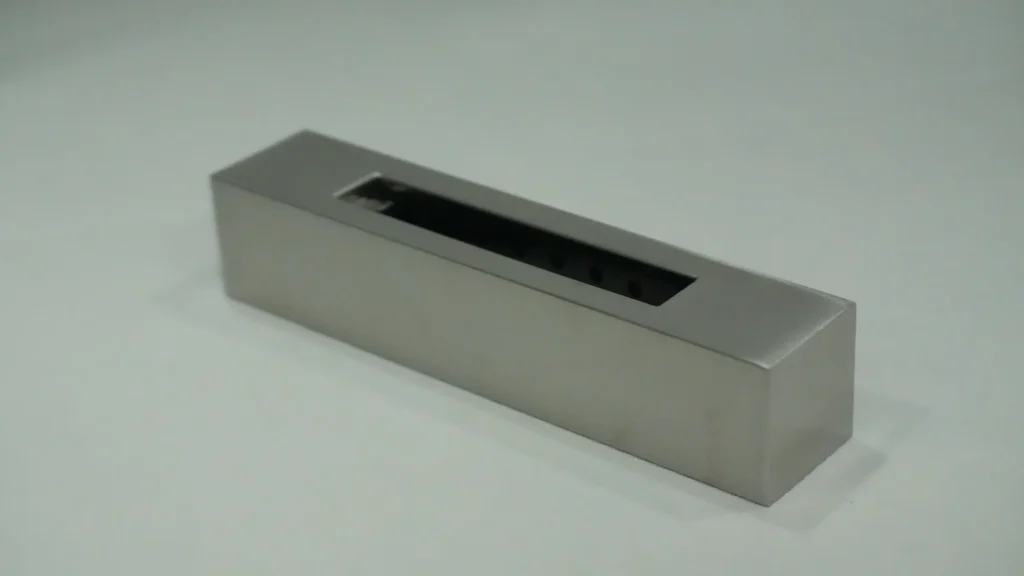
The older language around alcohol-based or gelatinous fuel can create confusion in legacy files. For a current Part 1 tabletop ethanol fireplace review, buyers should confirm the actual fuel type, fuel container, burner structure, and refilling method. If the product uses a different fuel presentation, a separate fuel tank, or a feature set that does not fit the manual decorative fireplace scope, the supplier should explain which standard or test path applies instead.
This is a common point of misunderstanding in procurement. A product can look similar in a photo while behaving differently in use. Two tabletop fireplaces may share a base shape but use different burner inserts, glass shields, filling openings, extinguishing tools, or fuel-capacity controls. The visual family is not the same as the tested configuration. The buyer’s file should record exactly which components were tested and which components are shipped.
For distributors managing multiple SKUs, a simple matrix helps: one row per SKU, one column for the tested model, one column for burner/fuel-box identity, one column for glass/accessory package, one column for instruction version, and one column for the applicable standard. This small internal control often finds mismatches before they become launch problems.
Testing Evidence Should Follow the SKU, Not the Catalog Photo
A useful test report is not just a PDF with the right title. It should identify the model, sample, drawings, photos, construction details, and test conditions clearly enough that a buyer can connect the report to the actual order. When comparing EN 16647:2015 and EN 16647-1:2025 evidence, ask whether the supplier is relying on a legacy report because the product is genuinely unchanged or because nobody has reconciled the file.
The safest commercial habit is to create a controlled evidence package before bulk order approval. The package should include the report, model list, product photos, drawings or critical dimensions, bill of materials, burner/fuel-box details, glass and accessory information, labels, carton artwork, user manual, and change history. The report can then be read alongside the physical sample rather than treated as a detached certificate.
For buyers still in sample stage, pair this comparison with HND’s tabletop ethanol fireplace sample quality guide. Compliance evidence and sample quality should move together. A smooth finish, stable base, clear fuel opening, consistent glass fit, and accurate packaging all support the same buying decision.
Documentation and Traceability Are Not Optional Details
Regulation (EU) 2023/988 reinforces a broader point that many importers already understand from experience: product safety is not proven only in the lab. Economic operators need technical documentation, product identification, manufacturer and importer information, clear instructions, safety information, and procedures that keep series production aligned with the safety requirement. For ethanol fireplaces, that means the technical file and the consumer-facing materials should be checked together.
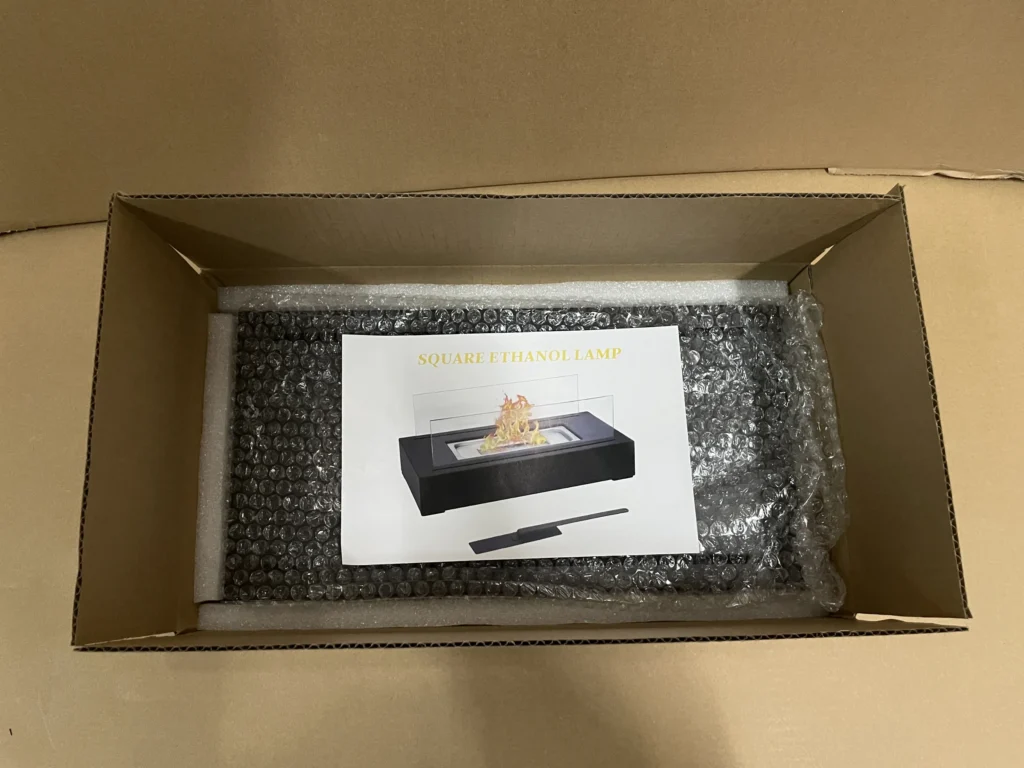
In practice, this affects retail cartons, instruction manuals, warning labels, product plates, batch traceability, and after-sales records. If a buyer changes a language set, private-label mark, model number, barcode, accessory pack, or carton format, the technical file should be reviewed again. If the supplier cannot provide a current manual or the manual does not match the product in the sample box, the project is not ready for launch.
Buyers should also separate market claims from evidence. A supplier may say a product is “EU compliant” or “tested to EN 16647.” Those phrases are not enough. Ask for the exact report, applicable edition, report holder, tested model, sample photos, date, laboratory identity, and limitations. Then check whether your own brand, importer details, and target countries require additional review.
When the New Part 1 Standard May Not Be Enough
One of the most useful outcomes of the 2025 structure is that it makes out-of-scope questions easier to ask. If a product is automatic, has a separate fuel tank, is sold as having a defined heating function, is above the relevant output boundary, is intended for outdoor-only use, or is designed for boats, caravans, or vehicles, do not assume Part 1 solves the compliance question. Those products may need a different standard path, additional risk assessment, or separate market guidance.
This does not mean buyers should avoid product innovation. It means innovation should be routed correctly. A manufacturer can still develop advanced models, custom features, and differentiated designs, but the technical evidence has to match the operating principle. If the product leaves the manual decorative fireplace lane, the evidence package must leave that lane with it.
For teams evaluating a supplier portfolio, use the standard comparison as a sorting tool. Put manual tabletop ethanol fireplaces in one review group, automatic products in another, decorative built-in variants in another if needed, and products with heating or outdoor claims in their own review path. This structure avoids a common procurement mistake: asking one report to support too many different products.
Buyer Checklist for Updating an Older EN 16647 File
- Confirm the exact standard edition named in the report, quotation, declaration, and technical file.
- Match the tested model to the current SKU, including model number, photos, dimensions, burner, glass, base, accessories, and packaging.
- Check whether the product is manually operated for ignition, filling, refilling, and extinguishing.
- Confirm the fuel type and fuel container design fit the intended standard scope.
- Screen for exclusions such as food-warming use, outdoor-only use, vehicles, boats, caravans, separate tanks, defined heating functions, or high-output claims.
- Review the user manual, warning labels, carton marks, product identification, importer information, and language set for the target market.
- Ask for a change-control record if the supplier is reusing an older report for a modified product.
- Keep sample photos, test evidence, artwork, and production specifications in one controlled buying file.
- Recheck the evidence package before repeat orders if materials, burner parts, glass, accessories, packaging, or instructions have changed.
- Use a qualified compliance adviser or test laboratory when the product scope is unclear.
How to Discuss This With a Supplier
A good supplier discussion should be specific and calm. Instead of asking “Is this EN 16647 compliant?”, ask: “Which exact edition applies to this SKU, and why?” Then ask for the document set that proves the answer. The supplier should be able to identify whether the product is manually operated, which model was tested, what fuel system was used, which user instructions apply, and whether any order variant differs from the tested sample.
For current tabletop ethanol fireplace programs, the conversation should also cover packaging and documentation before the purchase order. Ask whether the product plate, warning label, carton, user manual, filling instructions, extinguishing instructions, and traceability details are already aligned with the target market. Do not wait until inspection to discover that a manual is missing, an old warning remains in artwork, or the model number on the report does not match the carton.
If the supplier offers custom development, record which changes are design changes and which are branding changes. A logo change may be simple. A burner opening, glass height, fuel capacity, accessory tool, or carton instruction change may need technical review. HND’s customized fireplace service page is a useful starting point for discussing project requirements, while certificates and accreditations provide context for compliance-oriented sourcing conversations.
Recommended Internal Decision Framework
Before approving a tabletop ethanol fireplace order for the EU market, classify the project into one of three lanes. Lane one is a clean manual decorative fireplace where the product, tested sample, documents, and market use align with EN 16647-1:2025. Lane two is a legacy or modified product where older EN 16647:2015 evidence exists, but the buyer needs a gap review before relying on it. Lane three is an unclear or out-of-scope product where the operating principle, tank design, use claim, or output means the team should obtain separate technical advice.
This framework is intentionally simple because sourcing teams need decisions, not only theory. A lane-one project can move into supplier qualification, sample evaluation, and commercial negotiation. A lane-two project should be held until the document gap is closed. A lane-three project should not be forced into a standard pathway for convenience.
For procurement teams comparing multiple suppliers, the same framework can be used as a scorecard. Suppliers that can explain scope, reports, manuals, markings, and production controls clearly are easier to work with. Suppliers that rely on generic claims, old certificates, or mismatched model numbers should be treated as higher risk until they provide better evidence.
What This Means for Importers and Distributors
The move from EN 16647:2015 to EN 16647-1:2025 should change how buyers brief suppliers and how they read evidence. It should make the buying file more precise: exact standard edition, exact SKU, exact operation type, exact fuel system, exact documentation package, and exact production-control expectation.
For importers, the benefit is practical. A clearer review reduces late surprises at inspection, listing, retailer onboarding, and after-sales support. It also helps internal teams explain why a cheaper offer with a vague old report may not be the lowest-risk option. For distributors and brands, it supports cleaner product launch records, better manuals, and more defensible supplier conversations.
HND’s tabletop ethanol fireplace product range and tabletop ethanol fireplace safety guide can help buyers frame the product questions before requesting samples. When you are ready to compare a specific model or documentation set, use the contact page to discuss the intended market, operation type, and evidence requirements.
FAQs
Does EN 16647-1:2025 replace EN 16647:2015?
Public standards listings identify EN 16647-1:2025 as replacing EN 16647:2015. Buyers should still check the exact national adoption, report scope, and market requirements that apply to their project.
Is EN 16647-1:2025 only for tabletop ethanol fireplaces?
No. Public listings describe Part 1 as applying to manually operated decorative fireplaces for domestic use, including freestanding, wall-mounted, and built-in fireplaces. A tabletop model may fit that scope, but the buyer should still check the exact product configuration.
Does the new standard cover automatic ethanol fireplaces?
Part 1 is centered on manually operated decorative fireplaces. Automatic products should not be assumed to fit the same evidence path; they need a separate scope review and may fall under a different part or additional requirements.
Can an older EN 16647:2015 report still be useful?
Yes, as historical evidence, especially for a stable product family. But buyers should not rely on it without checking the current SKU, standard edition, fuel system, manual operation, documentation, and production changes.
What should an importer ask a supplier for first?
Ask for the exact test report, tested model identification, sample photos, applicable standard edition, user manual, warning labels, packaging marks, traceability details, and any change-control record since testing.
Does EN 16647-1:2025 prove EU market compliance by itself?
No single standard reference should be treated as the whole compliance file. Importers also need to consider product safety duties, national language requirements, documentation, traceability, and any other rules that apply to the product and market.
What if a product has a separate fuel tank or heating claim?
Do not force it into the Part 1 manual decorative fireplace scope. Treat it as a separate technical question and ask the supplier or laboratory to identify the correct standard pathway.
How often should buyers recheck the evidence package?
Recheck it before a new launch, private-label update, repeat order with changed components, new packaging version, new manual language set, or supplier change. The evidence should follow the product being shipped.
Sources
- iTeh/CEN listing for EN 16647-1:2025
- DIN Media listing for DIN EN 16647-1
- EVS listing for EVS-EN 16647-1:2025
- Regulation (EU) 2023/988 on general product safety
- Commission Decision (EU) 2015/547 on alcohol-powered flueless fireplaces
After comparing EN 16647:2015 with EN 16647-1:2025, sourcing teams can continue with HND’s practical checklist for reviewing EN 16647-1:2025 testing requirements before sample approval, artwork release, and mass production.